Free Tool — No Sign-Up Required
The Cold You Already Own
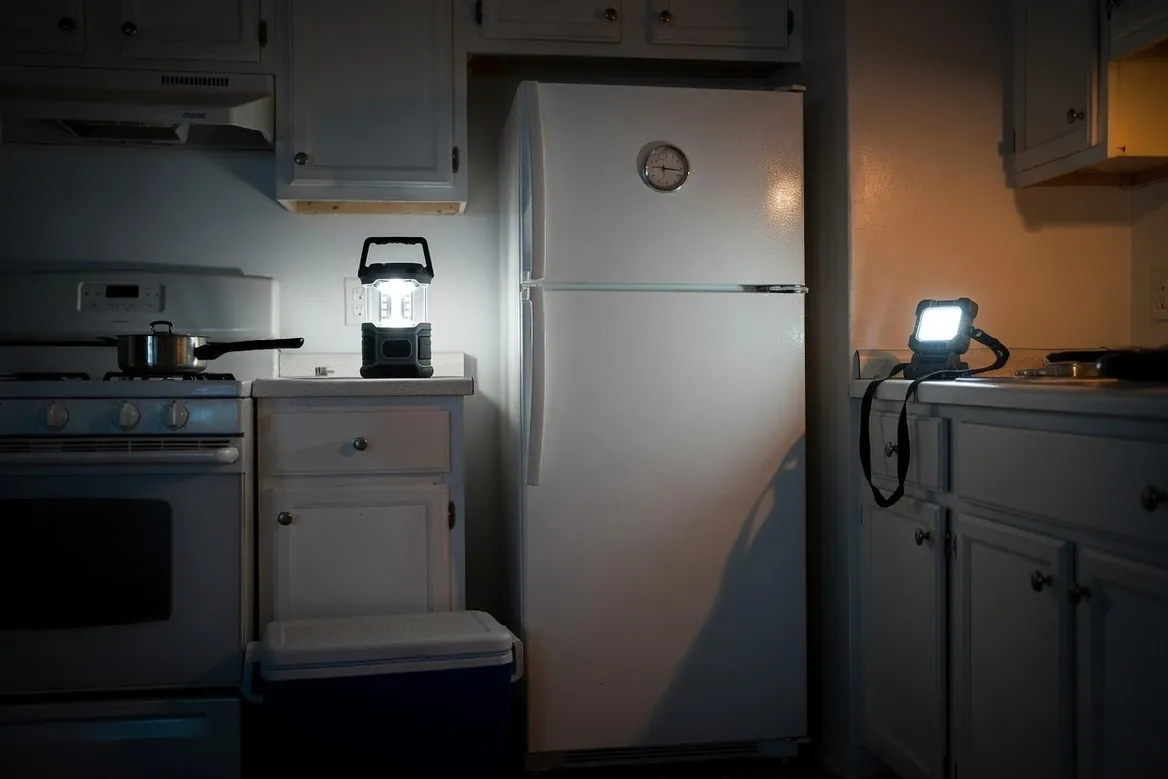
Your refrigerator and freezer are storage tanks for cold — the generator’s job is to refill them, not to babysit them.
Free Tool — No Sign-Up Required
Your refrigerator and freezer are storage tanks for cold — the generator’s job is to refill them, not to babysit them.
Here is the mistake almost everyone makes: they size a generator to run the refrigerator, around the clock, as if it were a light bulb. But a refrigerator is not a light bulb. It is a box of stored cold — and stored cold is fuel you already bought, sitting in your kitchen, waiting for an outage. The generator's job is not to babysit the box. It is to refill it.
The standard food-safety guidance is worth taping inside a cabinet: a refrigerator that stays closed keeps food safe for about four hours. A full freezer holds for about 48 hours; half-full, about 24. Closed is the operative word — every door-opening spends cold you cannot get back without power.
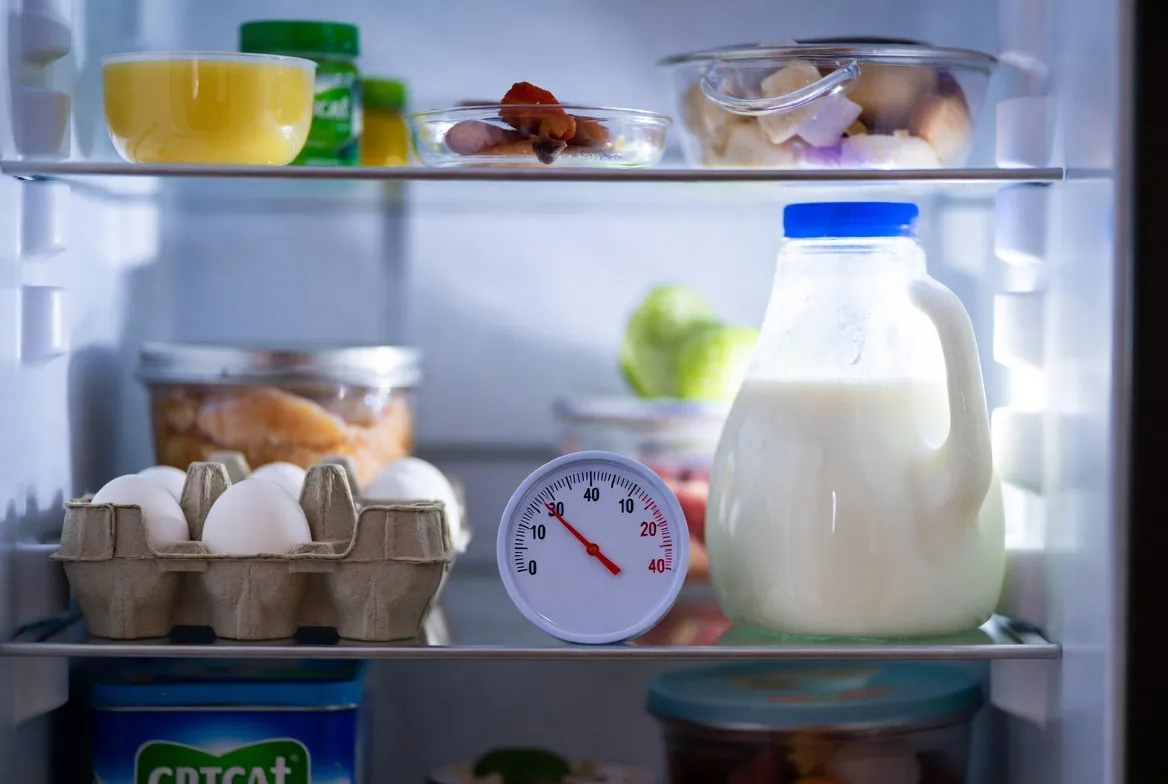
Now the load side. A modern refrigerator runs on something like 150 watts and starts on 1,000 to 1,200 — the compressor is a little air conditioner, with the same surge habit. A chest freezer is similar and holds cold even better, because the cold air does not fall out the door when you open it. These are not big loads. The reason they dominate outage planning is not their wattage — it is what spoils when they stop.
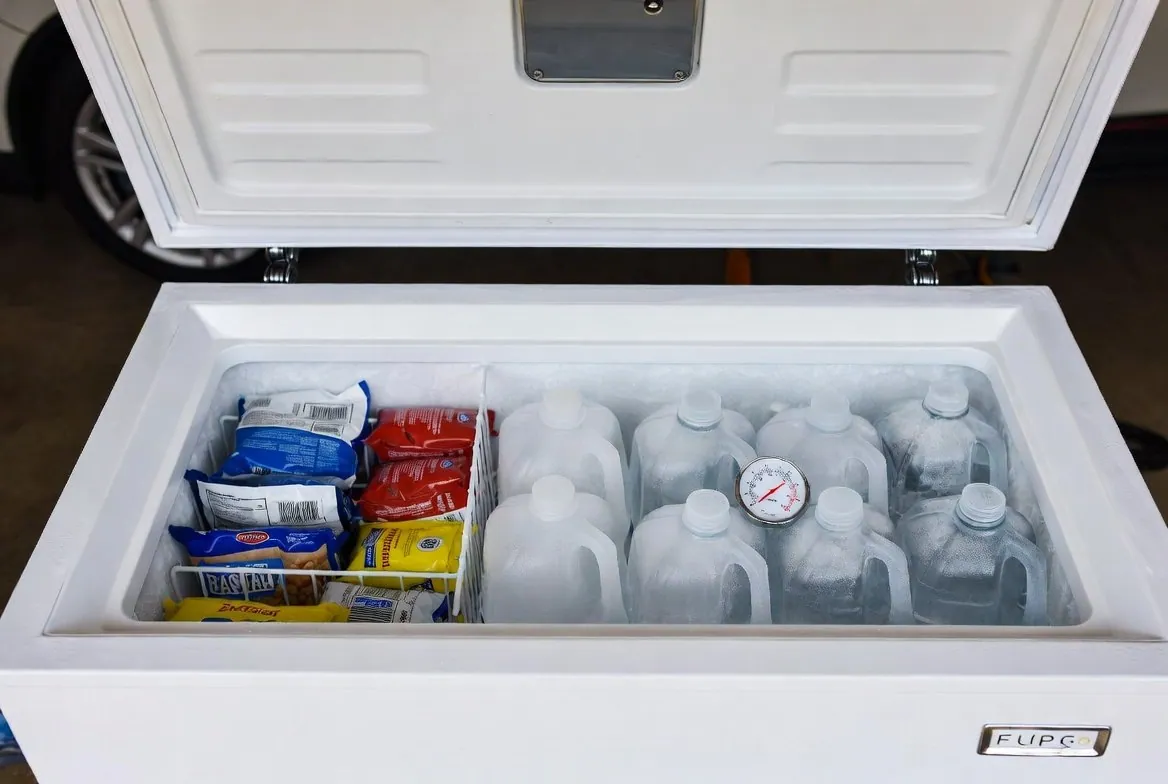
Because the boxes store cold, you do not need to power them continuously — you need to top them up. The pattern that works: run the generator a few hours in the morning and a few in the evening. In each window it pulls the refrigerator and freezer back down to temperature while it also recharges the battery bank, the phones, and everything else on your list. Then it goes quiet — and the insulation does the night shift for free.
What this buys you is fuel. A generator that runs eight hours a day instead of twenty-four burns a third of the propane for nearly the same result, because most of what a round-the-clock generator does at 3am is hold a door closed that was going to stay closed anyway. The calculator's hours-per-day slider is exactly this decision — and this page is the argument for sliding it left.
Two tools on this site finish the job: the Food Spoilage Timer tells you how long specific foods hold at the temperature your thermometer is showing, and if there is insulin or any refrigerated medication in that door shelf, the Medication Cold Storage calculator should be read before the storm, not during it — medicine gets a plan of its own, never a leftover corner of the food plan.
Now I am going to be dull for a stretch, and I would ask you to bear it, because this is the part of the page where a charming sentence could give somebody food poisoning at seventy-five. So here it is flat, in the order it matters, and then we can talk like people again.
The line is forty degrees Fahrenheit. Perishable food held above forty for more than two hours goes in the bin. Not tasted first, not sniffed first — in the bin. The organizms that make a person ill do not change the smell, the color or the taste of anything, which is exactly why people get caught.
What goes, once that line is crossed: meat, poultry and fish, raw or cooked. Eggs and anything made with them. Milk, cream, soft cheese, sour cream, yoghurt. Cut fruit and cut vegetables. Leftovers, casseroles, stews, soups, gravy, stuffing. Cooked pasta and rice. Opened baby formula.
What stays, and this is the half nobody tells you: hard cheeses. Butter and margarine. Whole fresh fruit and vegetables. Bread, rolls, cakes, muffins. Peanut butter, jam and jelly. Ketchup, mustard, relish, olives, vinegar-based dressings, barbecue sauce. Fruit juices and open fruit pies. A surprising amount of a refrigerator is not actually at risk, and knowing which half is which is the difference between throwing out one shelf and throwing out the lot.
Never taste food to decide whether it is safe, and never judge it by smell or appearance. Food that will make you ill can look, smell and taste completely normal. When you are unsure, the answer is always to throw it out — a full refrigerator is worth a few hundred dollars, and a week in a hospital bed at seventy is worth considerably more than that.
The freezer has its own rule and it is a kinder one than most people expect. If the food still has ice crystals in it, or the freezer is still at or below forty degrees, it can be refrozen. Quality suffers — a refrozen steak is a slightly worse steak, and refrozen ice cream is a lost cause on texture alone — but it is safe.
That single rule saves a great many freezers. It also means the first thing to do when the power comes back is not to start throwing food out. It is to open the door once, briefly, and feel for ice.
The exception worth naming: anything that thawed and then sat warm gets judged by the forty-degree rule above, the same as if it had come out of the refrigerator. Ice crystals mean it never got there. No ice crystals and a warm box mean it did.
Forty-eight hours in a full freezer is the standard figure, and it assumes you do nothing at all. There is a good deal you can do.
This is free and it outperforms everything else on this list. Decide what is coming out before you open the door, get it in one trip, and shut it. A refrigerator opened six times an hour by somebody who cannot remember what they wanted is a refrigerator with no cold left in it by lunchtime.
Move refrigerator food that matters into the freezer if there is room. Move freezer food into the middle of the mass, away from the walls and the door, and pack the gaps with the frozen jugs. Cold keeps cold; a solid block of frozen things is one large ice cube and it behaves like one.
Roughly fifty pounds of dry ice will hold a full eighteen-cubic-foot freezer for about two days. It is sold at some grocery chains, ice suppliers and welding-gas suppliers, and it is worth finding out which one near you carries it now, on a calm afternoon, rather than on the telephone during an outage.
Dry ice is frozen carbon dioxide at about 109 degrees below zero and it will burn skin on contact — handle it with heavy gloves or tongs, never bare hands. It does not melt, it turns into gas, and in an enclosed space that gas displaces the air people breathe. Never store it in a sealed container, never in a closed car with the windows up, and ventilate any small room where it is sitting. Lay it on cardboard on top of the food, not underneath it, because the cold falls.
If somebody on your street has power and you do not, a full freezer is a favour worth asking for, and worth offering when the situation is reversed. Failing that, a good cooler with block ice will hold a day’s worth of what actually matters — the insulin, the milk, the meat you were going to cook anyway. Block ice lasts far longer than cubes, for the same reason a full freezer beats a half-empty one.
A thick blanket or a couple of sleeping bags thrown over a chest freezer adds insulation to a box that is already insulated. It is not dramatic and it is not a substitute for anything else here. It is free, it takes a minute, and it costs you nothing to be wrong about.
Do this in order and it takes ten minutes.
And one that surprises people: if the freezer was full when it failed and full when the power returned, you have just proved the whole argument of this page. The cold you had already paid for did the work. The generator only had to top it up.
The short version of this page, one question at a time — the answer is always the first line.
A closed refrigerator keeps food safe for about four hours, a full freezer holds for about 48 hours, and a half-full freezer about 24. Every door-opening spends cold you cannot get back without power.
Perishable food held above forty degrees Fahrenheit for more than two hours should be thrown out, not tasted or sniffed first. Food that will make you ill can look, smell and taste completely normal.
Food that still has ice crystals in it, or sits in a freezer still at or below forty degrees, can be refrozen safely. The quality suffers, but it is safe.
No, a generator only needs to run a few hours in the morning and a few in the evening to pull the refrigerator and freezer back down to temperature. The insulation holds the cold in between, which saves fuel.
Roughly fifty pounds of dry ice will hold a full eighteen-cubic-foot freezer for about two days. Handle it with heavy gloves or tongs, never store it in a sealed container, and ventilate any small room where it sits.
Hard cheeses, butter and margarine, whole fresh fruit and vegetables, bread, peanut butter, jam, ketchup, mustard and vinegar-based dressings can generally stay. Meat, eggs, milk, soft cheese, leftovers and cut fruit go once the forty-degree line is crossed.
What This One Buys You
The cold you already own.
A full freezer is a block of stored cold worth hundreds of dollars in groceries; knowing how to keep it closed and how long it holds is free and saves the whole load.