
About this story: “Barbara” is a composite character. Her experience is assembled from the common, real situations Florida residents face during extended power outages — but she is not a specific, identifiable person, and this is not a customer testimonial or endorsement. The events, costs, and outcomes described are illustrative. Individual results vary, and nothing here is a guarantee of any particular result.
Barbara had been a school librarian for 31 years. She retired at 64 with a decent pension, a paid-off house, and no particular plan for what came next. She had lived in the same home for nearly three decades — an older neighborhood inside Pensacola proper, the kind of established street where the trees had been growing since before she moved in and the houses had been there longer than most people could remember. Sidewalks. City water. Neighbors who had known each other's names for years, even if they didn't always act like it.
What came next turned out to be a two-day power outage from a storm that barely made the news.
She spent both nights in her recliner in the dark, afraid to fall into a deep sleep. Her CPAP machine wasn't running. She knew what sleep apnea could do to a person who wasn't getting airflow. By morning she was exhausted and shaken in a way that a two-day outage had no business making a person feel.
Sitting there in the dark she started thinking about something she had been quietly avoiding for a couple of years. Not the storm. Not the CPAP. Something larger and slower and harder to look at directly.
She was 66 years old. In a few years she would be 70. And the things you can push through in your 50s — the things your body will absorb and recover from in your 60s — your body simply stops tolerating in your 70s. She knew that. She had watched it happen to her mother. She had watched it happen to friends. The margin shrinks. The recovery takes longer. The things that used to be inconveniences start becoming dangers.
This blackout had only lasted two days. Two days without power in August in Florida and she was already shaken. What would two days feel like at 72? At 75? What would a week feel like — the kind of extended outage that a serious Gulf Coast storm could produce — when her body had ten fewer years of resilience to draw on?
Because it wasn't just hurricanes she was thinking about. The grid was getting less reliable every year. Demand was climbing. Summer heat was lasting longer. Brownouts and rolling outages that had been rare when she was younger were becoming routine. An hour without power in August in Florida — just one hour, not a week, not a disaster, just an ordinary summer afternoon failure — could put a 70-year-old woman in genuine medical danger. Heat moves fast in a closed Florida house. Faster than most people realize until it's too late.
She wished she had thought about all of this in her 50s. She had been healthy in her 50s. She had been busy. The problems of her 70s had felt abstract and distant and easy to set aside. That was the trap, she understood now — the window to prepare was exactly when you felt like you didn't need to.
She gave herself a small amount of grace on that point. A lot of the technology she was about to research — the standby generators, the satellite internet, the options that hadn't existed or hadn't been affordable — hadn't been available twenty years ago the way they were now. The window that had been difficult to act on in her 50s was genuinely more accessible now. That was something. But it didn't change the fact that she was starting this at 66 instead of 56, and that meant she needed to move with more purpose than she might have otherwise.
She sat in that recliner and made herself a promise. She was not going to do this again. She was not going to be the person on her street who didn't see it coming. And she was not going to be the 72-year-old woman who had meant to get ready and just never quite gotten around to it.
She had time. Not unlimited time — but enough. She had a little money set aside. She had spent her whole career figuring out what people needed before they knew they needed it. She decided to apply that same instinct to the one problem she could actually solve right now.
She Did Her Homework First — and Almost Talked Herself Out of It

Barbara did not walk into a generator showroom first. She sat down at her kitchen table and spent three weeks reading before she spoke to a single salesperson — DOE outage reports, EIA data on Gulf Coast restoration times, FEMA generator safety guidelines. She made a spreadsheet of her home's wattage requirements: CPAP, refrigerator, window AC unit, lights, phone chargers.
Something she discovered early in that research worked quietly in her favor — and she almost missed it entirely. Homes on private wells need a well pump to get running water, and a well pump is one of the single biggest power draws a generator has to handle. It can add 1,500 watts or more to the load calculation, and that surge forces homeowners into a larger, more expensive generator unit just to keep the water running. Barbara lived in an older established neighborhood with sidewalks, city water, and city sewer — infrastructure that had been in the ground since before she was born. No well. No pump. No surge load to calculate around.
Her total wattage needs came in low enough that a smaller, less expensive generator unit would handle everything she needed. That one fact — city water — kept her required generator size, and therefore her total cost, well within reach of what she could finance on a fixed income. It is the kind of quiet advantage of living in an established city neighborhood that most people never think about until they are staring at a generator spec sheet trying to figure out why the number is so high. If you live in town, on city water, you may be in the same position Barbara was. Your number may be lower than you think.
The numbers scared her at first. A whole-home standby generator with a buried propane tank and professional installation was not a small number. She almost closed the laptop and told herself she'd figure out something else.
What changed her mind was a different kind of math. Her mortgage had been paid off for eight years. That one fact meant her pension and Social Security — modest as they were — went further than most people on fixed incomes assumed was possible. She had a savings account she kept for car repairs and appliance replacements, the quiet cushion that keeps ordinary life from becoming a crisis every time something breaks.
When she finally had the numbers in front of her — the right size unit for her home, installation, the buried propane tank, all of it — the total landed somewhere between eight and ten thousand dollars. She sat back in her chair. She had savings, but not that kind of savings. She reached for the trackpad to close the laptop.
That's when she saw the button. Small, easy to miss, sitting right below the equipment pricing on the dealer's website. Apply for financing. She almost scrolled past it. She clicked it instead.
Sixty payments. About $130 a month. She read it twice. Then she did what she always did when a number surprised her — she got out a piece of paper and worked it out by hand. One hundred and thirty dollars a month. She had been paying more than that for a cable package she had grown increasingly annoyed with — hundreds of channels and almost nothing she actually wanted to watch. She had been meaning to cancel it for two years.
She picked up the phone right then, canceled the cable, and signed up for Netflix the same afternoon. Netflix had more of what she actually wanted anyway. It was, she told herself, a no-brainer that had just taken her two years to get around to. The generator payment fit inside the gap without touching anything else. She stared at the paper for a long moment. Then she called the dealer.
It took four years to pay off and she never missed a payment.
She chose propane over gasoline deliberately. She had read about people running out of fuel at 3 a.m. when no gas stations were open. The buried tank held 500 gallons. The body of it went into the ground — only the valve dome at the very top sat near the surface, tucked under a metal cover flush with the yard. There was nothing for wind to catch, nothing exposed to flying debris, nothing to snap off. Invisible from the street, impossible to move. This wasn't equipment that sat in a garage. It was part of the house. She had it serviced every year the same way she had her car serviced — before anything went wrong.
✅ Buried or above-ground? Most people go above-ground — and in Florida there is a real argument for it.
Barbara buried hers, but that is the costlier path and it is not automatically the right one. A 500-gallon tank set above ground on a concrete pad typically runs somewhere around $1,500 installed. Burying that same tank adds excavation, trenching, and corrosion protection, which commonly pushes the job to $2,000–$5,000 — dealers generally quote anywhere from about a thousand to several thousand dollars more than the above-ground version of the same tank.
Why you might bury it: nothing for hurricane wind to catch, nothing exposed to flying debris, invisible from the street, impossible to shove over or steal, and no eyesore in the yard.
Why you might not — and this matters in Florida: in flood-prone ground with a high water table, a buried tank that is running low on fuel can actually float and shift in its hole when the water rises. Propane dealers routinely recommend above-ground tanks in areas that flood. Above-ground is also cheaper to install, easier to inspect, easier to smell a leak around, and far cheaper to move or remove later.
The honest answer: if your lot floods or sits on a high water table — much of coastal and central Florida — put it above ground on a pad, properly anchored, sited away from anything the wind can throw at it. If your ground is high and dry and the extra cost fits, burying it is the more storm-proof choice. Either way, have your dealer quote you both, and ask plainly whether your lot is a flood risk. Ask about leasing the tank, too — many suppliers lease an above-ground tank for a small annual fee, though it ties you to them for fuel.
By the time she finally called the dealership she knew which size unit her home required, why propane beat gasoline for her situation, and exactly what questions to ask. The salesman tried to upsell her on a larger unit. She told him politely but clearly what she needed and why. He looked at his notes and agreed she was right. She was not surprised.
The Starlink Decision — and the Part That Almost Stopped Her
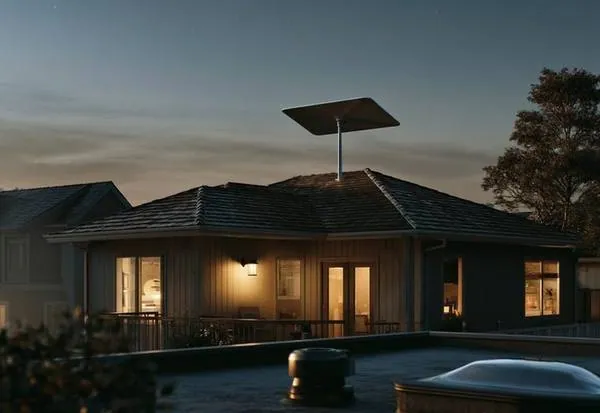
The following spring Barbara started looking into satellite internet. She had read enough after-action reports to understand that cell towers were among the first things to fail in a major storm and among the last to get repaired. She didn't want to be cut off from the outside world when it mattered most.
The hardware cost was manageable. The monthly fee was not — not for something she hoped never to need. She put the browser tab in her bookmarks and left it there for six weeks.
Then she found something called Standby Mode. For ten dollars a month the dish stays registered on the satellite network and sits on your roof ready to go. You're not paying for full service. You're paying to stay in line — keeping a working connection available the moment you need it.
What she found most reassuring was how the activation worked. The Starlink dish does not need a cell signal and it does not need an existing internet connection to get going. When you power it on it immediately starts connecting to the satellites overhead and broadcasts its own WiFi network — right from the dish itself.
You connect any phone, tablet, or laptop to that network, open a browser, and you are taken straight to the Starlink activation page. No cell towers involved anywhere in that chain. In a disaster where every cell tower for twenty miles is down, the dish works completely independently. That was the part that settled it for her. This was not a system that depended on the same infrastructure that had just failed. It was its own infrastructure.
When a disaster hits you connect to the dish's WiFi, log into your Starlink account from any browser, and upgrade to full service in minutes. The whole process is designed to work when nothing else does.
Ten dollars a month. She was spending more than that on a magazine subscription she barely read. She ordered the dish, had it professionally mounted on her roof, set her account to Standby Mode, and went back to her regular life. She did not think about it again until the storm.
The Garage Sales — and the Article That Changed Everything
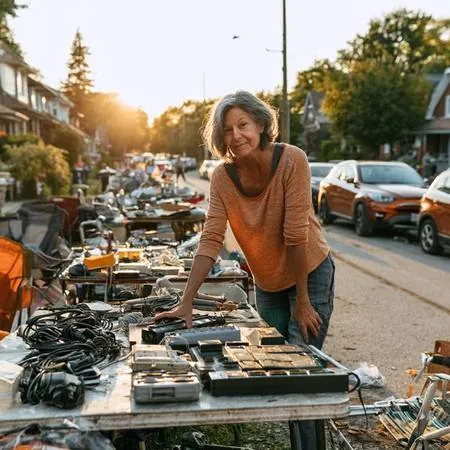
The generator and the Starlink dish were the two expensive decisions. Everything else came later — and it came from a different place entirely.
While she was deep in her research, reading after-action reports and FEMA studies and outage data, she kept stumbling across the same theme in story after story. Families waiting. Waiting for power to come back. Waiting for FEMA to arrive. Waiting for insurance adjusters to return calls. Waiting for contractors. Waiting for debris crews. Waiting for the grocery stores to reopen. Waiting for cell service. Just waiting — in the heat, in the dark, increasingly desperate, increasingly cut off from each other and from any sense of what came next. The ones who fared worst weren't always the ones with the least money. They were often the ones who had been waiting alone.
Then she read something that stopped her completely. It was an account of a family — a church family somewhere in the Carolinas — who had prepared not just for themselves but for the people around them. Nothing dramatic. Nothing expensive. They had thought ahead about what their neighbors would need during an extended outage and they had quietly accumulated the things that could help. Extension cords. A way to charge phones. A cooler.
A folding table with cold water on it. Simple things. The article mentioned almost in passing that most of what they had gathered had come from church rummage sales, garage sales, and thrift stores — the places where perfectly good things go because nobody else can figure out a use for them anymore. The total cost had been almost nothing. The effect on their block had been, by the account of everyone involved, something they still talked about years later.
Barbara sat with that for a few days.
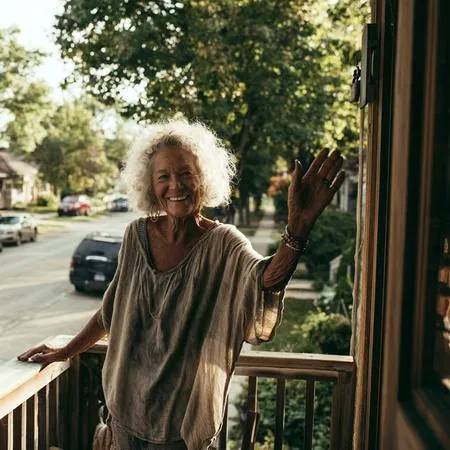
One afternoon she was on her porch — just sitting, the way she did sometimes when she needed to think something through — and she looked up and down her street. Thirty years she had lived here. Thirty years of these houses, these yards, these faces. She knew who was struggling. She knew who was alone. She knew who had no family nearby and no plan for what happened when things went wrong.
She thought about that church family in the Carolinas. She thought about what they had done and what it had cost them and what it had meant to the people around them.
And she thought: why couldn't she just do that for her street?
Not a grand project. Not a neighborhood committee or a formal plan or anything that required anyone else's agreement or participation. Just a retired librarian who had thirty years of goodwill built up on a single block, quietly accumulating the things that would matter when the lights went out. The generator was already taken care of. The Starlink dish was on the roof. Everything else on that article family's list — she could get most of it for next to nothing if she was patient and paid attention and knew where to look.
She already knew where to look. She had been going to garage sales her whole adult life.
She started checking Facebook Marketplace three or four times a week and hitting garage sales on Saturday mornings with a mental list. Some weekends she came home with nothing useful. Some items she found immediately and others took months. She bought two heavy-gauge outdoor extension cords at a sale three blocks over. Two six-plug power strips still in their packaging on Marketplace for two dollars each.
A 35-inch flat panel television for twenty dollars from a woman downsizing after her husband passed. A hot air popcorn popper for three dollars. A ten-gallon insulated beverage cooler. A small folding table. A Coleman wheeled cooler at an estate sale. Folding chairs. Board games. A large plastic bowl that would hold enough popcorn to feed a dozen children.
From Amazon she ordered gallon Ziploc freezer bags, silicone ice trays, bulk grape Kool-Aid powder, and toothpicks — about sixty dollars spread across several months so it fit inside her regular budget without feeling like a sacrifice.
Dollar Tree: Sharpie markers and another four boxes of Ziploc bags. Under ten dollars.
She brought each item home, cleaned it, tested it, and put it where it needed to go. She did not tell most of her neighbors what she was doing. The few she mentioned it to thought she was being overly cautious. She smiled and changed the subject.
Getting to Know the Street — Harder Than It Sounds
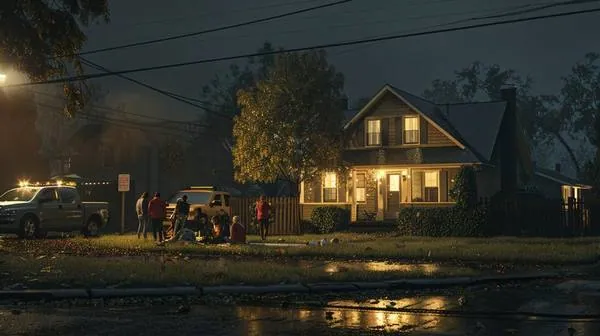
Over those same years Barbara made an effort to know her neighbors. This sounds simple. It was not always simple.
Some were easy. Dorothy two doors down was a Type 2 diabetic who lived alone and stopped to talk whenever she saw Barbara on the porch. Carl across the street was a retired firefighter — big guy, quiet, drove a pickup truck, had a son in Atlanta he talked about sometimes. He nodded and waved and occasionally offered an opinion about the weather.
Helen three houses down had been a nurse for 40 years and carried herself like someone who had been the most useful person in every room she'd ever walked into. Marco, two houses up from Carl, was in his early 50s, worked in construction, kept to himself mostly but was always the first one outside after any kind of weather to check that the street was okay. Russell next door was 80 years old, lived alone, had no family nearby, and had a single box fan in his bedroom that rattled when it ran.
Others were harder. Some neighbors gave her a glance and kept walking. A few never acknowledged her at all. There was one woman on the block who people had been calling unfriendly for years — she had never waved back, never responded to a greeting, never stopped to talk. Barbara had chalked it up to personality. She kept waving anyway.
She was building a map, not friendships. Who was vulnerable. Who could be counted on. Who had children. Who had medical equipment. Who lived alone. She filed it all away without being sure any of it would ever matter.
What she could not have explained to anyone who hadn't read the same FEMA reports she had read was why this mattered. The neighborhoods that fared worst after major disasters were not always the ones with the fewest resources. Often they were the ones where nobody knew anybody else's name. Strangers don't trust each other. People who don't trust each other make bad decisions when they're frightened. She had learned that from a report, not from experience. She was about to learn it from experience.
When the Storm Came
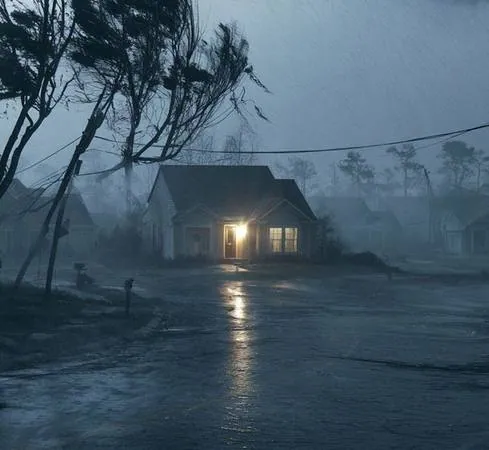
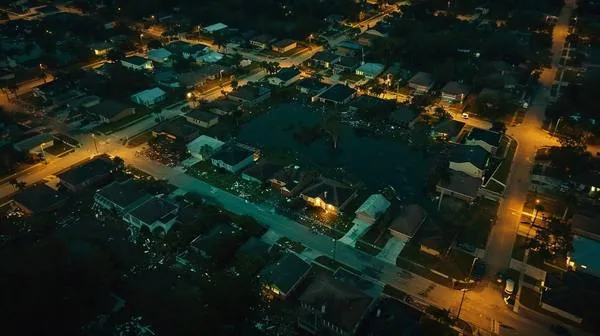 Hurricane Ditton didn't hit her community dead on. The eye passed to the north and took the worst of the wind with it. But a glancing blow from a hurricane is still a hurricane. Trees came down across roads and onto rooftops. Power lines went down on three streets. Her neighborhood lost power at 4:47 AM on a Wednesday morning.
Her generator came on eleven seconds later. Her lights never went out.
It was the only generator running on her block. The surrounding streets were dark and silent. Her neighborhood was not a prosperous one. Most people were on pensions, disability, or working two jobs to cover rent. Nobody had money sitting around for a standby generator. She had known that when she bought hers. She had also known that the marginal cost of helping her neighbors once she had the generator was almost nothing. The propane tank was already full. The power was already on. She had built that into her thinking from the beginning.
By Thursday afternoon her porch had become the most important place on the block. That part she had planned for. What came after it — she had not planned for all of that.
The Porch Outlet — and the Conversation She Didn't Expect
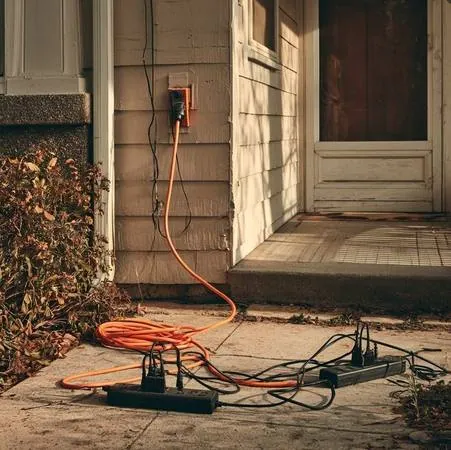
The morning after the storm Barbara ran two heavy-gauge extension cords from her Christmas light outlet, draped them over the porch railing, and attached a power strip to the end of each one. Twelve charging spots. People could use them without knocking on her door or coming inside.
What she hadn't calculated was how long people would stay.
A phone takes 45 minutes to go from dead to useful. You can't walk away and leave it unattended. So people sat. On her porch steps, on Carl's truck tailgate pulled close enough to reach a cord, in lawn chairs that migrated from various driveways. They refilled cups from the ten-gallon jug on the folding table at the end of the driveway — ice cold, because Barbara's freezer had never stopped running — and came back and sat down again. And they talked.
Helen learned for the first time that the young woman across the street was a single mother with a four-year-old and no family within 300 miles. By Friday Helen was bringing her dinner. Carl and a man from two streets over discovered they had served in the same branch of the military a decade apart and spent an entire afternoon sorting that out on Barbara's porch steps.
And then there was the woman everyone had called unfriendly. On Thursday afternoon she walked up, picked up an extension cord, plugged in her phone without a word, and sat down on the top step. Twenty minutes later Helen sat beside her.
It came out that she was profoundly hard of hearing. She had never been able to follow conversations shouted across a driveway or called from a porch. She hadn't been unfriendly. She'd been unable to hear. Sitting two feet away from people in the quiet after the storm she talked for hours. Several neighbors admitted afterward that they had misjudged her completely for years.
Barbara had not planned any of that. She had put out two power strips and gotten out of the way.
The Ziploc Medication System — Four Dollars and Thirty Seconds of Thought
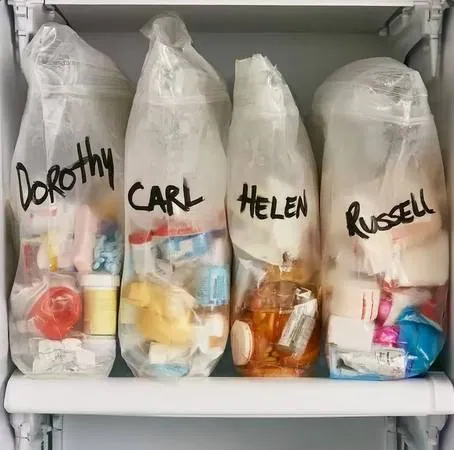
Dorothy showed up Thursday morning with an armful of insulin that had been sitting in a warm refrigerator for 36 hours. Barbara had been expecting exactly this. She handed Dorothy a gallon Ziploc bag and a Sharpie. Dorothy wrote her full name in large letters. The insulin went into the bag. The bag went onto a dedicated refrigerator shelf Barbara had already cleared — kept cold but never frozen, because freezing ruins insulin — labeled with masking tape: MEDICATIONS — DO NOT MOVE.
Over the next four days eleven bags joined Dorothy's on that shelf. Heart medications. Thyroid medications. Eye drops. A neighbor's EpiPen. A child's liquid antibiotic. Every bag had a name in black marker. There was never any confusion and there were never any arguments.
What Barbara had not anticipated was how many people would show up with medications she knew nothing about — things that needed to stay cold that their owners had never thought to mention until they were holding them in a warm kitchen four hours after the power went out. She had bought enough bags. She was glad she'd bought more than she thought she'd need.
The Medication Shelf System — Total Cost: Under $6
The Ice Bricks — and the Day They Stopped Being Optional
In the days before the storm Barbara had been filling sandwich-sized Ziploc bags halfway with water and laying them flat in her freezer. Dozens of them. She had read that a full freezer stayed cold longer than a half-empty one. That was one reason. The other reason was Russell.
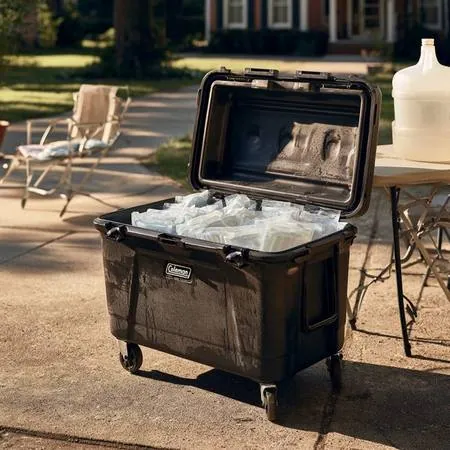
She had watched Russell next door all summer. He was 80. He had one box fan. When July temperatures hit 97 degrees he sat on his porch in the late afternoon with the particular stillness of someone who had stopped fighting the heat. She had thought about him when she ordered the silicone ice trays. She had thought about him when she bought the wheeled Coleman cooler at the estate sale — big enough to hold a serious supply of ice, easy enough to move that one person could manage it without help.
By day two of the outage the temperature inside Russell's house had climbed past 95 degrees. His daughter in Tampa had been calling his cell phone for two days with no answer. His phone was dead and his single box fan had been useless since 4:47 Wednesday morning.
Helen the retired nurse was the one who noticed Russell standing on his porch looking unsteady. She went straight to Barbara.
They loaded the Coleman cooler with ice bricks and walked next door. Russell was pale and confused and his skin was hot and dry — early heat exhaustion, Helen said, and she recognized it immediately. They sat him in the shade. Helen placed ice bricks wrapped in dish towels against the back of his neck, under his arms, against the inside of his wrists where the blood vessels run close to the surface.
They had already agreed that if he had gotten any worse — or hadn’t come around quickly — they were calling 911, because heat stroke is a medical emergency that belongs in an ambulance, not a lawn chair. Within twenty minutes his color had improved. Within an hour he was lucid and embarrassed and insisting he was fine.
Helen told him he wasn't fine and that he was coming to Barbara's house where the AC was running. He argued. She ignored him. He came. He stayed for four days.
Barbara had not known this was going to happen. She had guessed, in a general way, that something like this might happen. She had bought the cooler and filled the ice trays and left them in her freezer, and when the moment came she was ready for it in the way that you are only ready for something if you prepared for it before you knew exactly what you were preparing for.
She set the ten-gallon beverage jug on the folding table at the end of the driveway each morning, filled it with water and a generous pour of ice from her running freezer, and refilled it three or four times a day — ice and all. In Florida heat a cup of cold water is not a small thing. Neighbors made it a destination. It became one of the quiet anchors of the driveway gathering — something to walk toward, something cold, something that said someone is taking care of things here.
Staying Safe — the Part She Hadn't Fully Thought Through
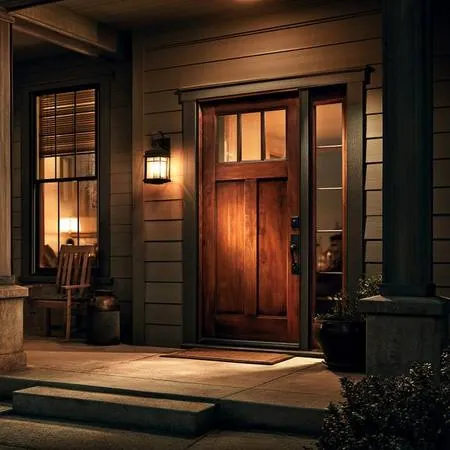
Barbara was a woman living alone. Her lights were on when nobody else's were. People were coming to her driveway at all hours. By day two she had started thinking carefully about things she had not thought carefully enough about before.
She set rules for herself and did not bend them. Her front door stayed locked. Nobody came inside unless she specifically invited them, and she only invited people she had known for at least a year. The porch outlet, the wifi password on the index card taped to the porch post, the water jug — all of it was designed so people could get what they needed without ever knocking. Access without entry. Generosity without vulnerability.
The cheap stuff — extension cords, folding chairs, the popcorn popper — if someone had walked off with it in the night it would have stung but not hurt her in any serious way. The generator was bolted to a concrete pad. The propane tank was buried in the ground with just the valve dome near the surface under a flush metal cover — nothing to catch wind, nothing to break off. The Starlink dish was on the roof. The medications were in a locked freezer. The things that mattered were not going anywhere.
What she hadn't fully planned for happened on day three. Carl came to the front door — unusual. He said he had been thinking about something. He and Marco — the construction worker two houses up who Barbara had noticed always came outside first after any kind of weather — and a man named Darnell from the corner house had talked it over. They were going to take turns keeping an eye on things in the evenings. Nothing obvious. Just present. Carl's truck would be in the driveway. Darnell had a folding chair. Marco was usually there until ten or eleven anyway.
Barbara thanked him. She meant it more than she said.
She had spent two years getting to know her neighbors partly for this reason — not just to know who needed help but to know who could be counted on to give it. Carl and Marco and Darnell hadn't been asked. They had looked at the situation, recognized something that needed doing, and done it. That is what neighbors do when they know each other. That is what they do not do when they are strangers.
Starlink When the Cell Towers Went Down
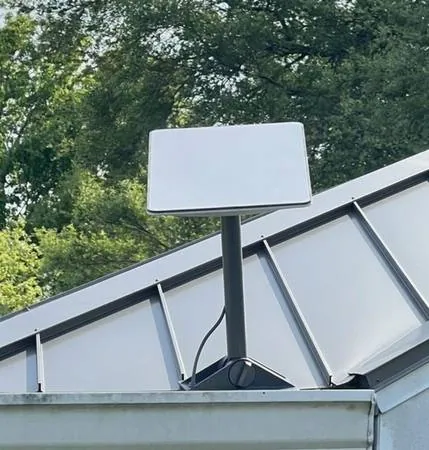
Carl had not been able to reach his son in Atlanta for two days. The nearest cell tower had been knocked out in the storm. His phone showed no signal at all.
Barbara went inside and opened her laptop. The Starlink dish on Standby Mode still maintained a low-level connection to the satellite network — just enough to reach the Starlink website through a browser. She logged into her account, upgraded from Standby to full service, and the connection came up almost immediately. No cell signal needed. The whole thing took under three minutes. The dish had been sitting on her roof for years at ten dollars a month waiting for exactly this moment, and it delivered.
Carl sat at her kitchen table Thursday evening and sent his son a text that said we are fine don't worry. His son had been awake for 48 hours.
After that Barbara wrote the wifi password in black marker on an index card and taped it to the porch post beside the power strips. Neighbors used it from the driveway without needing to come inside. The signal reached the street just fine.
Helen noticed something else. She pulled Barbara aside and asked if she had WiFi calling turned on. Barbara had never heard of it.
Helen explained it the way a nurse explains something to a patient — clearly, without talking down to her. Every modern smartphone has a feature buried in its settings called WiFi Calling. Most people have never turned it on because they never needed to. Here is what it does: normally when you make a phone call your phone connects through a cell tower. No tower, no call.
But WiFi Calling lets your phone route that call through a regular internet connection instead — through your home WiFi, or in this case through Barbara's Starlink signal on the porch. To the person you are calling it sounds exactly like a normal phone call. To your phone it looks exactly like a normal phone call. The only difference is it is traveling over the internet instead of through a tower that may be lying in a field three miles away.
It works for regular calls. It works for 911. It works for texts. It costs nothing — it is already built into the phone, just waiting to be switched on. And it takes about thirty seconds to enable once you know where to find it. On most iPhones you go to Settings, then Phone, then WiFi Calling and flip the switch. On most Android phones you go to Settings, then Connections, then WiFi Calling. That is it. Nothing to download. Nothing to pay for.
Helen mentioned it to a few people sitting in the driveway Thursday afternoon. Word traveled the way word travels when people are sitting together with nowhere else to be. By Friday evening six people on the driveway had gone into their phone settings and turned it on, with Helen or Barbara walking them through it step by step. A couple of them had to borrow reading glasses to see the screen. Nobody minded.
What that meant practically was something the people on other streets did not have. If anything had gone wrong on Barbara's block — a medical emergency, someone becoming threatening, anything that required calling for help — every person sitting in those lawn chairs under that canopy could dial 911 over the internet connection — though a call placed over Wi-Fi may not automatically share your location with dispatchers, so you always state your address out loud.
Cell towers were down across the region. Barbara's street had a working phone system anyway. Carl said later that when he understood what that meant he felt something he had not expected to feel during a power outage. He felt genuinely safe. Not safer. Safe.
The Canopy — Something She Didn't Do
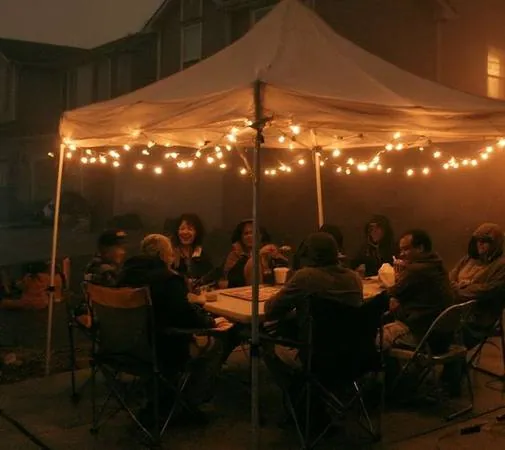
By day four people were bringing their own lawn chairs. By day five Marco showed up with a pop-up canopy tent still in its wheeled bag — bought the previous summer for a beach trip, sitting in his garage since. He set it up over the driveway in fifteen minutes. It was white and clean and when it went up several people stopped and looked at each other with the expression that appears when something unexpectedly good happens in the middle of something hard.
Now there was shade. The water jug moved under the canopy. The chairs moved under the canopy. People who had been waiting for the evening to sit outside could sit outside at two in the afternoon without the Florida sun driving them back indoors.
Barbara had not put up that canopy. She had not asked anyone to bring it. Marco had figured out it was needed and he had one and it was the right thing to do. That was when she understood that what was happening on her street was no longer just about her preparation. It had become something the street was doing together.
By day eight there was a nightly gathering under the canopy that started around seven when the heat broke and went until ten or eleven. Children ran between houses. Someone brought a guitar on day seven. The charging circle on the porch had grown into something closer to what people used to call a neighborhood — people sitting together in the evening with nowhere particular to be.
The Popsicles — and the Problem She Hadn't Anticipated

On Friday a problem appeared that Barbara had not fully planned for. Children.
There were eleven children under the age of ten on her block alone. The heat was brutal. Parents were frightened and exhausted and running short on ways to keep small kids calm. One mother arrived Friday afternoon near tears with a four-year-old who had been crying for two hours.
Barbara got out her silicone ice trays. She mixed grape Kool-Aid from the bulk powder she had ordered on Amazon months earlier. She poured it into the trays, pressed a toothpick into each cube, and put them in the freezer. Two hours later she walked out to the driveway with a plate of small purple popsicles and called out to whoever was nearby.
She made a deliberate decision not to serve the Kool-Aid as a drink. She didn't know how long the outage would last and didn't want to burn through her supply. Popsicles stretched it much further. As it turned out she needed to keep making them for five of the nine days and never came close to running out — somewhere between 150 and 200 total.
The children started appearing at the driveway in the late afternoons the way children appear at ice cream trucks. Parents came with them. When children calm down, adults calm down too. That is something you can read in a parenting book or you can learn it in a Florida driveway on day five of a blackout.
In the evenings she set up the 35-inch television she had bought at a garage sale for twenty dollars on the front porch and connected it to the Starlink wifi. For two hours each evening the children sat on the grass watching television while the adults gathered under the canopy. She ran the hot air popcorn popper and set the bowl on the porch steps where the kids could reach it. It also meant parents got two hours each evening to sit under the canopy and talk to other adults without managing a restless child. That was not an accident.
The popsicles also quietly solved a problem Barbara had been watching develop. One neighbor — a man she had kept at a careful distance from the beginning — had become increasingly agitated by day three. He had been drinking. His voice was getting loud in ways that made others uncomfortable. On Friday afternoon he walked up to the driveway. She handed him a popsicle. She asked about his dog. He sat down in a lawn chair and stayed quiet for two hours. Children running around have a way of settling situations that no adult conversation could have managed. She had learned that in 31 years of running a school library.
What It All Cost

The generator and buried propane tank were financed over four years at a monthly payment she covered by canceling cable and switching to Netflix — which she should have done two years earlier anyway. The Starlink dish and Standby Mode cost a one-time hardware fee and ten dollars a month while it waited. Everything else — the Amazon supplies, the Dollar Tree run, years of garage sales and Facebook Marketplace finds — came to roughly $145 total, spread across three years so it never felt like a budget hit.
The generator was the only piece that required real financial planning. Everything else was within reach of almost any fixed income budget, if you're willing to look for it over time rather than all at once.
Barbara's Complete Cost Breakdown
Day Nine
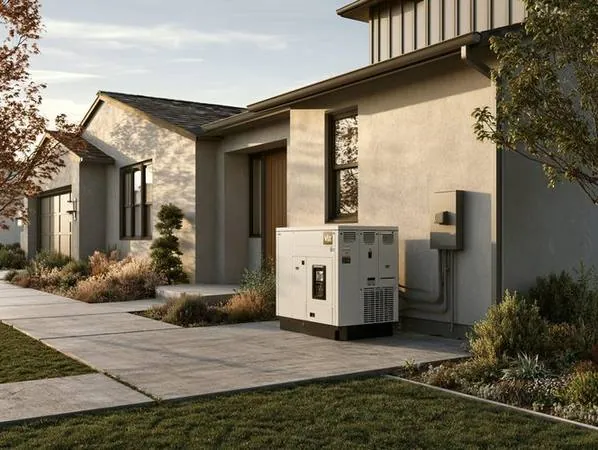
The utility crew restored power on day nine. Barbara's generator had run without a single interruption. Her 500-gallon propane tank still had fuel to spare. Her freezer had never warmed above 38 degrees. Every medication on the dedicated shelf was still viable.
Dorothy's insulin was fine. Carl's son had stopped losing sleep after Thursday evening. Russell next door was alive and well and had quietly arranged to have a window AC unit installed before the following summer. His daughter in Tampa had mailed Barbara a card. She kept it on her refrigerator.
When the power came back several people stood in the street and looked at each other and something had shifted that was hard to put into words. They were no longer strangers. They knew each other's names and situations and struggles in the way that only comes from having sat together in the dark and shared something difficult and come out the other side.
Not all of it had been easy. One neighbor had taken an extension cord and not returned it. Another had spread a rumor during the outage that Barbara was charging people for the electricity, which was not true and which stung more than she expected. A few people had never said thank you. That was real too — the quiet, slightly deflating version of doing something generous and discovering that generosity is not always received the way you imagine it will be.
But most of it had been something else entirely. Children asking their parents for weeks when they were going back to Miss Barbara's driveway. Helen stopping by on a Thursday two months later just to sit on the porch and drink coffee. Carl keeping an eye on Russell's house all winter without being asked.
Barbara was 69 years old when that storm hit. She had bought her generator at 66 on a fixed income because she had done the math and decided the monthly payment was worth every cent. The rest of it — the ice trays, the Ziploc bags, the porch outlet, the Saturday morning garage sales — none of it had required sacrifice. It had just required thinking ahead, taking the threat seriously, and acting before the storm arrived rather than after.
"The best time to get ready is when you don't need it yet. When you need it, it's already too late to start."
That Is Why This Guide Exists
BuyItAt50.com was built for people in their 50s and 60s — not their 70s and 80s. The window to prepare is now, while you have the income, the mobility, the time, and the energy to make decisions that will protect you for the next 20 to 30 years.
Barbara didn't become her neighborhood's hub by accident. She did it deliberately, one quiet decision at a time, over several years. Some decisions cost real money and required real planning. Most cost almost nothing. All of them required the same thing — the willingness to think ahead and act before the storm arrived.
You are reading this page right now. That means your window is still open.
Barbara is a composite character. The events behind her are not invented. This account is drawn substantially from the lived experience of the author — a Florida resident since 1984 who has been through roughly forty hurricane seasons on the Nature Coast — along with the experiences of his brother and sister-in-law, other family members, close friends, and neighbors.
The CPAP nights in the dark, the fuel runs for a portable generator, the weeks without service that led to a Starlink purchase, the three weeks of research before calling a dealer, the eight-to-ten-thousand-dollar quote, the salesman who pushed a bigger unit: each is something that happened to a real person known to the author. Names, locations, and timelines have been changed and combined into one character so that no individual is identified.
Supporting figures — outage duration, cell tower failure rates, medication storage temperature guidelines, generator performance data, satellite internet restoration timelines, and heat mortality risk factors — are drawn from FEMA after-action reports, CDC emergency preparedness and heat mortality guidelines, EIA electric disturbance event records, and SpaceX Starlink disaster response documentation, covering Gulf Coast hurricane and major power outage events 2018–2023. Nothing in this story constitutes medical, legal, safety, or emergency management advice. All preparedness decisions should be made in consultation with qualified professionals and your local emergency management agency. Personal safety decisions during a disaster are the sole responsibility of the individual. © 2026 Franklyns Bay LLC.
💡 Why Power Goes Out — 15 Documented Reasons