Free Tool — No Sign-Up Required
The Breaker Panel Is Your Friend
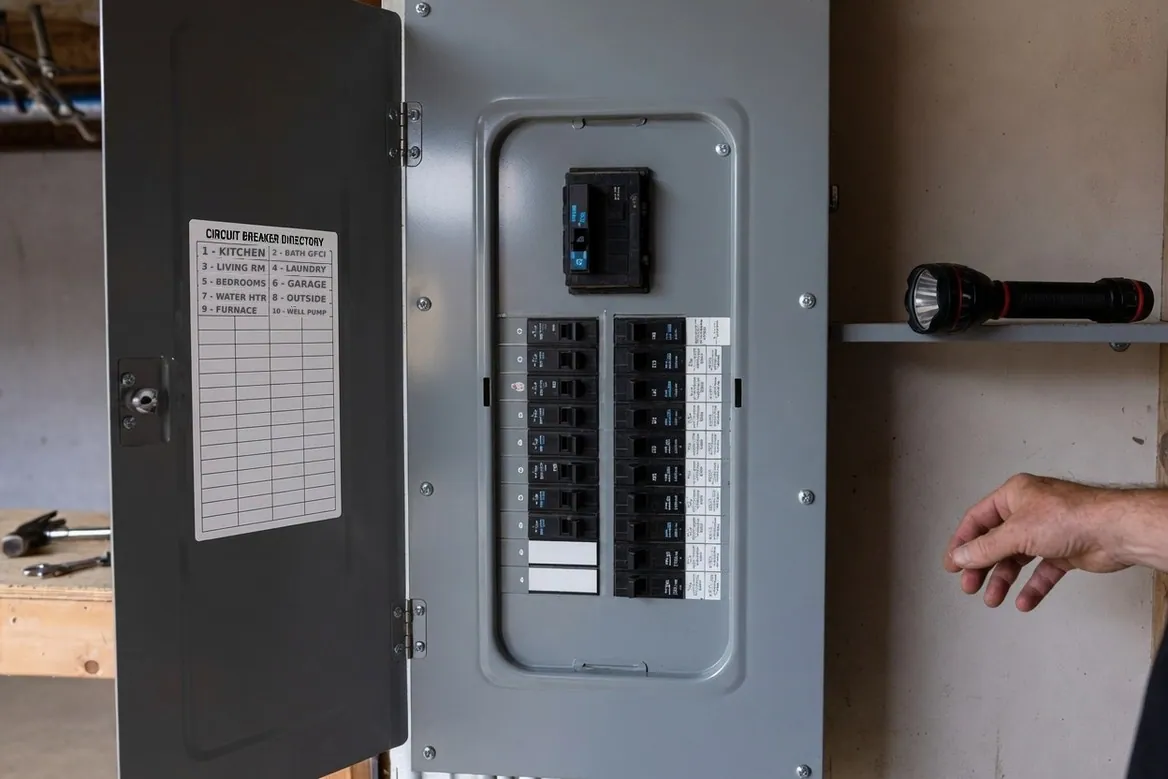
The gray door is the control center of the house — map it once, on the panel face only, and steer every outage from one spot.
Free Tool — No Sign-Up Required
The gray door is the control center of the house — map it once, on the panel face only, and steer every outage from one spot.
Every lesson in this series ends the same way: switch that off. The water heater before the generator starts. The heavy loads before utility power comes back. The circuits you are not using tonight. All of those instructions point at the same gray door in the garage or the hallway — and if you have never made friends with what is behind it, the instructions are useless. So this page is about that door. The breaker panel is the control center of your house, and learning it costs one afternoon and zero dollars.
Everything on this page happens on the face of the panel — the door, the switches, the label card. Flipping a breaker is as ordinary as flipping a light switch; that is what breakers are for. The inside of the panel — anything that requires a screwdriver, anything behind the metal cover the switches poke through — belongs to an electrician, full stop, and nothing in outage planning ever requires going there.
And if anything about your panel argues with you — a breaker that feels hot, buzzes, smells scorched, or will not snap firmly back on — stop planning and call an electrician now, on a sunny day, at regular rates. A panel with a problem is a before-the-storm repair, not a during-the-storm discovery.
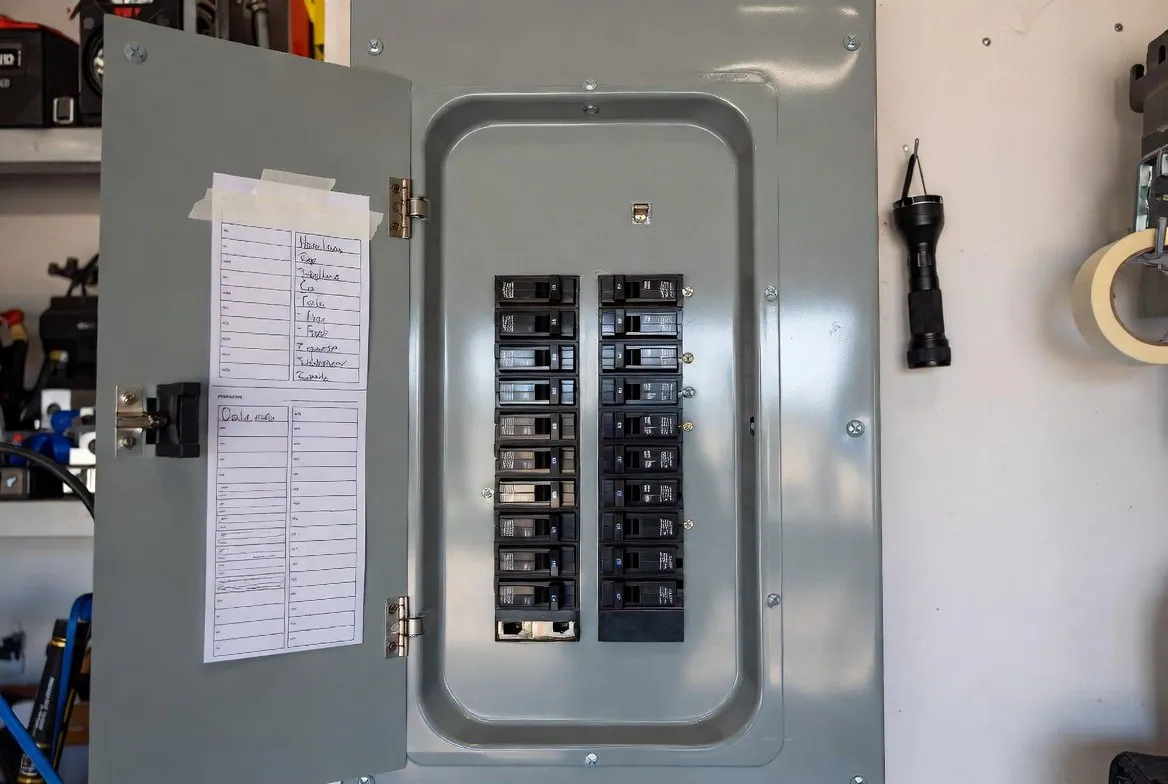
Most panel cards are a work of fiction — faded pencil, a previous owner’s handwriting, half the slots blank. Fix it once and the card owns the knowledge for the life of the house — which matters, because your head will not. Anything you learn and then do not use fades in a few months; that is not age, that is how memory works for everyone, and age just raises the price of it. The whole point of this page is to store what you figure out on the panel itself, so nothing depends on remembering. Do it before there is a problem — on a calm Saturday with the coffee on, not by flashlight with the wind up — because the mapping afternoon is also your one chance to catch the mistakes: the switch labeled BEDROOM that actually kills the kitchen, the guesses a previous owner penciled in thirty years ago. Storm night is the worst possible time to discover the card has been lying to you. The method takes two people and a phone:
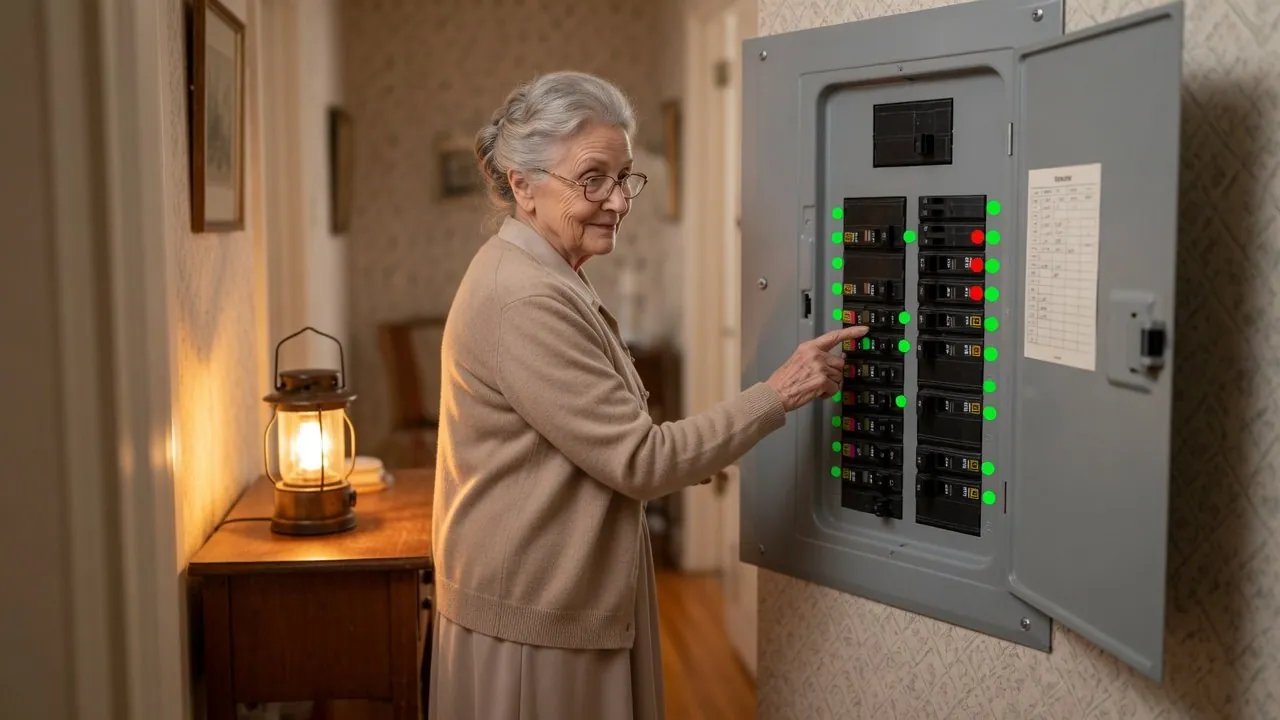
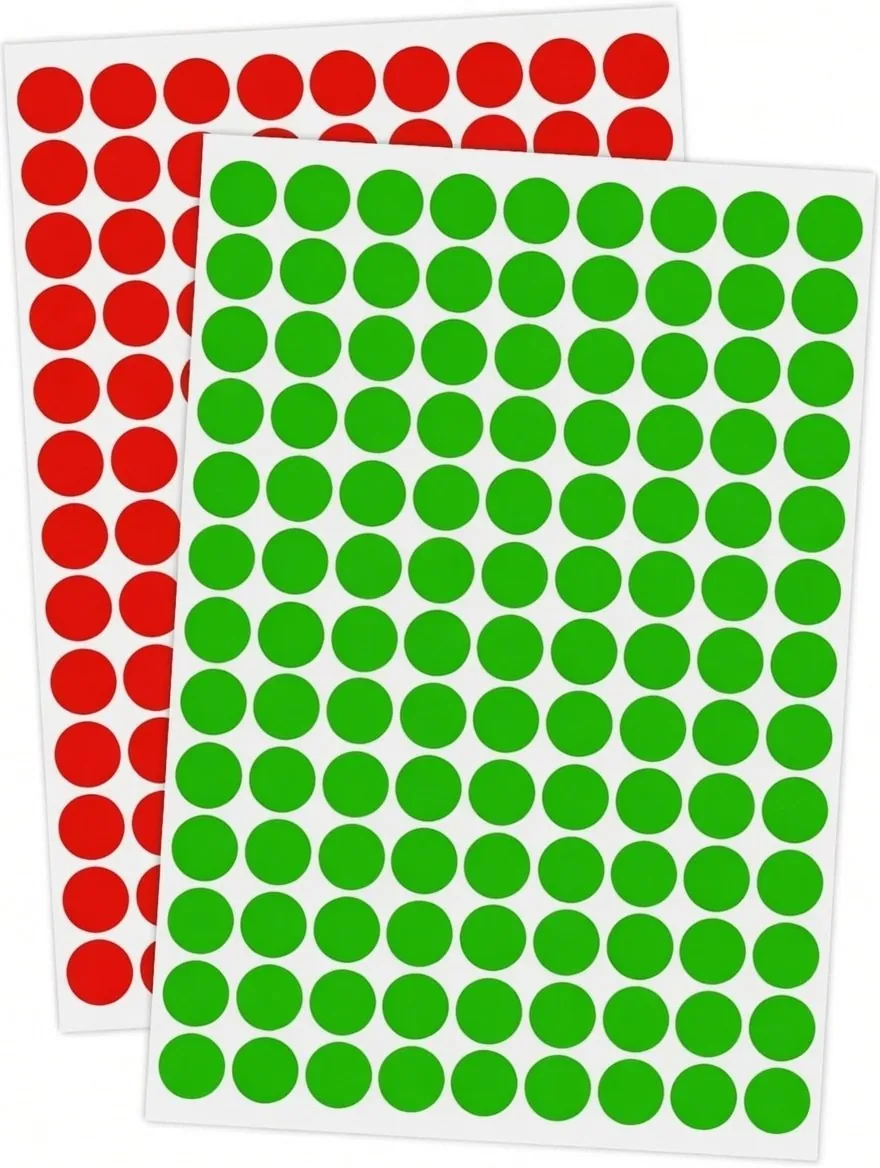
Somewhere out there is a panel I have never been able to forget. It belonged to a woman who was ninety if she was a day, living alone in a little house, and she had solved everything this page teaches with two sheets of stickers from the office-supply aisle — the little round dots that cost a couple of dollars. Green and red.
Her system had exactly two rules:
That is the whole invention. And here is why it is smarter than it looks.
Think about the night she built it for. The power is out. The house is dark. The generator is running in the yard, and she is standing at the panel with a flashlight — alone, at ninety. That is not the moment to read thirty tiny labels and reason through which circuits her generator can carry. That is the moment stress eats your thinking, and it does not matter how sharp you are or how many times you have done it. All of us have that problem. Stress does not check your age; it just makes everything harder.
So she did the thinking once, on a calm afternoon, with all the time in the world — and then she stored the answers on the panel door where thinking is no longer required. On the bad night, her whole job is: look for red, flip it off, done. No reading. No remembering. No wondering if she got it right, because the woman who decided was calmer and had better light than the woman who is flipping. The dots let the Tuesday version of her take care of the storm version of her.
That is what “simpler” really means as we get older — and honestly at any age. It does not mean doing less. It means moving the hard thinking to an easy day, and leaving only the easy part for the hard day.
And this is not just a nice story — it is settled science. Researchers who study memory and aging call her dots an external memory aid: knowledge stored out in the world, on the thing itself, instead of inside your head. Study after study finds these aids are among the most effective memory supports there are for older adults, and the effect shows up strongest exactly where she used it — in real daily life, not on tests. And here is the finding that would not surprise her one bit: older adults who use them report more than fewer mistakes. They report less worry, more independence, and a stronger feeling of being safe in their own home. The dots did not just run her panel. They let her stop carrying it around in her mind.
One more honest reason she was right to build it: even if you learn your panel perfectly this Saturday, a real outage may not come for six months — and six months of not using knowledge is how knowledge quietly leaves. The dots do not fade. They will be exactly as sure of themselves in March as the afternoon she stuck them on.
To build it in your own little house, the recipe is short: finish the mapping afternoon above. Then, on the same calm day, put a green dot beside everything that stays on. Add a red dot beside each switch that must go off when the generator runs — your double-wides and anything else your generator cannot carry. Then do one practice run while the power is still on: walk to the panel, flip the reds off, flip them back. Two minutes. Now the storm version of you has nothing left to figure out — and neither does a neighbor, a grandchild, or anyone else who ever has to stand at that panel in your place. The dots do not just remember for you. They remember for whoever comes to help.
Here is what the map buys you. A generator is a small engine sharing a finite budget of watts, and the panel is where you decide how that budget gets spent — not by unplugging lamps all over the house, but from one spot, in ten seconds, in any order you choose.
Rules are good; a numbered list is better, because on the bad night nobody wants to think about order. Print this, or copy it in big handwriting, and tape it inside the panel door next to your directory card:
One afternoon with a helper and a roll of tape, and the gray door stops being the thing you open once a year when a breaker trips. It becomes what it always was: the control center — and the cheapest piece of backup-power equipment you will ever own, because you already own it. For the hand tools and the habits that go with this kind of knowledge, the Grandfather Toolkit and the Fix It Yourself guide pick up where this page stops.
Before we finish, you should know that everything this page teaches now comes in a box you can buy. To understand what that box does — and what it costs — start with what an ordinary breaker really is.
Every switch in your panel is a little mechanical guard standing at the gate of one circuit. It has exactly one trick: if too much electricity tries to rush through — more than the wire behind the wall can safely carry — the guard slams the gate. That is a trip. No batteries, no internet, no thinking; a spring and a sensor, about ten dollars, and it has kept houses from burning down for a hundred years. It does not know what is plugged in, does not count anything, and cannot be reached from your phone. It guards. That is the whole job.
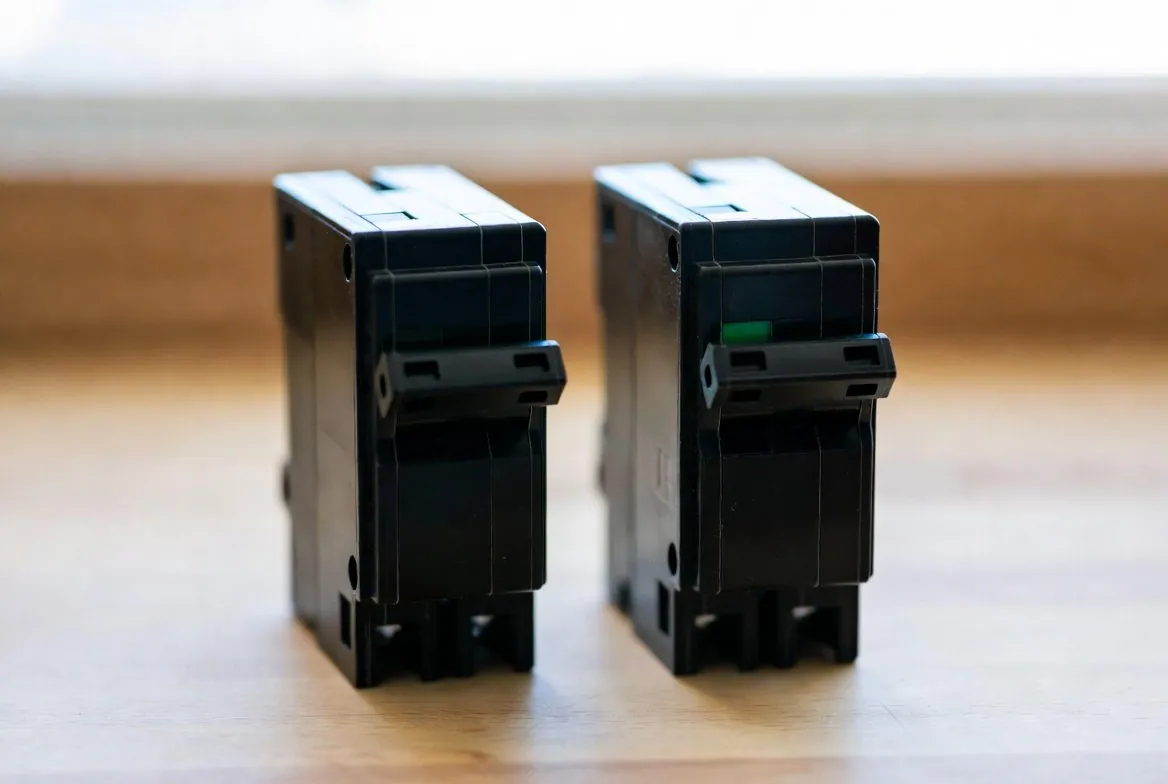
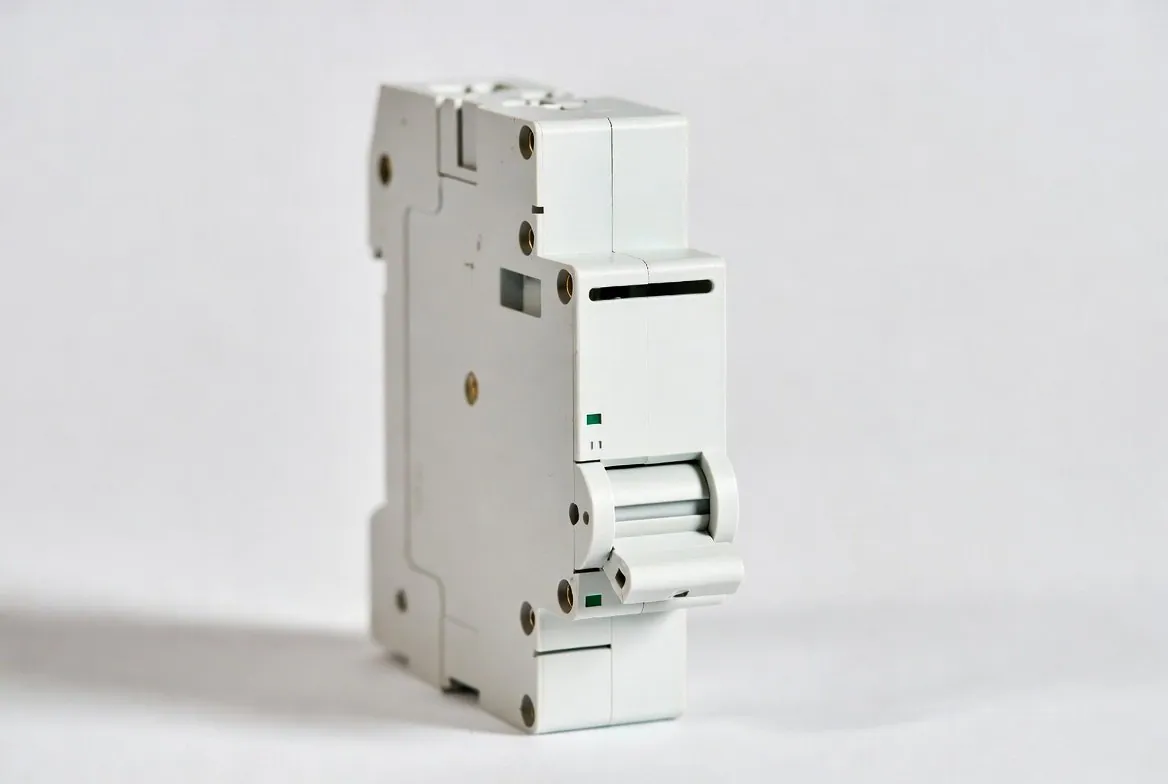
A smart breaker keeps that guard exactly as it was — the slam-the-gate trick still works the old mechanical way, whether or not the internet is up. Then it hands the guard three things:
A smart panel is simply a breaker box full of these, with a small computer playing traffic cop — and on some models the brains live in the panel itself rather than in each breaker.
Two more tricks worth knowing about. First, a smart breaker can report on its own health — it watches itself age, and tells your phone when its condition is slipping or it is nearing the end of its reliable working life. Remember the rule at the top of this page: a breaker that is hot, buzzing, or tired means call an electrician. A smart one raises its own hand before you would ever notice. Second, many smart panels build surge protection into the box itself — a shield for the whole house against voltage spikes, including the moment this page already taught you to respect: the instant the grid comes back on.
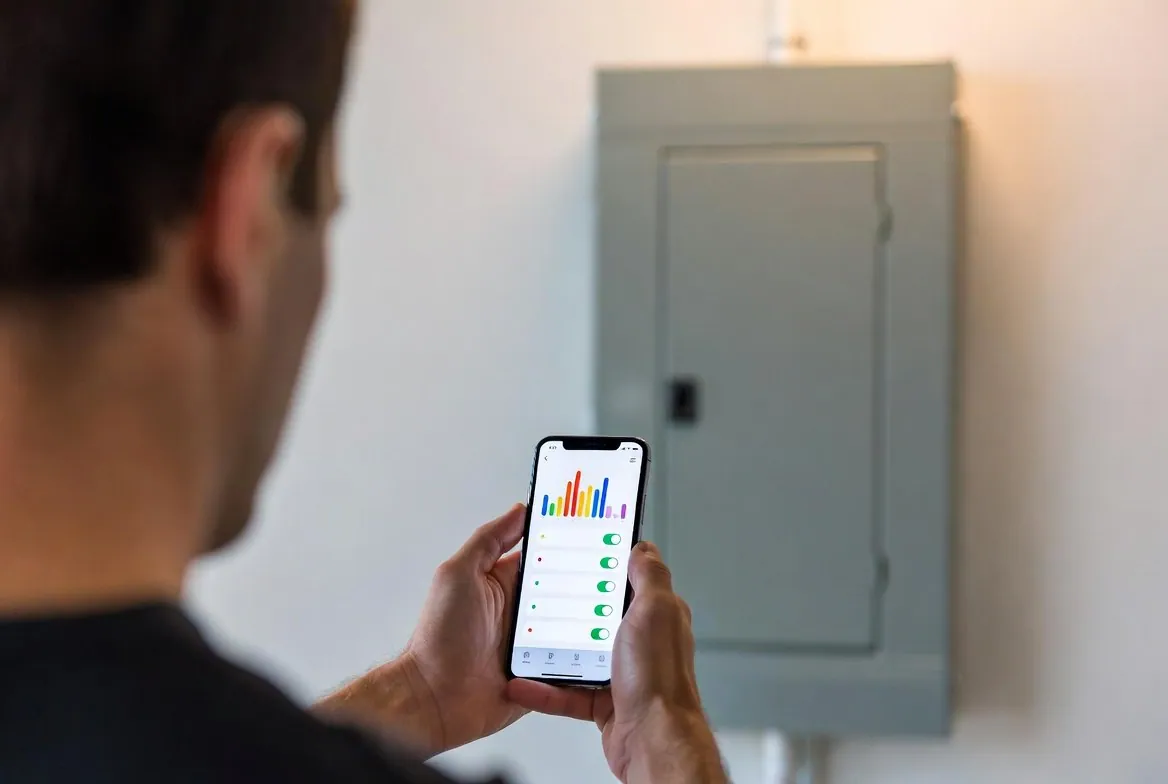
The headline feature on these systems is this: you mark certain circuits as essential — the refrigerator, the medical equipment, the well pump. When the power fails and a generator takes over through the transfer switch, the panel switches every nonessential circuit off by itself, so the generator carries only what matters, and the fuel lasts longer. When you can spare the watts, you tap the phone and a circuit comes back.
Read that again slowly, because you have seen it before. It is this page. The mapping, the shedding of the double-wides, the bringing circuits back one at a time, the deciding what stays on when the budget is small — a smart panel is that exact judgment, performed automatically, by the box. The industry looked at the skill you just learned and decided it was valuable enough to build robots for.
A smart breaker costs several times what a plain one does, and a full smart panel, installed, runs well into the thousands — and installation means working inside the panel, which makes it an electrician’s job by definition, same as everything else behind that cover. For a household adding solar and a battery, or one where medical equipment must stay powered even when nobody is awake to manage the load, that money can be honestly well spent — the automation never sleeps, never forgets, and never has to walk to the garage in the dark.
And there is one more situation where the math changes completely: when your old panel is due for replacement anyway. Panels age like everything else — some fail inspections, some are simply too small for how a house has grown, and an electrician will occasionally tell you the whole box needs replacing regardless of what you want. Nobody should swap a healthy panel just to get a smart one. But if the replacement is already being paid for, that is the one moment the smart version costs only the difference — and buying at the right moment instead of the wrong one is the oldest money-saving trick in this site’s toolbox.
But understand exactly what the money buys: the decisions this page taught you to make with your thumb. And that is worth knowing for its own sake — because when an industry charges thousands of dollars to automate a skill, it has quietly told you what the skill is worth. The manual version is an afternoon, a helper, a roll of tape, and a photograph. It came free with your house.
The short version of this page, one question at a time — the answer is always the first line.
To map a breaker panel, one person flips each breaker off in turn while a second walks the house and reports what went dead. Check the outlets too, not just the ceiling lights, write it down for a stranger at midnight, and photograph the finished card.
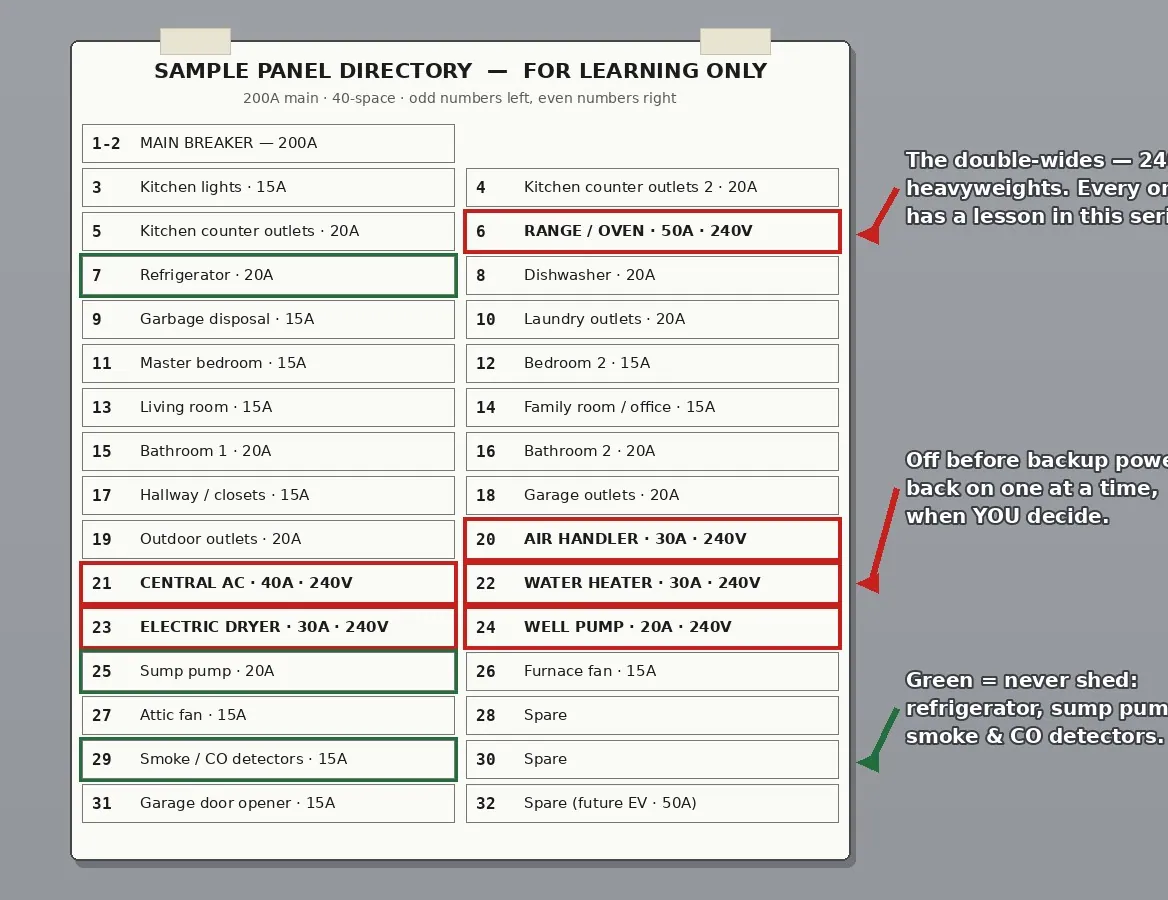
Before backup power comes on, switch off the double-wide 240-volt breakers: the water heater, range, dryer, and the air conditioner unless your generator was sized for it. Then bring circuits back one at a time, refrigerator first.
Breakers that take two slots are the 240-volt heavyweights, such as the water heater, range, central air conditioner, dryer, and on many rural homes the well pump. They are the loads you steer in an outage.
If a breaker feels hot, buzzes, smells scorched, or will not snap firmly back on, call an electrician now, on a sunny day, at regular rates. Anything behind the metal cover of the panel belongs to an electrician.
A smart breaker keeps the ordinary breaker's trip but adds a meter, a Wi-Fi radio to your phone, and the ability to open and close its own circuit. A full smart panel, installed, runs well into the thousands and is an electrician's job.
In the dot system, a green dot marks a breaker that stays on all the time and a red dot marks one to flip off whenever the generator runs. The dots cost a couple of dollars and hold the thinking done on a calm afternoon.
What This One Buys You
Reading the panel instead of fearing it.
Being able to find and flip the right breaker turns a dead outlet into a two-minute fix, and knowing where the panel's limits are keeps you out of the part that belongs to an electrician.