The whole list, first
What hand tools does every homeowner need?
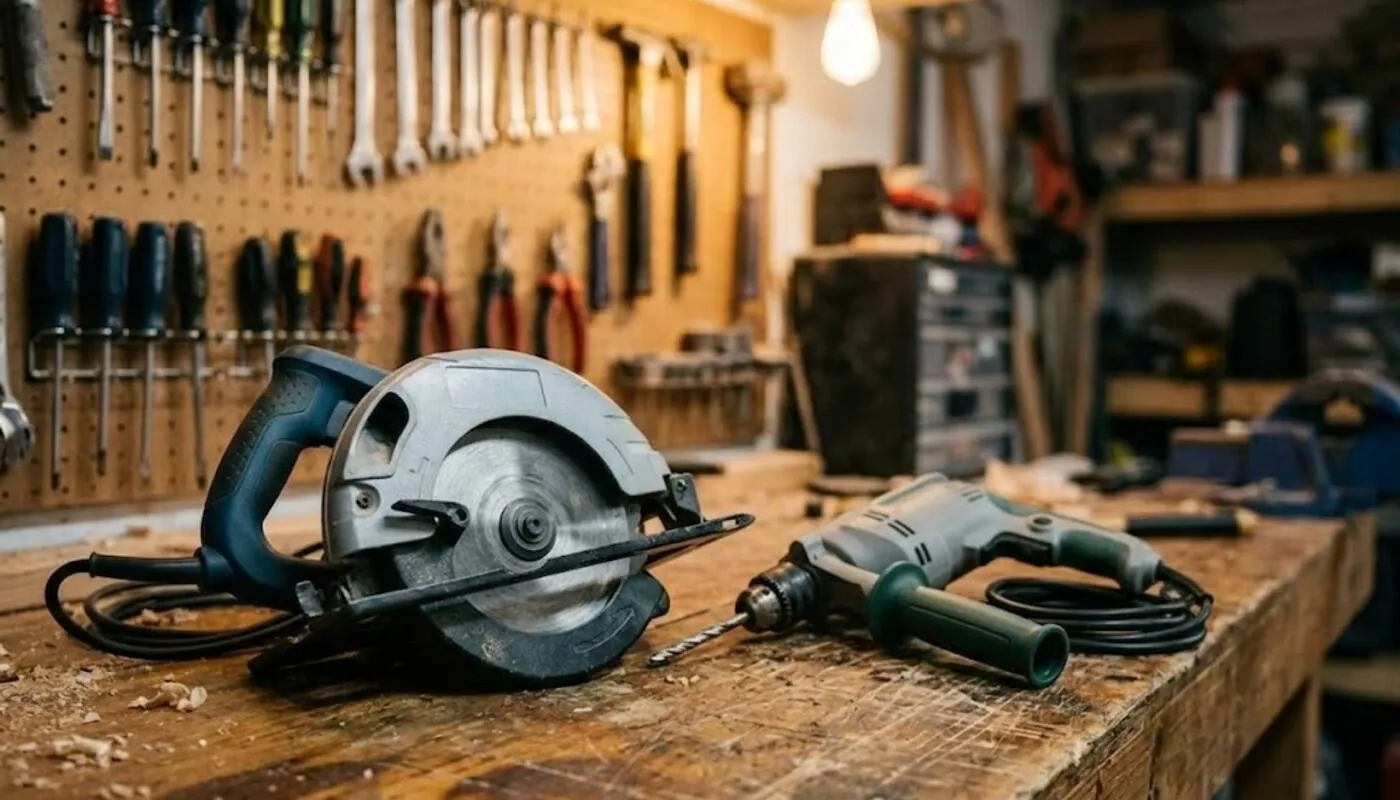
Five to begin with, and the rest as the money allows. Buy each one once, from a name that stands behind it. Used is fine, so long as the name is right.
Buy these five first
- Locking pliers (Vise-Grips) — the third hand
- A combination wrench set, SAE and metric
- A corded drill/driver
- A 16-ounce one-piece steel claw hammer
- A 3/8-inch-drive socket set with a breaker bar
Then the rest of the kit
| Gripping and holding | Driving and fastening | Striking | Before any of it |
|---|---|---|---|
| Tongue-and-groove pliers (6, 9 and 12 inch), needle-nose pliers, wire cutters, spring clamps, C-clamps | Ratchet screwdriver, precision screwdriver set, full set of Phillips and flat screwdrivers | Ball peen hammer, rubber mallet | Safety glasses rated ANSI Z87.1, and a 25-foot tape measure |
Everything below this box is why: who is telling you, what a cheap tool costs, and which names are worth paying for.

👁️ Eye Protection — Non-Negotiable. Before anything else on this list. Safety goggles or glasses for every power tool, every grinding job, every sawing job. At 70 your eyes do not heal the way they did at 30. A chip of metal or wood at the wrong angle ends your ability to do any of this work permanently. Buy 3 pairs — one for the garage, one for the shop area, one spare. ANSI Z87.1 rated. See the 3M GoggleGear 500 →
The rule: If it requires a battery, it will eventually fail you when you need it most — and the replacement batteries may not exist in 10 years. A corded drill bought today will still work in 30 years. A 20-volt cordless bought today will be a paperweight when its battery platform gets discontinued.
The exception: Hand tools that amplify your strength rather than replace it. A ratchet screwdriver. A long breaker bar. Vise-Grips. These are force multipliers — they make reduced hand strength at 70 irrelevant. The same idea scales up to things far heavier than a bolt: a refrigerator or a chest freezer can be moved across a room by one person who never lifts any of it.
Buy quality once. Store it dry. It will outlive you.
This page covers 39 tools. You don’t need all of them today. If you’re starting from scratch or working with a limited budget, these five handle 80% of everything a homeowner encounters — and they do it in a way that doesn’t require hand strength you may not have at 70.
All five are available used at garage sales and estate sales. All five carry lifetime guarantees. Buy these first, then work through the rest of the list as budget allows.

✓ Not a Garage Sale Person? Buy New — But Buy Right.
Some people won’t buy used tools. That is a completely reasonable position. New tools are fine. What is not fine is buying cheap new tools. The big box stores are full of house-brand sets in bright packaging with impressive-sounding names and meaningless spec sheets. The marketing is designed to make you feel like you’re getting professional quality at a bargain price. You are not.
If you are buying new, these are the brands that are actually worth the money:
Estwing — Hammers and pry bars. Buy direct or at any hardware store. Made in Belleville, Illinois. No substitute exists.
Channellock — Pliers. Made in Meadville, Pennsylvania. The name on the tool is the only one that matters for tongue-and-groove pliers.
Klein Tools — Needle-nose pliers, wire cutters, screwdrivers. Made in the USA since 1857. The electrician’s standard for 165 years.
Irwin Vise-Grip — Locking pliers. The original. Do not buy any other brand of locking pliers.
Craftsman — Wrenches, sockets, screwdrivers. Lifetime guarantee at Ace Hardware or Lowe’s. Available everywhere.
Swanson — Speed squares. Made in Frankfort, Illinois since 1925. They invented this tool. Accept no substitute.
Dewalt / Makita / Porter-Cable — Corded power tools. Any of the three. Buy corded only — see the rule above.
Wagner — Heat guns. The HT1000 and HT3500 are the homeowner standards. Reliable, repairable, widely available.
GearWrench / SK Tools — Socket sets and wrenches if Craftsman is not available. Both carry lifetime guarantees. Both made to professional standards.
The one rule for buying new: If a tool is on sale, ask yourself why. Quality hand tools do not go on sale because demand exceeds supply and the manufacturer has no reason to discount them. A Channellock wrench set at 40% off is not a deal — it is a signal. Buy at full price from the right brand, or buy used from the right brand. Those are the only two options that end well.
If you buy right, your grandchildren will still be using the tools you bought today.
Who Is Telling You This
I learned basic carpentry as a boy, helping my grandfather build his house one board at a time. As a teenager I worked as a carpenter’s apprentice alongside men who built homes for a living. My uncle was a drywall contractor and taught me to hang board. One of my stepfathers was a painter and taught me to paint. At seventeen I took a summer job and learned to build kitchen cabinets, then vanities, then furniture. Later, in Maryland, I repaired antiques to bring in cash.
I still have the chisels. I still have the planes, the sharpening stones, the plumb bobs, the tack hammers, and a framing hammer I have carried for decades. I made my daughter’s cradle out of black walnut before she was born, and a hope chest for a girl I knew when I was a teenager. I can still make anything out of wood.
Everything on this page comes out of that, not out of a catalogue.
And before any of it, boats. After the Navy I was hired on as a veteran to work the docks at Coronado on the Navy’s wooden and fiberglass small craft, where the work was mostly hull cracks and where the standard was set by a blueprint rather than by taste. What a hull teaches that furniture never will →
A Cheap Tool Makes You Think You Are the Problem
Quality tools is where you realize that you have been working too hard and fighting with your tools — because they do not work the way you expected them to. Quality tools do not do that to you. Once you learn how to use them it comes to you naturally. They feel good in your hand. They feel natural in your hands.
Read that again, because there is something underneath it. A cheap tool does not merely work worse. It convinces you that you lack the skill. A man buys a twenty-dollar set of chisels at fifty-eight, they will not hold an edge, the joint comes out ragged, and he concludes he is not a woodworker and puts them in a drawer. He was never the problem. Nobody selling the cheap set is going to tell him that.
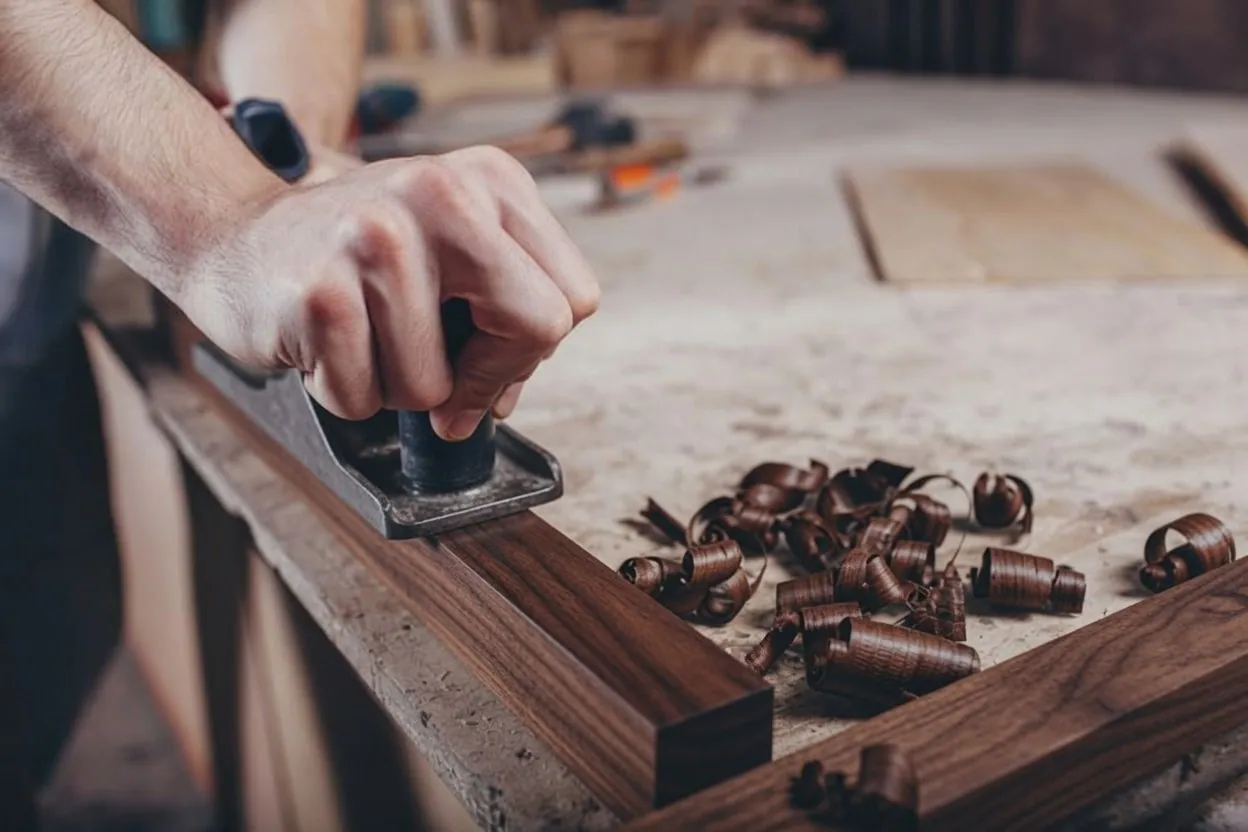
The first time I got fooled buying a tool was a bullnose plane. Thirty dollars, and thirty dollars was a lot of money to me then. A good one at the time was closer to a hundred. That plane is highly engineered for a reason: it has to reach right up to and touch the inside corner of a box, so there are no raggedy little edges left behind — which means the blade runs the full width of the body and the sides have to be dead square to the sole. The cheap one could not do it. It took me two years, but I finally got myself a couple of decent planes, and I have them yet.
Buy quality, and buy for the hand you will have in twenty years. Those are two different tests, and most people only run the first one. A superbly made plane can still leave your palm aching after four hours, because it was shaped for a working tradesman’s hand doing production work — not for yours at seventy, on a Saturday. Which tools do what to your hands →
Sizes rather than names: the tool sizes checklist sets out which wrenches, sockets, screwdrivers and pliers to own, in both measuring systems, with no brand in it anywhere.
If You Are Building a Woodworking Kit, Buy in This Order
Bench planes first, and only three. A No. 4 or 4½ smoother, a No. 5 or 5½ jack, and a No. 7 jointer — a No. 6 or No. 8 will serve in place of the 7. Those three will do nearly everything you will ever ask a plane to do.
Chisels second. A core set of bevel-edge bench chisels — ¼″, ⅜″, ½″, ¾″ and 1″. Add mortise chisels in ¼″, ⅜″ and ½″ when you start cutting mortises, and paring chisels when you start fitting joints properly.
Specialty planes last. A bullnose, or a three-in-one shoulder plane, is the tool for jobs where a full shoulder plane is too long and a bench plane cannot reach — cleaning inside corners of rebates, trimming tenon shoulders tightly, refining stopped joints. They are wonderful tools. They are also the ones a beginner buys first and then wonders why nothing improved.
A note on the good old ones. The bullnose planes worth having are frequently out of production and have been for years, which means the honest advice is the secondhand market rather than a link to a shop. That is not a problem. It is how the best tools in most chests were bought in the first place.
And here is the argument for buying quality, told as a fact rather than a claim: the chisels, the hand planes, the sharpening stones, the plumb bobs, the tack hammers and the framing hammer are all still here after a working lifetime. The table saws, the planers, the shapers and the sanders are all long gone — some worn out, but most of them sold.
Because hand tools are portable and machines are not. I moved a great deal over the years. Every chisel, plane, stone and square I owned packed into a couple of wooden crates a little bigger than an orange crate, and went with me. You cannot do that with a table saw. So the routine became: sell the big stationary equipment before the move, and buy brand-name used equipment once I got where I was going. I did exactly that moving from San Diego to Frederick, Maryland.
The practical lesson, if you are past fifty and might move once more: your hand tools are the part of the shop you actually keep. They fit in two crates, they hold their value, and they will work in the next house exactly as well as they worked in this one. The stationary machines are closer to furniture — buy them used, use them hard, sell them when you go, and buy used again at the other end. There is a large secondhand market in good machinery for precisely this reason: shops close, people move, and the iron changes hands.
Do Not Cheap Out On Your Tools

Your grandfather didn't buy his tools at a dollar store. He bought them once, took care of them, and they were still in his garage the day he died. That's the standard.
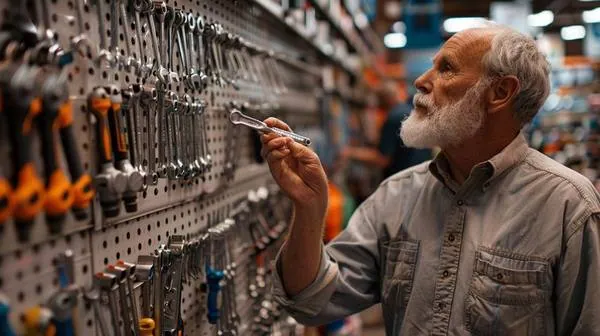 You don't have to buy new. You just have to buy right. Garage sales. Craigslist. Facebook Marketplace. eBay. Estate sales. That's where the real tools are — Craftsman, Snap-on, Proto, Channellock, Irwin, Klein — bought by tradesmen in the 1970s and 1980s, used hard, stored dry, and still better than anything made in the last 20 years at half the price. A $3 Craftsman wrench at a garage sale will outlast a $12 import from a big box store by 30 years.
Go find them. They are out there everywhere.
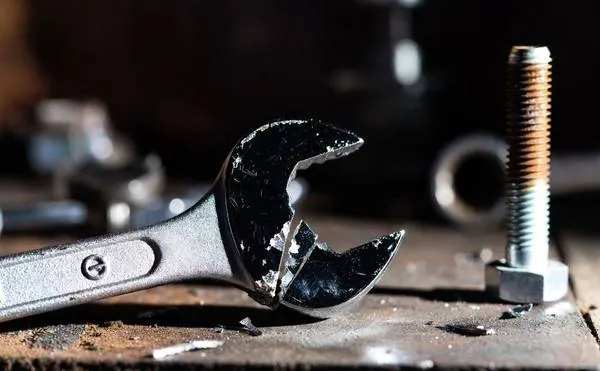
The tool community has a name for it: “Mach 5 knuckles” — when the wrench slips and your hand travels at full force into whatever is next to the bolt. Every experienced mechanic has a story. Every one of them now uses quality tools.

Facebook Marketplace and Craigslist — Search "tool lot," "garage clean out," "estate tools." An entire working man's toolbox for $50 is not unusual. Most people selling don't know what they have.
eBay — For specific tools you're hunting. Search the brand and model. Read the condition notes. Most vintage American hand tools are in fine shape — they were built to last and most of them did.
Estate sales — The best source of all. The tradesman who owned these tools cared about them. They are usually in better shape than new store tools at a fraction of the price.
Pawn shops — Underrated. Tools come in constantly. The staff rarely knows the difference between a Proto wrench and a harbor freight one. You do.
Finish — Chrome vanadium steel has a bright, even finish. Cheap steel looks dull or has a bluish tint.
Markings — Good American tools are stamped with the size and often the steel grade. If it says "Chrome Vanadium" or "CV" it's worth buying.
The fit — Put a wrench on a bolt. A good wrench fits snugly. A cheap wrench has slop — it rocks slightly. That slop is what rounds off bolts and busts knuckles.
The hinge — Open and close a pair of pliers. Good pliers move smoothly with no grinding. Cheap pliers feel rough and can gall over time.
Gripping and Holding Tools
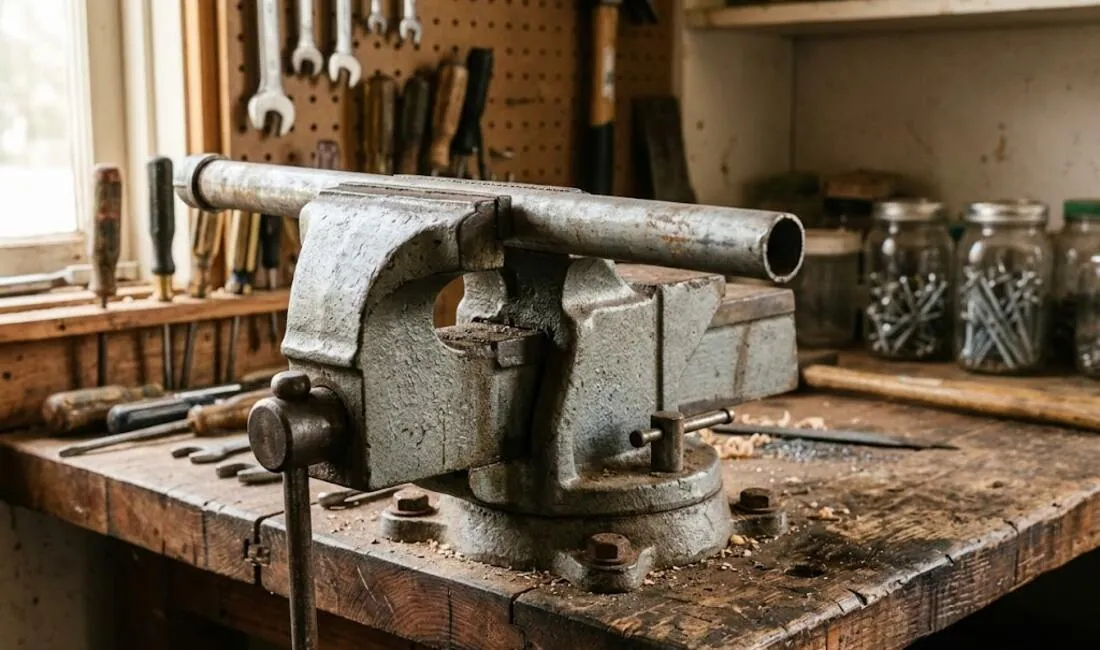
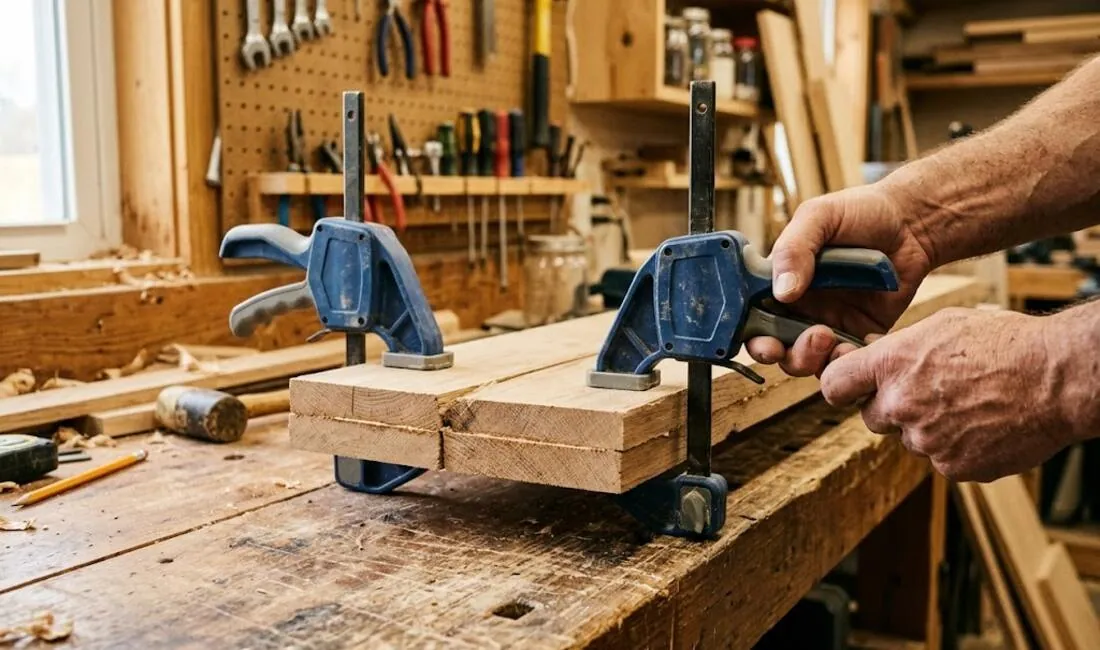
Removing a stripped screw or bolt. When a screwdriver or wrench can’t get purchase because the head is damaged, Vise-Grips bite into the metal directly.
Clamping two pieces together while glue dries. Lock the Vise-Grip and walk away. Come back in an hour.
Turning a rusted pipe, nut, or fitting. When a wrench slides off, Vise-Grips dig in.
Emergency hose clamp. Pinch off a leaking hose temporarily while you get the right repair parts.
Turning a valve that won’t budge by hand. Water shutoffs, gas valves, anything stuck — lock the Vise-Grip and use the handles as a lever.
Grip a broken key or bolt stub. When a key snaps off in a lock, Vise-Grips are often the only tool that can get it out.
Makeshift handle on a pan or pot. Handle break off a cast iron pan? Lock a Vise-Grip to the rim.
Hold a door open or closed. Lock to the door edge and it becomes a stop.
Carry heavy wire or cable. Lock onto the end of a spool and use the handles as a carry grip.
They are not a substitute for the right wrench. Use the correct wrench when you can. Vise-Grips are for when nothing else works.
The adjustment takes practice. Set the jaw opening before locking. After a few uses it becomes automatic.
They are not pliers. Don’t use them for fine wire, delicate parts, or small terminals.
Tightening or loosening large nuts. One tool fits a 1/2” nut and a 2” nut without switching sizes.
Turning stuck jar lids and caps. The long handles multiply your grip force several times over.
Holding round stock while you cut or drill. Round pipe, rod, or dowel rolls when you try to cut it. Channellocks hold it steady.
Gripping things that have no flat surfaces. Old corroded fittings that have rounded off are no match for them.
Remove a broken light bulb base. Power off first — grip the base rim and unscrew it.
Pull cotter pins and roll pins. Grip the pin with the jaws and pull straight out.
Open stuck paint cans without a screwdriver. Grip the lid edge and use the handles as a lever.
They require hand pressure to hold. Unlike Vise-Grips, Channellocks don’t lock. For sustained gripping with limited hand strength, switch to Vise-Grips.
They can slip if not set correctly. Set the jaw snug — minimal play before it starts gripping.
Not for precision work. For small nuts in tight spaces, a box-end wrench or socket is better.
Holding work steady while you drill or cut. One hand on the drill, clamp holds the piece.
Securing a tarp or cover. During hurricane prep, faster than rope and holds better in wind.
Holding a bag, hose, or line closed. One squeeze and it’s closed.
Hold a flashlight aimed at your work. Clip to a shelf or ladder rung, close on the flashlight body. Hands-free lighting.
Keep a paint can lid sealed between coats. A spring clamp on each side presses the lid down tight.
Plastic ones break. Buy steel spring clamps with rubber-tipped jaws.
Squeezing takes hand strength. For severe arthritis, smaller sizes are more manageable.
Clamping work to a bench or sawhorse. Working alone without a vise, C-clamps are your bench vise.
Holding metal while welding or grinding. Spring clamps can’t handle the heat — C-clamps can.
Emergency repair hold while adhesive cures. A C-clamp doesn’t care if the repair takes 20 minutes or 24 hours.
Compress a spring while you reassemble. Stuck valve spring, screen door closer — a C-clamp holds it compressed with both hands free.
Hold a door while you work on it. Removed a door for planing or painting? Clamp it to sawhorses.
They are slow to set and release. Use spring clamps when you need speed. Use C-clamps when you need maximum force.
Cheap ones flex under load. Buy cast iron or drop-forged steel.
Needle-nose pliers have one job better than any other tool: reach into tight spaces and grip things that your fingers can’t reach. The long tapered jaws fit into electrical boxes, behind appliances, under dashboards, and anywhere else a normal pair of pliers won’t go. The jaws also bend wire cleanly. Most also have a small wire cutter built into the base of the jaws. Klein Tools has been making these in the USA since 1857. The steel is better. The joint is tighter. They last longer.
- Reaching into electrical boxes — grabbing wire ends, pulling wire through knockouts
- Bending wire ends — making the small hook that goes under a screw terminal
- Holding small parts — nuts, bolts, cotter pins, snap rings
- Pulling wire through walls — fishing wire through conduit or wall cavities
- Removing cotter pins — the tiny bent pins that hold trailer hitches and lawn mower blades
- Gripping small bolts — when a wrench is too big and the bolt is in an odd spot
- Unclogging drains — reach past the drain stopper and pull out the hair clump
- Removing broken keys — when a key snaps off in a lock, grab the exposed stub
- Pulling heavy staples — better than a staple remover for large staples in wood or drywall
- Crimping small connectors — automotive spade connectors in a pinch
- Extracting broken screws — grip the shank of a stripped screw and back it out
- Holding soldering work — grip a small part while you apply a soldering iron
- Not for big work — the jaws will spring apart or twist under heavy load
- The wire cutter is small — light wire only. Use dedicated wire cutters for anything heavy.
- Not for prying — using them as a pry bar will spring the jaws open permanently
- Grip strength is limited — they hold, they don’t crush
8 inches is the right starting size. The Klein D203-8 is the standard — made in the USA, dip-coated handles, side cutter built in. Find them used at garage sales and estate sales. Any Klein needle-nose in good condition is worth buying at any fair price.
Diagonal wire cutters cut wire, cable, zip ties, small bolts, and cotter pins cleanly in confined spaces. The cutting edges meet at an angle — the jaws get into corners that straight scissors can’t reach. Klein makes three sizes: small (6”) for electronics and fine wire; medium (7”) for general use; large (8–9”) for heavier cable and small bolts. Klein has made these in Lincolnshire, Illinois since 1857. The steel holds an edge longer than imports.
- Cutting wire to length — electrical wire, speaker wire, antenna wire
- Cutting zip ties flush — the diagonal angle cuts right at the locking head, no sharp stub
- Removing cotter pins — cut one leg, straighten, pull
- Cutting small bolts flush — when a bolt sticks out too far
- Cutting picture hanging wire — cuts braided wire cleanly without fraying
- Removing staples from wood — slide the tip under the staple crown and cut it in half
- Cutting small springs to length — cut a coil spring to reduce tension
- Opening blister packaging — the hardened plastic clamshell that destroys scissors cuts in one move
- Precision nail trimming in tight corners — the small version reaches the corner of a fingernail or toenail that standard nail clippers can’t get to cleanly. This is a technique used by medical professionals on patients with limited dexterity — use with care and never on broken or infected skin.
- Not for hard wire — piano wire and spring steel will chip the cutting edges
- Not for live electrical wire — turn the power off first, always
- The cut leaves a diagonal face — one side will have a sharp angled point. Account for it when measuring.
- Match size to the job — forcing a small cutter on thick cable ruins the tool
Medium — 7 inch — is the right starting size. The Klein D228-7 is the standard — made in the USA, induction hardened cutting edges. Find used Kleins at garage sales. The pivot joint should move smoothly and the cutting edges should meet cleanly with no gap when closed.
Driving and Fastening Tools
A ratchet screwdriver lets the shaft spin in only one direction while the handle moves back and forth. Push forward to drive, flick the switch, push back to reset — the screw advances with every stroke without your hand ever leaving the handle. No re-gripping. For hands with arthritis or reduced grip, this is transformative. S2 steel bits are harder than standard bits — they hold their shape longer and strip screws less often. The magnetic tip holds the screw so you don’t need to balance it with your fingers. The flexible shaft bends around corners and into spaces where a straight shaft won’t go — behind panels, under dashboards, inside appliances.
- Furniture assembly — dozens of screws driven without re-gripping once
- Cabinet and door hardware — hinges, knobs, pulls in tight spaces where a drill won’t fit
- Appliance repair panels — washing machine access panels, refrigerator covers, dryer housings
- Electrical work — outlet screws, switch plate screws, junction box covers
- Any job where your hands get tired fast — the ratchet does the return stroke for you
- The flexible shaft reaches inside wall cavities — bend it around a stud to drive a screw you could never reach straight-on
- Extra leverage on seized screws — wrap your palm over the handle cap and push down while turning — adds significant axial force
- Quick-change bit driver — most ratchet sets accept standard 1/4-inch hex bits, the same bits your drill uses
- Not for high-torque work — the ratchet mechanism limits force. For large tight screws use a corded drill or impact driver.
- The flexible shaft reduces torque — use it for light screws in hard-to-reach spots, not for lag screws.
- Bit quality matters — S2 steel is specified for a reason. Don’t substitute cheap bits — they strip faster.
Look for: ratcheting handle, S2 steel bits (Phillips #1/#2/#3, flat 4mm/5mm/6mm minimum), flexible shaft extension, bit storage. Vessel, Wera, and Klein are professional grade. Any ratcheting screwdriver set with S2 bits and a flex shaft from a hardware store will serve a homeowner well for decades. Test the ratchet: it should click cleanly with no slipping in both directions.
Modern devices use miniature screws in specialty head styles that a standard screwdriver won’t touch. A 24-in-1 kit covers all of them: Phillips #000 through #1, flat 1.5mm through 4mm, Torx T4 through T15, JIS (Japanese Industrial Standard for cameras), pentalobe (Apple devices), tri-wing (Nintendo), and hex 1.5mm through 3mm. The magnetic tips hold tiny screws that would otherwise fall into the device. The slim knurled handles give control under light torque. This kit lives in the house — junk drawer, desk, nightstand — not in the garage.
- Eyeglass frame screws — the tiny hinge screw; the #000 or #00 bit fits
- Hearing aid battery doors — tiny Phillips, usually #000
- Phone screen and back panel — pentalobe for Apple, Torx for Android
- Laptop and tablet panels — Torx and small Phillips for panel screws
- Watch battery replacement — flat 1.5mm fits most watch case screws
- Small appliance repair — toasters, coffee makers, electric razors
- Tightening loose eyeglass hinges — the single most common use for anyone over 50. Takes 10 seconds.
- Opening CPAP machine housings — most use Torx T10 or T15 panel screws
- Game controller repair — PlayStation and Xbox use Torx T8 security screws
- Remote control battery contact repair — tiny flat bit bends a spring contact back into position
- Not for torque — slim handles are for precision, not force. Heavy pressure strips the screw or snaps the bit.
- Bit tips are fragile — precision bits are small. The wrong size bit strips more screws than a cheap driver.
- Easy to lose the bits — keep them in the case. Buy a kit with a magnetic storage tray, not loose bits in a bag.
Look for pentalobe, JIS, Torx (including security Torx), tri-wing, and standard Phillips and flat in precision sizes. iFixit, Wiha, and Wera make professional-grade kits. A 24-piece to 48-piece kit from any hardware or electronics store covers everything. Keep one at your desk or chair — that’s where you’ll use it most. A second kit in the car handles roadside eyeglass emergencies.
A standard screwdriver set covers the two head types that handle 95% of all screws in a home: Phillips (cross-shaped) and flat/slotted. You need three sizes of each — a #1 Phillips fits small appliance screws, a #2 fits most household hardware, and a #3 drives large screws and deck hardware. The cushion grip handle is the critical feature for older hands: the wide, soft grip lets you generate torque by twisting your palm rather than squeezing your fingers. Magnetic tips hold the screw to the bit so you don’t need to balance it while starting the thread.
- Outlet and switch plates — #2 Phillips for cover screws
- Door hinges and hardware — #2 Phillips for most residential hinges; #3 for heavy hardware
- Cabinet hinges and drawer slides — #2 Phillips almost universally
- Appliance access panels — #2 Phillips for panel screws, flat for prying up clips
- Tightening loose furniture screws — chairs, tables, bed frames
- Prying open stuck drawers and panels — the flat blade levers it open without damaging finish the way a pry bar would
- Scraping dried caulk and adhesive — the flat blade is stiff enough to scrape without flexing
- Opening paint can lids — the flat blade pries the lid without bending it
- Turning slotted faucet packing nuts — the large flat screwdriver fits old-style packing nuts inside faucet bodies
- Phillips bits cam out under heavy torque — designed to slip before stripping. For heavy driving, use a drill or impact driver.
- Flat bits slip off slotted screws — the tip must fit the slot width exactly. Too narrow and it pivots; too wide damages the slot.
- Cheap handles crack — cushion grip is not just comfort, it’s structural. Plastic without cushion grip splits under torque.
- You still need the ratcheting screwdriver — for jobs with many screws, the standard driver tires your hand. Both belong in the kit.
10-piece minimum: Phillips #1, #2, #3 and flat 3mm through 6mm plus a stubby #2 Phillips and stubby flat. The stubby handles tight spaces where a full-length driver won’t fit. Cushion grip handles are non-negotiable. Amartisan, Klein, Wiha, and Wera all make sets worth buying. Find used Craftsman, Klein, or Stanley screwdrivers at garage sales — the 1980s versions are better than new budget imports. Check the tips: no rounding, no chipping, no deformation at the point.
A socket set is the most efficient bolt-turning system ever designed. The socket fits over a bolt head or nut and grips all six sides at once. The ratchet lets you turn one direction and click backward without removing the socket from the bolt — essential for tight quarters. The breaker bar is a long handle — 18 to 24 inches — that multiplies your force through basic leverage. A bolt that resists 40 pounds of wrist force submits immediately to 40 pounds applied to an 18-inch handle. Get SAE and metric both.
- Changing oil and filters — the breaker bar breaks the drain plug loose without skinning knuckles
- Removing and installing batteries — terminal bolts and hold-down clamps
- Tightening loose outdoor furniture bolts — patio furniture, swing sets, deck railings
- Generator maintenance — spark plugs, oil drain plugs, and cover panels
- Fence and deck work — carriage bolts through lumber
- Breaker bar as a cheater pipe — slip a length of pipe over the handle for even more leverage on seized bolts
- Tapping the breaker bar with a hammer — shock loading breaks loose corroded bolts that steady pressure can’t move
- Using a socket as a punch — the right-size socket over a bearing or bushing, tapped with a hammer, drives it out cleanly
- Removing rounded bolt heads — a socket grips six sides fully; often gets purchase when a wrench has already rounded the corners
- The ratchet can slip under extreme torque — for truly stuck bolts, use the breaker bar, not the ratchet
- SAE and metric are not interchangeable — using the wrong size rounds bolt heads
- Cheap socket sets crack under load — chrome vanadium steel minimum. Craftsman, GearWrench, SK, Snap-on are reliable.
3/8-inch drive, SAE and metric, shallow and deep sockets, 3-inch and 6-inch extensions, a ratchet, and a breaker bar. A 40 to 72-piece set covers everything. Craftsman, GearWrench, and SK all carry lifetime guarantees. A used Snap-on or SK set from the 1970s is still better than most new sets sold today.
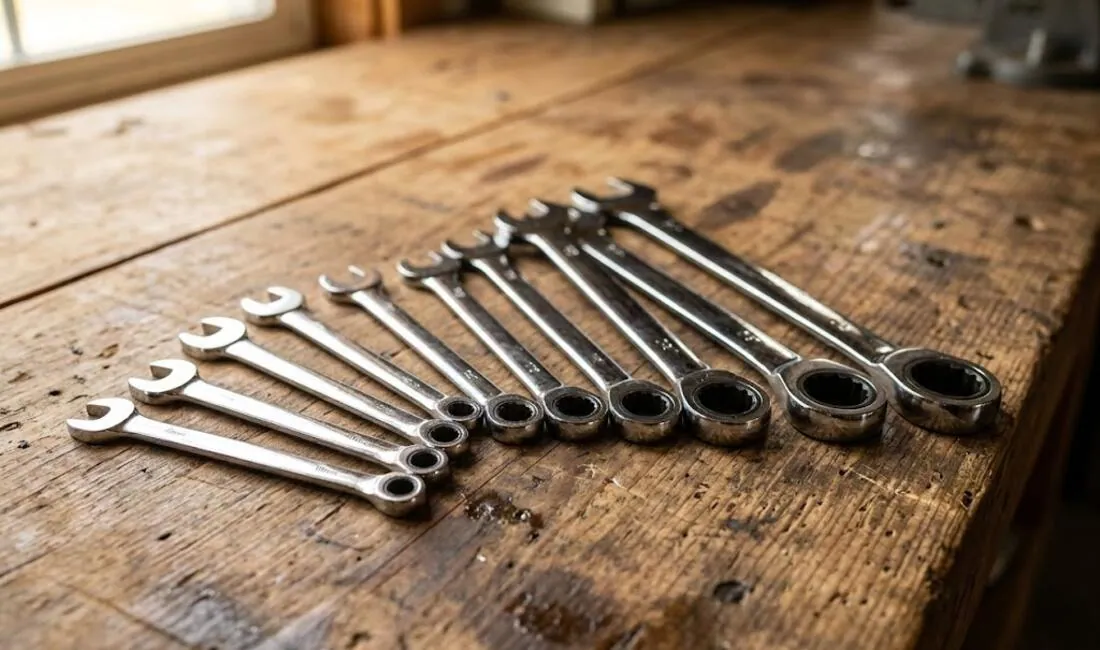
A combination wrench has an open end on one side and a closed box end on the other. The open end slips onto a bolt from the side — faster to position, works in tight spaces where you can’t slide the wrench over the bolt head. The box end surrounds all six sides of the bolt head and grips without slipping — more torque, less rounding. You use whichever end fits the situation. The combination format means one tool does both jobs. Chrome vanadium steel is the alloy standard for quality wrenches — harder than plain steel, resists rounding under torque, holds its shape over decades of use. A complete set runs from 1/4” through 1” SAE and 6mm through 22mm metric — covering every bolt you’ll encounter in a home, vehicle, or appliance.
- Tightening and loosening hex nuts and bolts — furniture hardware, appliance brackets, outdoor equipment, anything with a standard hex head
- Plumbing supply line connections — the nuts under sinks and behind toilets are almost always 3/4” or 7/8” SAE — a wrench seat them without marring the finish
- Battery terminal clamps — 10mm metric for most domestic vehicles, 8mm or 13mm for imports
- Hose clamps and fittings on generators and small engines — the open end reaches into tight engine bays where a socket won’t fit
- Tapping for extra torque — place the wrench on the bolt and tap the handle end with a hammer for the torque your hands can’t provide — the Craftsman guarantee covers the wrench even if it bends
- Holding a bolt head while you turn the nut — one wrench on the bolt, one on the nut — two wrenches from the same set
- Prying small things — the box end of a wrench is strong enough to lever small items, pop covers, and separate stuck parts when you need controlled, limited force
- Improvised hammer for soft tapping — the handle end of a heavy wrench taps pins, roll pins, and small parts into position without the damage a hammer face would cause
- Checking bolt tightness by feel — an experienced hand on a quality wrench can feel the difference between snug, tight, and overtight better than a torque wrench for household work
- Bench vise substitute — two wrenches clamped in opposite directions on a small part hold it steady while you file, drill, or solder
- Turning stuck knobs and valves — slip the open end over the stem of a stuck valve handle and use the wrench as a lever extension
- The open end rounds bolt heads under heavy torque — the open end grips only two sides. Under maximum force it can slip and round the corners. For maximum torque always use the box end or a socket.
- Fixed sizes — one wrench per bolt size — unlike adjustable pliers, a wrench only fits one size. An incomplete set leaves you stuck. Buy complete SAE and metric both.
- Slipping knuckle buster — when a wrench slips off a bolt under force, your knuckles go into whatever is next to the bolt. The box end largely eliminates this; the open end does not.
- Not for round objects — wrenches need flat sides to grip. Pipes, rods, and rounded fittings need Channellock pliers or Vise-Grips.
Buy SAE and metric both — a 14-piece SAE set (1/4” through 1”) and a 10-piece metric set (8mm through 19mm) covers everything. Craftsman is the first choice because of the lifetime guarantee — take any broken or damaged Craftsman hand tool to Ace Hardware or Lowe’s and they replace it free, no receipt, no questions, even on used tools from a garage sale. GearWrench, SK, and Proto are also lifetime guarantee. Snap-on and Mac are professional grade and expensive new — find them used. At a garage sale: look for the Craftsman name stamped on the handle, check that the box end corners are sharp and not rounded, check that the open end jaws are parallel with no spreading. Those three checks tell you everything about the tool’s condition.
Striking Tools — Hammers and Mallets
A claw hammer does two things: the face drives nails, and the claw pulls them out. That sounds simple because it is — and for home repair, it covers an enormous range of work. The 16-ounce head is the standard for general use: heavy enough to drive a 16d framing nail in three or four strokes, light enough to use all day without arm fatigue. The Estwing is one piece of forged steel from head to handle — no wood joint to loosen, no fiberglass insert to crack, no handle to replace. The leather grip wrapped over the steel handle absorbs vibration better than bare metal and better than most wood handles. Estwing has been making this exact hammer in Belleville, Illinois since 1923. The design has not changed because it does not need to. A used Estwing from a garage sale is not a compromise — it is often better than a new import.
- Driving nails — finish nails for trim, common nails for framing, roofing nails, duplex nails for concrete forms — any nail that needs to go into any material
- Pulling nails — the curved claw levers nails out cleanly; rock the handle back while the claw bites and the nail comes straight out
- Tapping things into alignment — door hinge pins, drawer slides, furniture joints, anything that needs persuading without a full blow
- Breaking things apart — demolition work, removing old trim, knocking apart furniture, breaking drywall for access
- Adding torque to wrenches and screwdrivers — tap the handle end of any wrench or screwdriver to break loose a stuck fastener that hand strength alone won’t move
- Striking chisels and punches — mortising hinges, driving center punches, setting drift pins
- The claw as a pry bar — the curved claw levers under boards, trim, and tiles with controlled force — more precise than a pry bar for small demolition
- Scoring drywall — drag the claw across drywall to score a cut line before snapping the panel — faster than a utility knife for rough cuts
- Stretching carpet — the claw hooks into carpet backing and the handle gives you pulling leverage to stretch a section flat before tacking
- Setting staples flush — tap the flat face over a staple that didn’t seat fully and drive it flush with one light strike
- Magnetic nail holder — many Estwing hammer faces have slight magnetism that will hold a nail upright for starting in tight spots where your fingers won’t fit
- Emergency vehicle exit — if you are trapped in a vehicle and cannot open the door, the poll (back of the head) will break a side window — aim at the lower corner, cover your face, and turn away. This is a genuine emergency technique, not general use.
- One-piece steel transmits vibration — the steel handle transmits more shock than a wood handle on a missed strike or hard surface hit. The leather grip reduces this but doesn’t eliminate it. For people with tennis elbow or severe wrist issues, a fiberglass-handled hammer absorbs more shock.
- 16oz is not for heavy framing — for driving 16d nails into structural lumber all day, a 20oz or 22oz framing hammer is faster and less tiring. The 16oz is the all-purpose size, not the heavy-work size.
- The claw is curved, not straight — curved claws are for pulling nails. Ripping apart lumber and prying boards apart is easier with a straight-claw framing hammer or a dedicated pry bar.
- The leather grip ages — old Estwings may have dried or cracked leather. A replacement grip is available and easy to install, or wrap the handle with electrical tape or leather lace to restore the grip.
The Estwing E3-16C — 16oz curved claw, leather grip — is the one. It has been the standard for finish carpenters and general contractors for 100 years. Buy it new or find it used — condition is nearly irrelevant because there are no joints to fail and the steel doesn’t wear out. At a garage sale: pick it up and swing it. The head should feel balanced over your hand, not nose-heavy. Check the face — minor pitting from use is normal; deep gouges or chipping at the edges is not. Check the claw tips — they should be sharp, not rounded. If all of that is true, buy it at any fair price. An Estwing from 1955 is a better hammer than most new imports sold at big box stores today.
A ball peen hammer has a flat face on one end and a rounded ball on the other. The flat face strikes punches, chisels, and metal surfaces. The ball end — the peen — sets rivets by spreading the rivet shank, shapes and work-hardens metal, and fits into spaces the flat face can’t reach. It is the machinists’ and metalworkers’ hammer — designed for metal work where a claw hammer’s face geometry is wrong and its claw is useless. The Estwing is one piece of forged steel, made in Belleville, Illinois, with a leather grip that absorbs shock. The 12oz handles light punch work and detail tasks. The 24oz drives heavy punches and does real metalwork.
- Striking center punches and pin punches — marking drill locations, driving out roll pins and cotter pins from machinery
- Striking cold chisels — cutting metal, breaking welds, splitting rusted nuts that won’t turn
- Setting rivets — the ball end spreads the rivet shank evenly without the flat face marking the work
- Tapping metal parts into alignment — where a claw hammer face would leave marks, the smooth face of a ball peen does not
- Breaking apart rusted assemblies — shock-loading rusted joints that penetrating oil alone won’t free
- Texturing metal surfaces — the ball end peened over sheet metal creates a decorative dimpled texture used in metalworking and jewelry
- Work-hardening soft metal — repeated ball peen blows on copper or aluminum work-hardens the surface, increasing its resistance to deformation
- Driving stakes and tent pegs — the flat face drives steel stakes cleanly without the claw getting in the way
- Not for nails — the flat face is hardened for metal work, not wood. Driving nails with a ball peen is technically possible but the face geometry makes it awkward. Use the claw hammer for nails.
- The ball end leaves marks — anywhere you strike with the ball, it leaves a round impression. Intentional for rivets and texturing; not intentional elsewhere.
Buy the 12oz and 24oz at minimum. The 12oz handles punch work, pin driving, and light metal tasks. The 24oz handles heavy punches, cold chisels, and anything requiring real force. The Estwing E3-12BP (12oz) and E3-24BP (24oz) are the standards — one-piece forged steel, made in the USA, lifetime guarantee. Find them at garage sales — any Estwing ball peen in any condition that passes a basic inspection is worth buying.
A rubber mallet delivers impact force without leaving a mark. The rubber head absorbs and distributes the blow across a larger surface area than a steel hammer face, which spreads the force without concentrating it enough to dent or mar the surface being struck. It hits hard enough to drive door jambs into position, seat tile, knock furniture joints together, and persuade stuck parts to move — but the rubber head bounces slightly rather than biting in, so finished surfaces, wood, tile, and plastic come through unmarked. It is the tool you reach for when you need a hammer but can’t leave a mark.
- Furniture assembly — driving dowels, knocking joints together, seating table legs without splitting the wood or bruising the finish
- Setting tile — tapping tile flat into mortar or adhesive after placement without cracking it
- Installing door and window casings — tapping trim into position against the wall without denting the wood
- Automotive body work — persuading body panels, bumper covers, and trim pieces into position without damage
- Driving chisels into wood — when a steel hammer would split a wooden chisel handle, a mallet drives the chisel safely
- Removing stuck drawer slides and cabinet hardware — a rubber mallet taps them free without the steel hammer marks that would require filling and painting
- Seating copper pipe fittings — after soldering, tap fittings fully home without distorting the soft copper
- Breaking up soil and clay in garden beds — the flat face breaks up compacted soil clods without damaging a spade or fork handle
- Not for nails or metal fasteners — the rubber head won’t drive a nail. It will deflect off a nail head and go sideways. Use the steel hammer for anything that needs to be driven into a surface.
- Rubber degrades over time — old rubber mallets harden, crack, and chip. A chipped rubber head leaves rubber fragments on your work surface. Replace when the head shows cracking.
- Less force than a steel hammer — for stuck things that genuinely need serious force, the rubber mallet may not be enough. Use a block of wood and a steel hammer to protect the surface while delivering more force.
16oz rubber mallet with a wood or fiberglass handle. Dead-blow mallets — which have a hollow head filled with sand or shot — are even better because they don’t bounce back after striking. If you can find a dead-blow mallet at the same price as a rubber mallet, buy the dead-blow. Estwing, Vaughan, and Tekton all make reliable mallets. This is one tool where brand doesn’t matter much — any quality mallet with a solid rubber head and a sturdy handle will last decades.
🏆 The Lifetime Guarantee Brands — Buy Them Used Without Hesitation
These brands honor their lifetime guarantees on used tools with no receipt required. Find them at garage sales, estate sales, pawn shops, Facebook Marketplace, or eBay — the guarantee follows the tool, not the buyer.
Estwing — Belleville, Illinois. Hammers, pry bars, hatchets. Made in USA since 1923.
Channellock — Meadville, Pennsylvania. Pliers. Made in USA since 1886.
Klein Tools — Lincolnshire, Illinois. Pliers, wire cutters, screwdrivers. Made in USA since 1857.
Craftsman — Lifetime guarantee on all hand tools. Replace at any Ace Hardware, Lowe's, or Sears — no receipt, no questions.
Irwin Vise-Grips — Original locking pliers. Lifetime guarantee.
Swanson — Frankfort, Illinois. Speed squares. Made in USA since 1925.
A $3 Craftsman wrench at a garage sale is worth more than a $15 import at a big box store. The guarantee makes it worth more. The quality makes it last longer. The brand makes it easy to replace if anything ever goes wrong.
Print this before you go. Every tool on the Grandfather Toolkit list in one sheet — the brands to look for, exactly what to check, what to avoid, and two checkboxes per tool so you track what you own and what you still need. Never buy the same wrench twice.
“My daughter called at 10 PM on a Sunday night. Her water heater was leaking onto the basement floor. Her husband was out of town. I asked her three questions and told her exactly which shutoff to turn and where it was. Then I drove over with my toolbox and we stopped the leak and had her set up with water again by midnight.
She called it a miracle. It was not a miracle. It was a shutoff wrench and forty years of knowing where things are and how they work. That is the whole thing. You are not going to get rich teaching your kids to turn off the water. But you might save them a very bad Sunday night.”
“After the hurricane my neighborhood lost power for eight days. I had a generator, fuel, and extension cords long enough to reach my elderly neighbor next door. She ran her refrigerator and a fan off my generator for six days. My son-in-law came by on day three and looked at what I had set up and said, ‘Dad, how did you know to have all this?’ I told him I had been buying and organizing tools and equipment since before he was born. He stood there looking at the garage and said, ‘I need to start doing this.’ I handed him a generator the following month as an early Christmas present. He cried a little. I let him.”
“My grandchildren are twelve and fourteen. They come over on Saturday mornings and I teach them how things work. How to change a tire. How to read a circuit breaker panel. How to shut off water and gas. How to use a multimeter. Their parents cannot do most of these things. Their school is certainly not teaching them. I have a full workshop and I am teaching two teenagers that a broken thing is just a thing that hasn’t been fixed yet. My grandson fixed his bicycle last month by himself using skills he learned in my garage. He called me to tell me it worked. That call was worth more than any tool in that garage.”
“I am 73 years old and I have never in my adult life called a plumber for something I could fix myself. Not once. When my neighbor’s toilet was running and she was going to call a plumber for a hundred and fifty dollar service call, I walked over with a flapper valve I had in my parts drawer and fixed it in eleven minutes.
She tried to pay me. I told her to bring me tomatoes from her garden when they came in. She has brought me tomatoes every August since. I have a drawer full of parts for things that break and the knowledge to use them. That is not magic. That is just paying attention for fifty years.”
Don't forget leather work gloves — buy several pairs now. At 70 your skin thins, tears easily, and heals slowly. A cut at 70 takes three times as long to heal as a cut at 50. Quality leather gloves stored away last decades. Buy them now, keep them in the garage, and wear them every time you work. This is not optional.
💡 Why Power Goes Out — 15 Documented Reasons
🛻 The companion kit — for the car. This toolkit is for the house. Everything your grandfather kept behind the seat of the truck — the jump starter, the wool blanket, the headlamp, the reflective tape — is its own guide now. Read What Grandpa Kept in the Truck →
🧰 The Rest of the Toolkit
This started as one very long page and was split into four, because nobody reads twenty-six thousand words in a sitting. Each part stands on its own.