The two heaviest appliances in the house — and the cheaper ways to get hot water and hot food while the power is out.
Every load so far has been about what to power. This page is the other half of sizing, and it is where the real money hides: what not to power. The electric water heater and the electric stove are the two heaviest routine loads in most homes — and during an outage, almost nobody should run either one. Not because you do without hot water and hot food. Because there are cheaper ways to buy both.
The Water Heater — You Already Have a Tank of Hot Water
An electric water heater draws 4,000 to 4,500 watts when its elements are on. Size a generator around that and you have bought thousands of dollars of machine; run it and you are burning roughly half a gallon of propane per hour of heating — to make hot water you mostly already have.
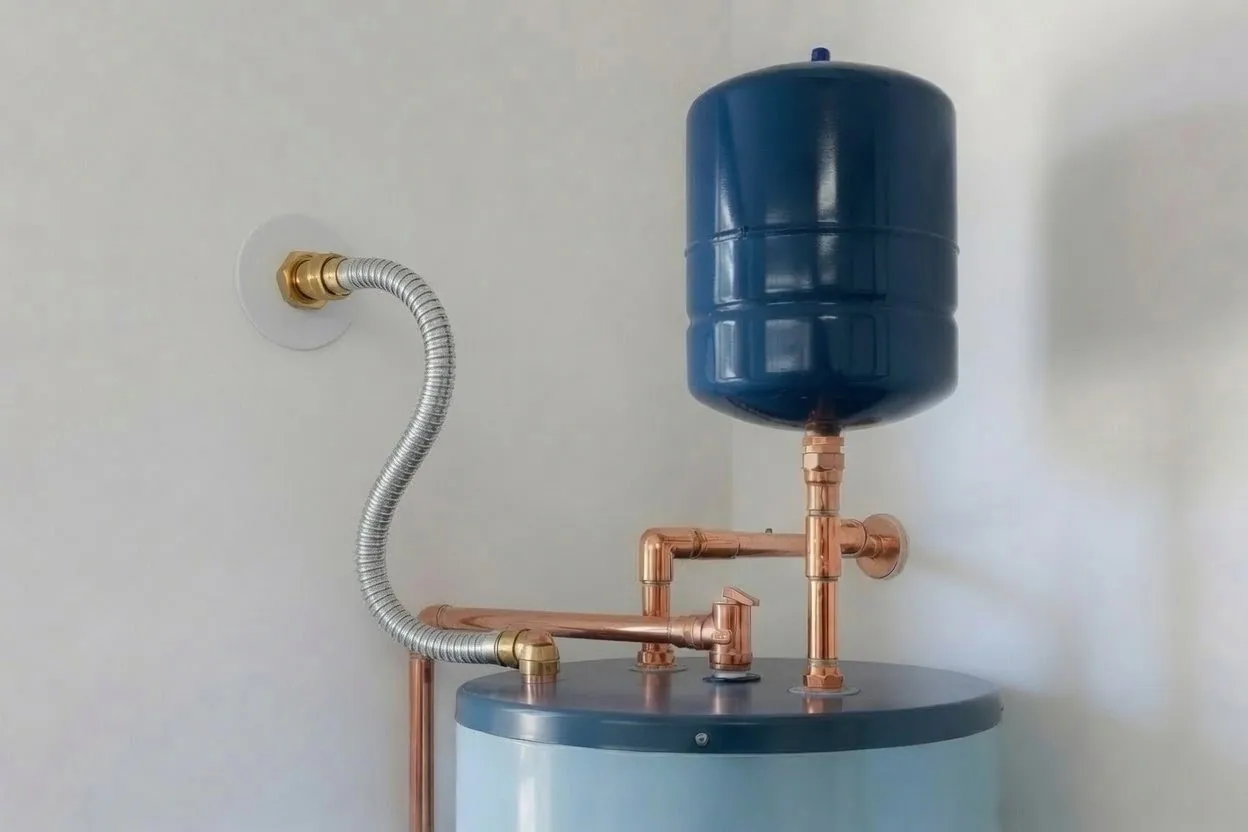
Because here is what the appliance actually is: an insulated 40- or 50-gallon thermos. The moment the power fails, that tank is full of hot water, and it stays usably warm for a day or more if you treat it gently. Short showers, no long hot-water chores, and the family gets through the first day on stored heat — the same trick as the freezer, wearing a different jacket.
The thermos itself: forty-plus gallons of already-hot water the moment the power fails. And one honest footnote about the little tank riding on top — that is a thermal expansion tank, a plumbing shock absorber, and that is all it is. It does not store extra hot water, and it is not the well’s gentle-start clue from the pumps lesson — same size, different job, different room.
Switch its breaker off when the outage starts. Flipping a labeled breaker on the panel face is ordinary homeowner territory — the inside of the panel is not, and nothing here requires it. The reason: when power returns (or the generator comes on), you decide when that 4,500-watt load wakes up, instead of it deciding for you in the middle of everything else starting at once.
If you must reheat, do it as an event. An hour of generator time with everything else switched off, then the breaker goes back off. One deliberate tank of hot water costs far less fuel than an element that cycles all day.
Gas water heater? Many keep working in an outage with little or no electricity. Check yours before the storm — you may own the one appliance that does not care.
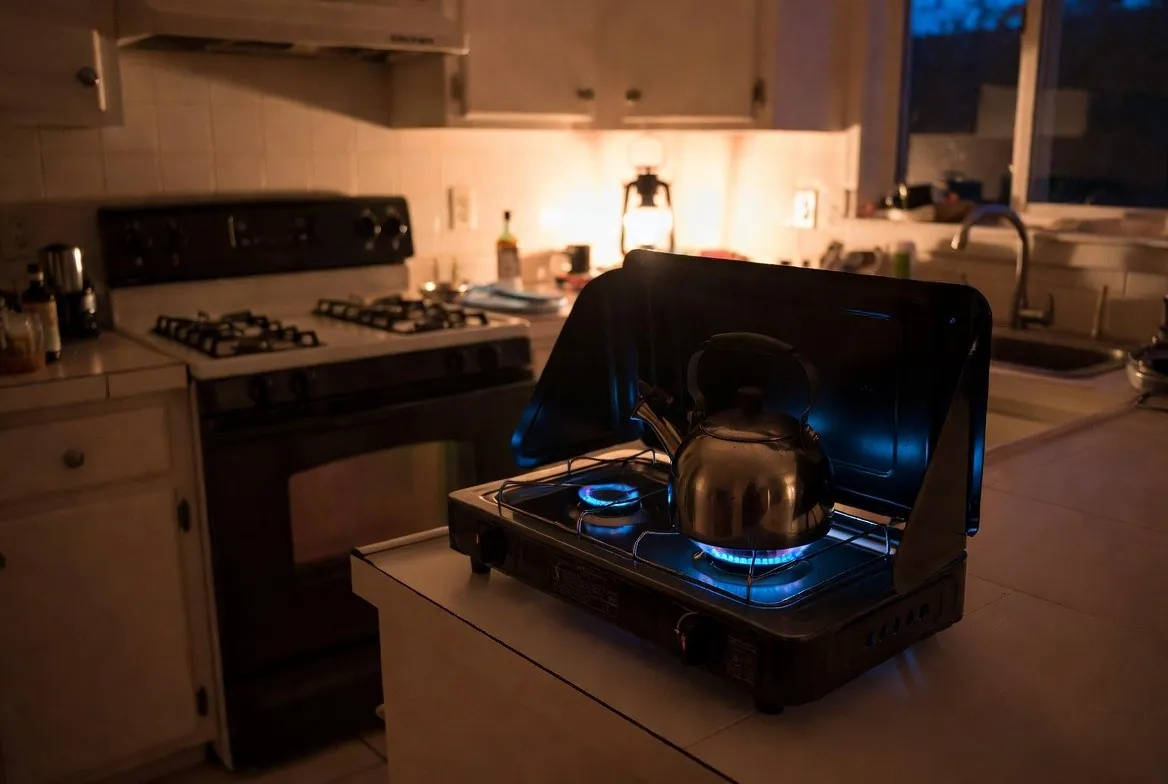
The Stove — A $40 Camp Stove Beats a 1,500-Watt Burner
One burner of an electric range is about 1,500 watts; the oven far more. Cooking dinner on a generator-fed range is paying generator prices for heat that a propane camp stove makes for pennies. The outage kitchen that works looks like this:
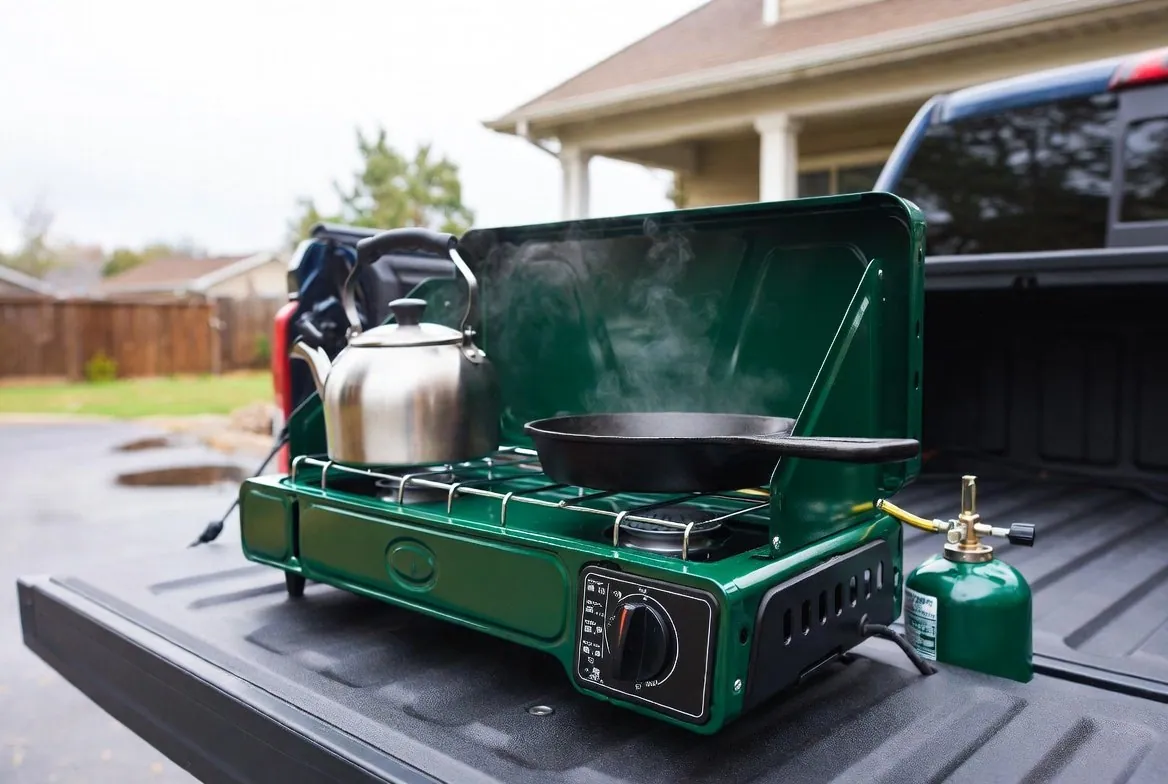
The outage kitchen, in its only correct location: open air, with the house and its porch well away. A camp stove makes carbon monoxide exactly the way a generator does — never indoors, never in the garage, never on a covered porch. Out here on the tailgate, it will cook everything the range cooks, for pennies of propane.
A two-burner propane camp stove — used outdoors, only outdoors. Never in the house, never in the garage, never on a covered porch: camp stoves make carbon monoxide the same as generators do, and the same battery CO alarm rule applies. On the porch rail or the tailgate in open air, it will cook everything a range cooks.
The microwave is the efficiency champion indoors. A thousand watts for six minutes is nothing next to a burner for forty — if the generator is running anyway, the microwave is the indoor cooking that earns its keep.
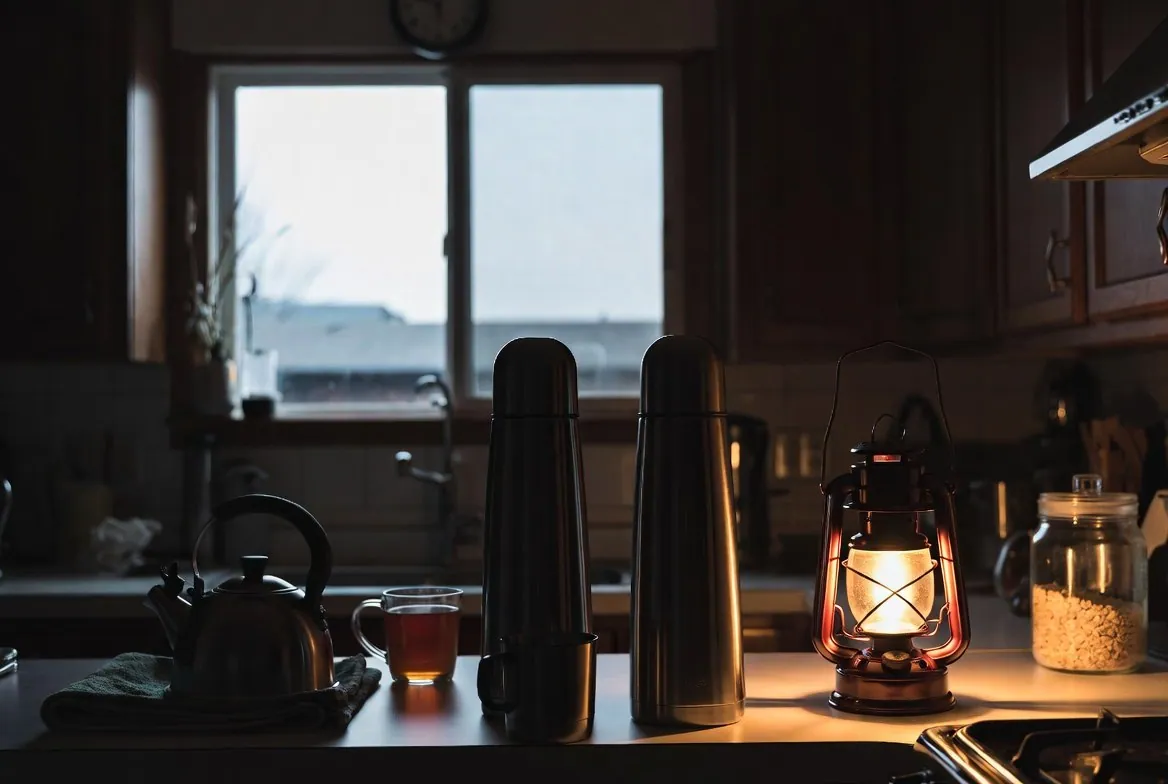
Boil once, hold all day. A good thermos or two turns one kettle of boiling water into coffee, tea, oatmeal, and dish-washing hot water for hours. Depression-era kitchens ran on this trick, and it has not stopped working.
Boil once, hold all day. The kettle worked for ten minutes this morning — outdoors, on the camp stove — and these two thermoses have been serving coffee, tea, oatmeal, and dishwater ever since, without costing the generator a single watt. The quietest appliance in the outage kitchen is the one with no cord at all.
Run the numbers once and the lesson generalizes: in an outage you are not buying appliances, you are buying outcomes — hot water, hot food, cold food, water pressure. For each one, ask what the cheapest machine is that delivers the outcome for a week. Sometimes it is the generator. For these two, it almost never is — and unchecking them in the calculator will drop your generator size and your fuel bill further than any other choice on the page.
Working out what you genuinely need to run is also what stops you being sold twice the generator. Take that list to whoever is quoting, rather than letting them build it for you — there is more on getting generator quotes and what the number should be based on.
❓ Plain Answers
The short version of this page, one question at a time — the answer is always the first line.
Should I run my water heater on a generator?
Almost nobody should run an electric water heater on a generator, because it draws 4,000 to 4,500 watts and the tank is already full of hot water. Switch its breaker off when the outage starts.
How long does a water heater stay hot without power?
A full 40- or 50-gallon water heater tank stays usably warm for a day or more if you treat it gently. Take short showers and skip long hot-water chores.
How do I cook during a power outage?
Use a two-burner propane camp stove outdoors only, never in the house, the garage or on a covered porch, because camp stoves make carbon monoxide like generators do. If the generator is running anyway, the microwave is the efficient indoor choice.
How many watts does an electric stove burner use?
One burner of an electric range uses about 1,500 watts, and the oven uses far more.
Does a gas water heater work without power?
Many gas water heaters keep working in an outage with little or no electricity, so check yours before the storm.
Now put the number to work.
The calculator turns what you just learned into a generator size and a fuel plan — and the other lessons in this series each move the number too.
Leaving the water heater and the electric stove off the list can cut the machine you need in half — that is thousands of dollars saved by a decision, not a purchase.
General Information Disclaimer: This page is general educational information, and some links are affiliate links (we may earn a commission at no extra cost to you). It is not electrical, engineering, medical or trade advice, and it was not written by a licensed electrician.Generators, camp stoves and any fuel-burning appliance produce carbon monoxide, which is invisible, odourless and kills people every year after storms — never run one indoors, in a garage, or on a covered porch, and keep a working battery carbon-monoxide alarm. Anything behind the cover of an electrical panel, and any permanent connection between a generator and a house, belongs to a licensed electrician and is subject to local codes and permits. If you have a pacemaker or any implanted medical device, ask your cardiologist before using induction cooking equipment. Nothing on this page is legal advice. None of it was written by an attorney, and it is not a substitute for speaking to one about your own situation.Full disclaimer →