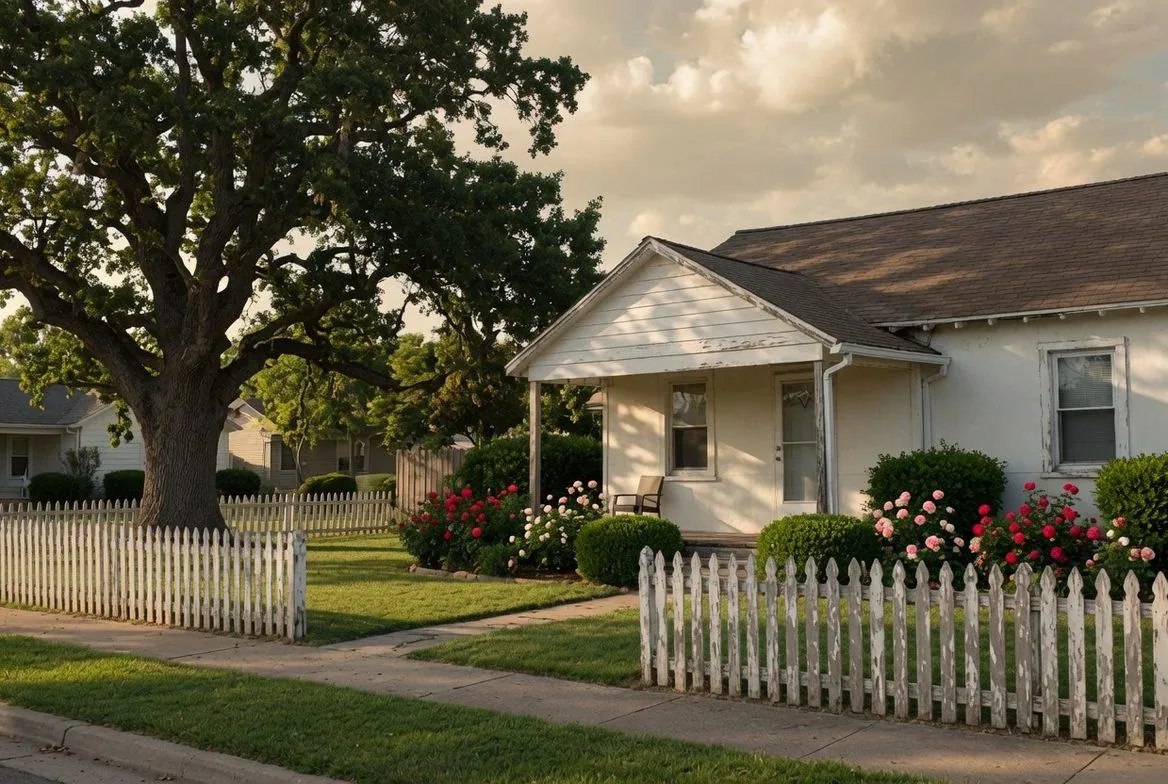
🪚 It Is Never the Roof

When somebody has to give up their house, everybody looks for the big reason. A fall. A diagnosis. A roof.
It is hardly ever the roof.
It is a gutter nobody cleared. A step that worked loose. A tap that drips. A door that stopped latching properly in about March. A light out at the top of the stairs. Each one is a nothing. Each one is also a hundred and eighty dollars to have somebody come out, which for a job worth eleven dollars in parts is an absurd price, so it does not get done.
Nobody loses a house over any one of those.
They lose it over forty of them, across eight years, every one of them perfectly reasonable to have put off.
And here is what the forty add up to. Not a dangerous house — a house that visibly is not being kept. Which is a different thing, and a worse one, and we will come back to it at the bottom of this page because it is the part that actually decides where you live.
Why the steps are here. This is not a repair manual, and we are not trying to make a tradesman out of anybody.
The steps are on the page so you can weigh the job. The name of a job tells you nothing at all. What it costs, what it takes, and how long you will be on the floor tells you everything, because now you can set it beside what somebody would charge to come out and do it, and decide for yourself. That decision is the whole point of the page. The instructions are only how we show our working.
Some of these you will read and think: not for me. That is a real answer and it cost you four minutes. Take it and hire the job out with your eyes open, which is a better position than most people are in when they make that call.
But take your time with one. Look it up twice. Watch somebody do it before you touch anything. A fair number of people who do that find the job was a good deal smaller than the fear of it — and then find out the same is true of the next one. That is what we are actually after. Not the repair. The surprise.
The forty small things, written out with how often each one wants doing, are on the once-a-year house checklist. What they cost when they are left alone, including the part insurance will not pay, is on the page about the bills that come after the mortgage.
⏳ What You Have Instead of Money
Let me be plain about one thing before anything else. What your money should be doing is a question for whoever handles your money. I am not that and this page is not that. Ask them, not me.
What I will say is the thing nobody puts in a brochure, because there is nothing to sell in it.
A great many people go over a cliff somewhere around sixty-five. Not a slope. Thirty or forty years of a real income, and then a fixed one, and the number is a good deal smaller than the number was. Meanwhile every hired hour on earth costs more than it did last year.
So you have less money than you had. And you have more time than you have had since you were about twenty.
That is not a consolation. That is an asset, and it is the only one on this page that most retirees are actually rich in.
An afternoon and eleven dollars, instead of a hundred and eighty and a week of waiting for somebody to turn up. Do that eight times a year and you have paid for every tool on this site twice over, and the house stays kept.
But there is a catch in it, and it is the whole reason for the rest of this page. That time is worth something only if you know what to do with it. And the window where you can still learn is not the same length as the window where you have the hours.
If You Want the Number
We have done this arithmetic properly, with the 2026 figures beside it — the water heater, the dryer vent, the caulk, the whole plumbing list, and the twenty-year total for each one done yourself against the same job hired out. It is on the fix-it-yourself page. The short version: two of those jobs, together about one afternoon a year, come to roughly six thousand dollars over twenty years if you buy them one visit at a time.
🧰 Owning the Tool Is Not the Skill
This site has spent a hundred pages telling you what to buy, and I want to correct something before it does any more of it.
Buying the thing is the easy half, and it is not the half that saves you.
A drill in a cupboard is not a repair. A generator in a garage that has never been started is not power. A water filter still in its box is not water. There is a way of reading a list like the ones on this site — got it, got it, got it, got it — that feels exactly like being prepared and is not being prepared at all.
The thing you are actually short of is not equipment. It is the twenty minutes where you found out how the thing works, on a day when nothing was wrong.
And I will tell you how easily that gets missed, at my own expense. There was a spring house on a farm I lived on, with a step cut into the stone wall of the sump, and I used that step every summer for a year before it occurred to me to wonder why it was there. It was there so a man could brace himself and lower a milk can without putting his back into it. I had been standing on the answer for a year without seeing the question.
If it can take me a year with my own two feet on it, it is not a checklist for anybody.
🪑 You Do Not Have to Do It. You Have to Know It.
Now the obvious objection, and it is a fair one. I am seventy-four. I am not going up a ladder and I am not getting down on that floor.
Good. Do not. Nothing on this page requires you to.
Because the valuable half was never the lifting. It is the knowing. And the knowing does not retire when the knees do.
Here is what that actually looks like on a Saturday. Two boards on the front steps have gone soft. You have a grandson, or a neighbor's boy, or somebody from church, who is seventeen and willing and has not the first idea how to start.
You bring a kitchen chair out into the yard. You put the video up on the telephone and the two of you watch it together. Then you talk him through it. Which board comes up first. Why you check what is underneath before you put the new one down. Why the screws go there and not there.
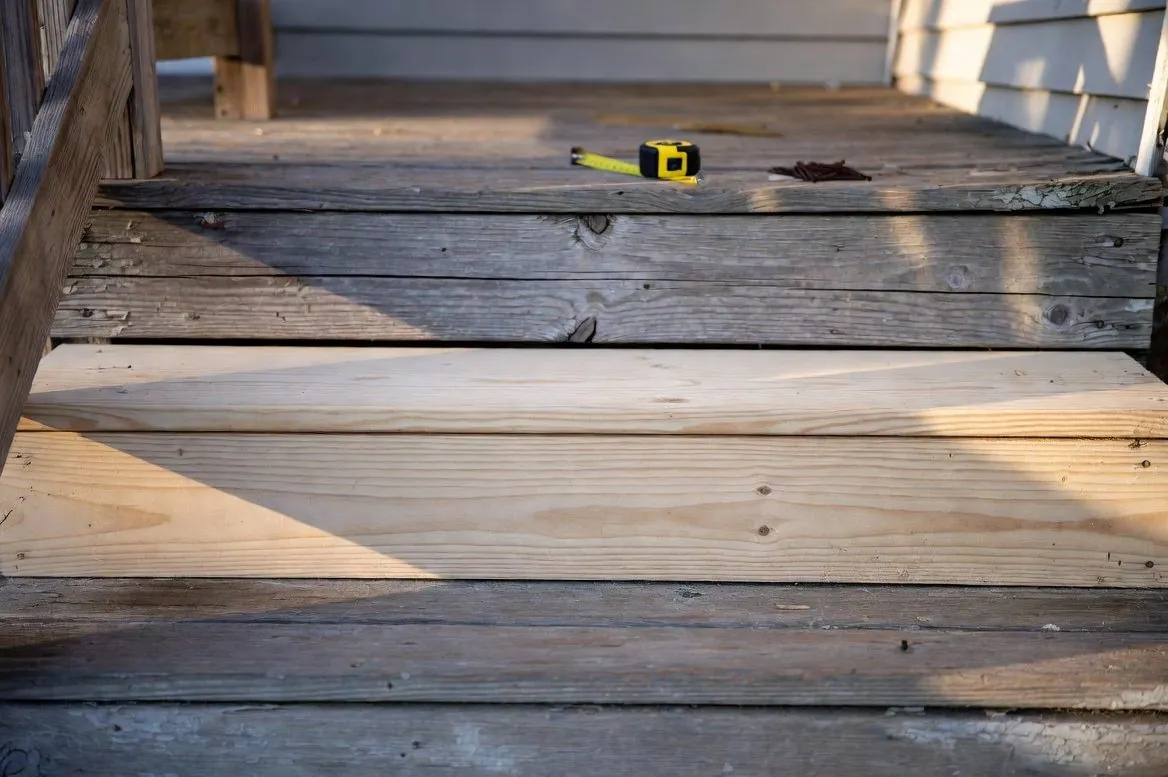
He goes away knowing how to replace a step, which is a thing he did not know that morning and will have for the rest of his life.
You go away with the step fixed.
And you were out there. Hold on to that last part, because it turns out to matter more than the step does.
🔨 They Have the Will. They Have Not Got the Tools.
The boy in the yard with the video on his telephone is half of it.
The other half is in your garage, and if it is not in your garage then all you have got is a willing seventeen-year-old standing on your grass with nothing in his hands.
This is the part nobody has caught up with yet. Two generations ago a man of twenty-five had a toolbox because everybody had a toolbox. Now a great many of them have never owned one. They rent, they move every two years, they have no garage to keep anything in, and everything they own arrived flat in a box with a folded steel key taped to the instructions. It is not that they are useless. They have the will. Nobody ever handed them the tools.
If you want the whole thing set out by size rather than by name — which wrenches, which sockets in both measuring systems, which screwdrivers, and what an older tool box is missing for a modern car — that is a page of its own: the tool sizes checklist.
And it is not a workshop that is wanted. To put two boards back on a set of front steps you need a saw — a circular saw if you have one, a hand saw if you have not — a tape measure, a hammer, a square, and a box of deck screws. That is the whole list. It is not expensive and it does not go out of date.
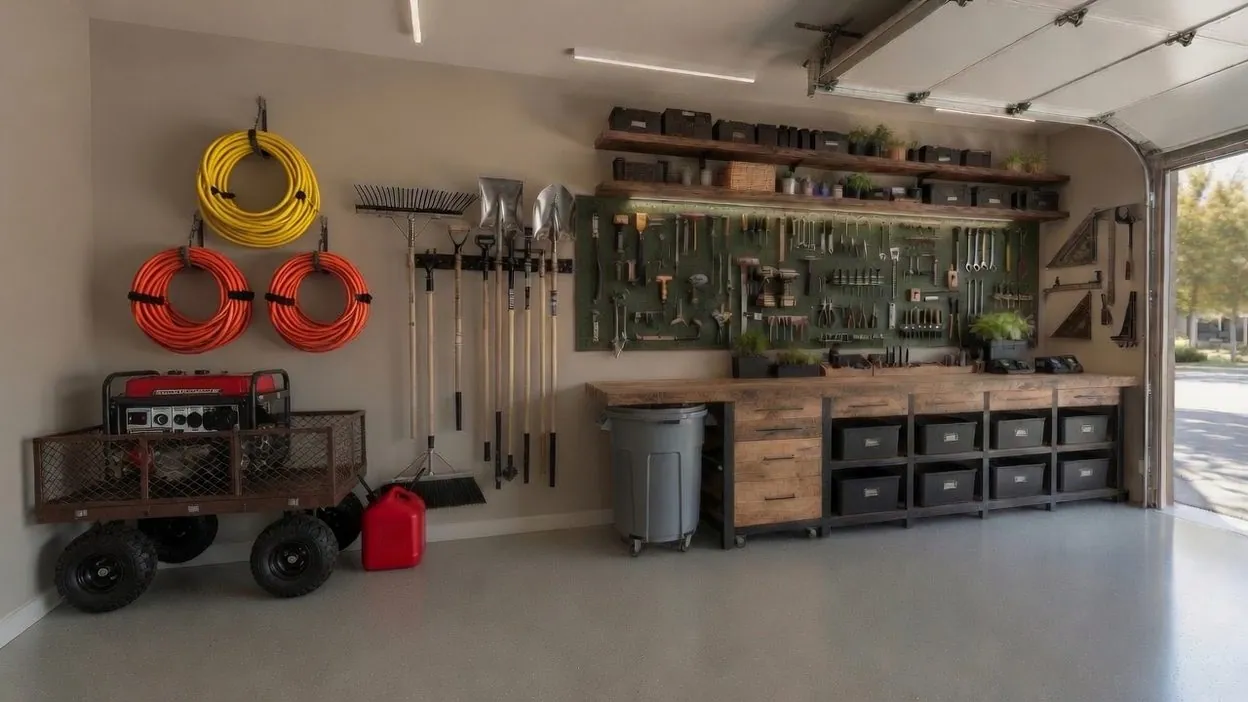
Buy that once, at fifty, and it is still sitting there at seventy-eight when you cannot lift the saw yourself. Which is exactly when it starts doing its best work, because by then it is not your tool for your job. It is the thing that lets anybody who turns up willing actually finish something.
🏷️ Where Those Tools Actually Are
You can buy every item on that list new. There is a discount tool shop in every town now and a farm supply store on every highway, and I have no quarrel with either of them.
They are not the cheapest place, though. They are not close.
The cheapest place to buy tools in America today is an estate sale.
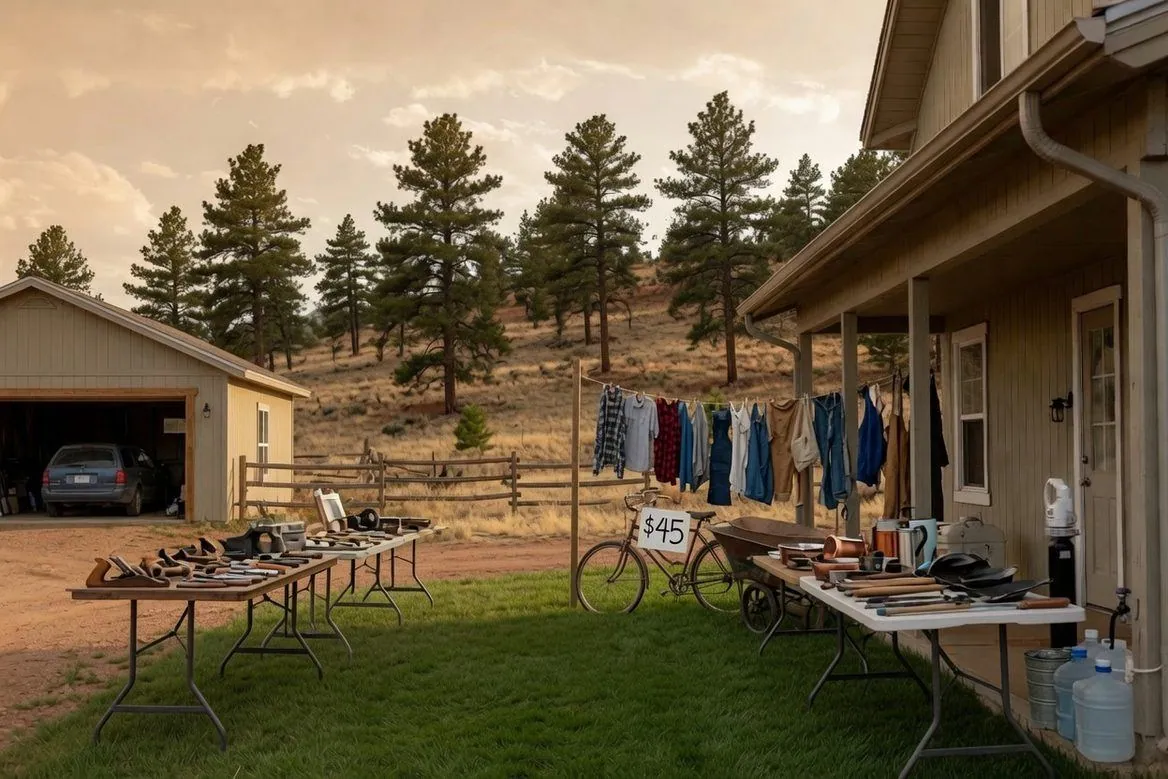
Think for a moment about who is having those sales. An entire generation bought tools — bought them when a wrench was drop-forged and made here and sold by a company that fully expected you to still have it in forty years. And they did still have it in forty years. It is sitting on a bench in the garage right now with the handle worn smooth.
And their children, a good many of whom live two states away in an apartment and have never owned a saw, need the whole garage cleared by Sunday afternoon.
So a socket set that cost a week’s wages in 1978 and has never once failed goes for a few dollars, because nobody at the sale knows what it is and nobody wants to carry it out to the car. Hand planes. Pipe wrenches. A good square. Clamps, which are the thing you never have enough of and never want to pay for.
You are not buying second best. You are very often buying better than anything on the shelf at any price, for about a tenth of it.
And there is a filter working in your favour there that you get nowhere else on earth, and it is worth saying out loud.
These are the tools he kept.
Whatever he bought that turned out to be rubbish went in a bin twenty years ago and is not on that bench. What is on that bench is what survived being used, by a man who used it, for a working lifetime. Forty years in a working man’s hand is a harder test than any review ever written, and every single thing on that table has already passed it.
Which is also why it pays to know whose sale you are standing in.
If the man was a car enthusiast, the automotive tools work. You can put money on that. If he was a carpenter, trade or hobby, then that saw cuts, those chisels will still take an edge, and the stone on the shelf beside them is the stone that put the edge there.
Name a trade — any trade — and sooner or later a man who spent forty years in it is going to have a sale. Go to that one. His widow does not know what a good plane is worth and the sign in the yard just says TOOLS.
🔎 How to work an estate sale for tools.
Go early for the choice, go late for the price. Saturday morning has everything and no bargains. Sunday afternoon is half off and picked over, and the garage is usually the last room anybody picks over.
Hand tools are almost always safe to buy. Surface rust wipes off, edges sharpen, handles can be replaced. A rusty wrench is a wrench.
Power tools get plugged in before money changes hands. Run it. Listen to it. Look at the cord along its whole length and at the plug. If there is nowhere to plug it in, that is a reason to offer less, not a reason to trust it.
There are no returns, and no warranty, and no receipt. That is the trade for the price.
🔩 Which Names Are Worth Picking Up
Let me get one thing the right way round before the rest of it, because it saves a deal of trouble. At a garage sale you are not buying a warranty. You are buying steel. If the tool is good in your hand on the day, that is the purchase. Everything below is a bonus.
But some of that steel does come with a guarantee attached, and a few of those guarantees will follow the tool straight into your hand. That is worth knowing when you are standing in somebody else’s driveway deciding between a three-dollar wrench and a five-dollar one.
There are four sorts of lifetime guarantee out there, and what separates them is not the tool. It is who the promise was made to.
The guarantee that follows the tool
This is the one you want, and Kobalt is the clean example. It is Lowe’s own line, the hand tools are covered for as long as they last, and no receipt is asked for, because the promise is attached to the tool rather than to whoever first carried it out of the shop. Craftsman hand tools work much the same way now, at Lowe’s and at Ace, and that includes the old Sears ones your seller bought in 1979.
Two catches, and I would rather you heard them from me than at the counter. The store has to have that tool, or something near enough to it, on the shelf that day — if they have not, you are telephoning the manufacturer instead of driving home with a new wrench. And Ace stores are individually owned, so one will do it cheerfully and the next may not.
The guarantee that comes to you
Here is the one almost nobody knows about, and for a man buying second-hand it is the best of the lot.
Tekton is a hand tool maker whose warranty is written about as plainly as a warranty has ever been written. No time limit, and it does not matter how old the tool is or when you got it. No receipt. Their own words are that if you own the tool, the support comes with it — which is a sentence with the second owner standing right in the middle of it. You send them a photograph of the thing and what is wrong with it, and they post you a new one, and they pay the postage.
You never leave the house. Nobody asks who bought it or when. For somebody who does not drive much any more, or who lives forty minutes from the nearest big store, that is worth more than the tool cost.
The catch is only that Tekton is a modern name, so you will find it on tables from the last fifteen years rather than in the garage of a man who bought everything he owned in 1978. A few other makers run their claims the same way, by photograph and post rather than over a counter — if you see a name you do not know, it is worth two minutes on the telephone to find out which sort of promise it carries before you decide.
The guarantee that follows the buyer
Husky at the orange store, and the Harbor Freight lines — Pittsburgh, Quinn, Icon — read in writing as promises made to the person who bought the tool new. Harbor Freight’s says the lifetime of the original purchaser in about those words.
Now in practice a great many counters swap them without asking anybody a question, and I am not going to talk you out of walking in and trying it. But do not pay a dollar extra at a sale for a warranty that was never made out to you. Buy that tool because it is a good tool or leave it where it lies.
The guarantee that follows the route
Snap-on. Mac. Matco. Nine times out of ten this is the finest steel on the table, and the reason it is on the table is that a working man bought it off a truck that pulled into his shop every Thursday for thirty years.
That truck does not come to your house. So buy these for exactly what they are — better tools than you were ever going to pay full price for — and count the warranty as somebody else’s business. At two dollars for a wrench that cost him forty, you are still well ahead.
✅ What to look at while you are deciding.
Weight. Good tools are heavier than they look. Cheap ones feel like a toy the moment you pick them up, and they feel like that because they are one.
The name stamped into the steel, not printed on it. A sticker or a painted logo tells you nothing. A name forged into the metal was put there by somebody expecting it to still be readable in forty years.
The corners. On a box-end wrench they should still be square. Rounded off means it has been slipping on bolts already, and it will slip on yours.
The moving parts. A ratchet should click clean in both directions. Pliers should pivot with no grinding and close with the jaws meeting evenly. Work every mechanism the tool has before you hand over any money.
One honest note to close it. Warranty terms get rewritten, brands change hands, and none of these covers ordinary wear or a tool somebody put a pipe on. If you are counting on a guarantee, check what it says today rather than what it said when the tool was made. And if you are not counting on it, none of that matters and you have still bought a good wrench for two dollars.
There is one more thing about this and then I will leave it alone, because it is this whole page arriving from the other end.
Every tool on that table belonged to somebody who did exactly what I have spent this page telling you to do. He bought well, he bought early, and he kept it. The part that did not get built was the rest of it — the somebody to hand it to.
So buy the man’s tools. They are still good, they were always going to outlast him, and he would a great deal rather they went to a house than to a skip.
And one more thing, which you may as well hear from me now as work out for yourself later.
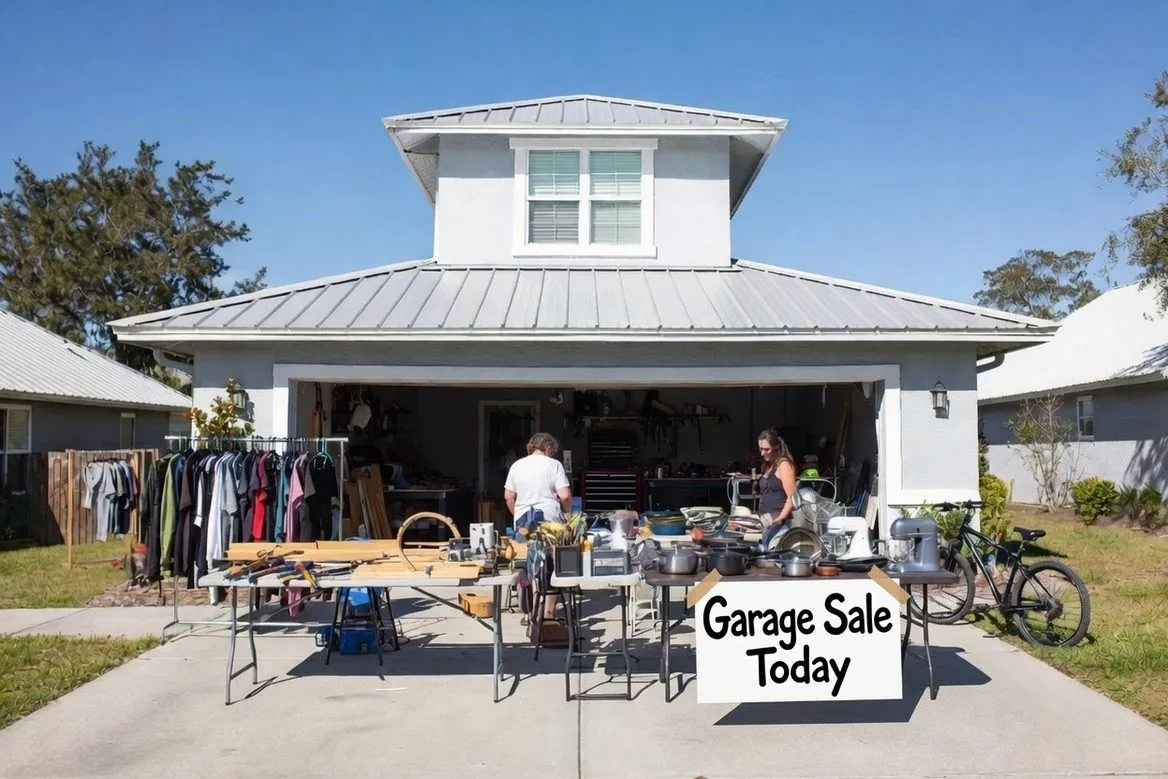
One day it is going to be your garage. Your bench, your tools, little paper stickers on them, and somebody in the driveway asking your daughter whether she will take ten dollars for the lot.
And the people who will be there first are the ones who used them. The boy whose first repair in his whole life was your front steps. The neighbor who changed your oil in your driveway. They know exactly what is on that bench, because they held it, and they know what it is worth, and they are going to get it for almost nothing.
That strikes me as about the best end a good tool can come to.
🚗 What It Looked Like on My Own Truck
I have a Hummer H3, and it wanted an oil change.
I went to price it at one of those quick-change places you see on every road in America, and the number they came back with was very close to three hundred dollars.
So I bought the parts instead. Five quarts of oil, a filter, and while I was at it one of those do-it-yourself air conditioning recharge cans, because it was sitting right there on the shelf. A hundred and seventy dollars, the whole lot.
Half the price, and I got a job done that was not even on the list.
Now the point of telling you that is not that I am clever with a wrench. It is that the job itself is nothing — it is a drain plug, a filter and a funnel — and there is very likely somebody within three doors of you who can do it in twenty minutes and would.
But he cannot do it in your driveway with his bare hands. Somebody has to own the wrench, the drain pan, the funnel and the jack stands. If that somebody is you, then his twenty minutes and your hundred and seventy dollars have just saved you the better part of a hundred and thirty, on a job that was going to happen anyway, twice a year, for as long as you own the vehicle.
⚠️ If anyone is going under that vehicle, read this first.
Never get under a vehicle supported by a jack alone. A jack is a lifting device, not a holding device, and jacks fail. Use jack stands rated for the weight, on level concrete, with the wheels chocked, and shake the vehicle before anybody puts a hand or a head beneath it. Many vehicles can be drained without lifting at all — if yours can, do it that way. Used oil and filters go to a recycling point, not in the bin or on the ground.
⛪ The Part You Cannot Buy and Cannot Learn
There is a third thing, alongside the tools and the knowing, and it is the one this site has been quietest about.
People.
Some jobs are not skilled work at all — they are simply height. Cleaning a gutter takes no craft whatever. There is nothing in it to learn. It takes forty minutes and a ladder, and the ladder is the entire problem. That job is not beyond you because it is difficult. It is beyond you because of where it happens.
That is not a job to hire. It is a job to ask for — and, per the section above, a job to have the ladder and the gloves already sitting there for when somebody says yes.
And in most American towns the plainest answer is a church. I will say that straight rather than dance around it. Sit in the same pew for a few years and you will find there are plumbers and carpenters and electricians two rows back who already know your name. When the gutters need doing, speak to the pastor. I would bet a good deal that he knows somebody — and once the word goes out that you need a hand, the tradesmen in that congregation tend to step up before anybody has finished asking.
If a church is not for you, the mechanism is identical elsewhere and I do not want that sentence read as the only door. A senior center. A community center. Your county's Area Agency on Aging, which in a good many places runs exactly this and nobody knows it. A neighbor with a truck and a Saturday. A volunteer outreach program.
What matters is not which one. It is that it exists before you need it.
Because a circle built over six years costs nothing and does nothing, and then does everything. A circle built the week the gutters overflow is not a circle. It is a stranger being asked for a favour by somebody he has never met, and that is a different transaction entirely.
There are a hundred better reasons to have people than getting a gutter cleared, and I am not suggesting anybody join anything in order to be owed something. The favour is a by-product of belonging. But it is a real by-product, and it is worth knowing that it is there.
There is a harder version of this thought, and it is worth facing while you still have the choice. Every tool in that garage is going to belong to somebody else eventually, and what happens to it then is decided almost entirely by whether anybody knows what it is. What happens to your things is the page about that, and it is not as gloomy as it sounds.
🤝 Two People at Seventy, Two Different Lists
A woman of seventy and a man of seventy do not walk out to the same jobs, and I am not going to pretend otherwise on a page about being practical.
But the difference is mostly not what you would guess, and it is worth being accurate about because the wrong guess makes people give up early.
Most of it is what you were handed at twelve. A lot of men that age were given tools and told to get on with it. A lot of women that age were not, and were handed a different set of competencies entirely that half those men could not manage either. That is not aptitude. That is what was put in front of you sixty years ago, and it is the most fixable thing on this page.
Where it genuinely is strength — a stiff valve, a heavy sash, a wheel nut — the answer is the same one a man with a bad shoulder uses. A longer handle. A better tool. Penetrating oil and twenty minutes of patience instead of thirty seconds of force. Or the seventeen-year-old, and the chair.
Nothing on this page requires you to be anybody in particular. It requires you to have started before you needed to.
⚖️ What the Fixed Step Is Really For
Now the part I have been keeping until the end, because it is the true reason any of this matters, and it has almost nothing to do with steps.
Somewhere ahead of you there is a conversation about whether you can still manage this house. It will probably happen in a hospital corridor, or a kitchen after you have gone to bed. It will be held by people who love you and are frightened. And you will not be in the room.
What decides that conversation is not your opinion. It is the evidence in front of them.
And the evidence is the house.
The gutter that has been running down the wall since spring. The step everyone has learned to avoid. The door nobody can shut properly. Nobody in that kitchen is going to say she has been priced out of a handyman. They are going to look at a house that plainly is not being kept, and they are going to draw the obvious conclusion, and the obvious conclusion is going to be wrong.
Every small thing you let go is a witness for the other side.
Which is why the step matters far beyond the step. A house in decent order says the thing you would say if you were in the room. And “I was out there, I was helping fix it” is a sentence that ends the argument before it starts.
It takes the teeth right out of it.
You are not maintaining a building. You are maintaining the case that this is still your house — and you are filing the evidence years before anybody opens the file.
Elsewhere on this site, if it is useful:
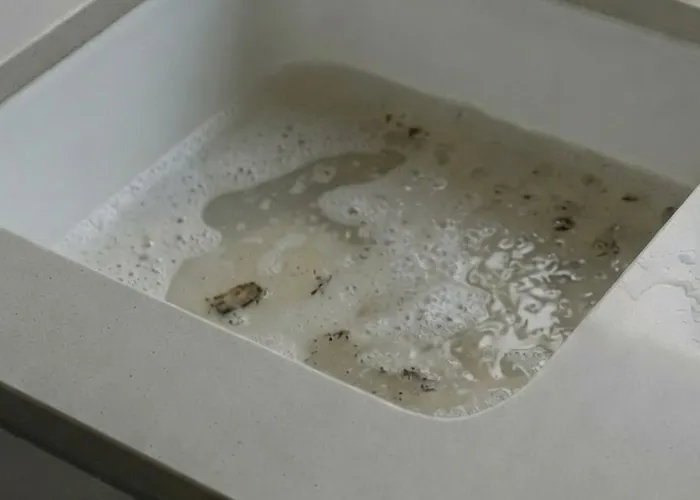
the two plumbing calls you never needed to make
A stopped toilet and a slow drain are most of what gets paid for. Three tools, a shoebox, about ten minutes.
Read the guide →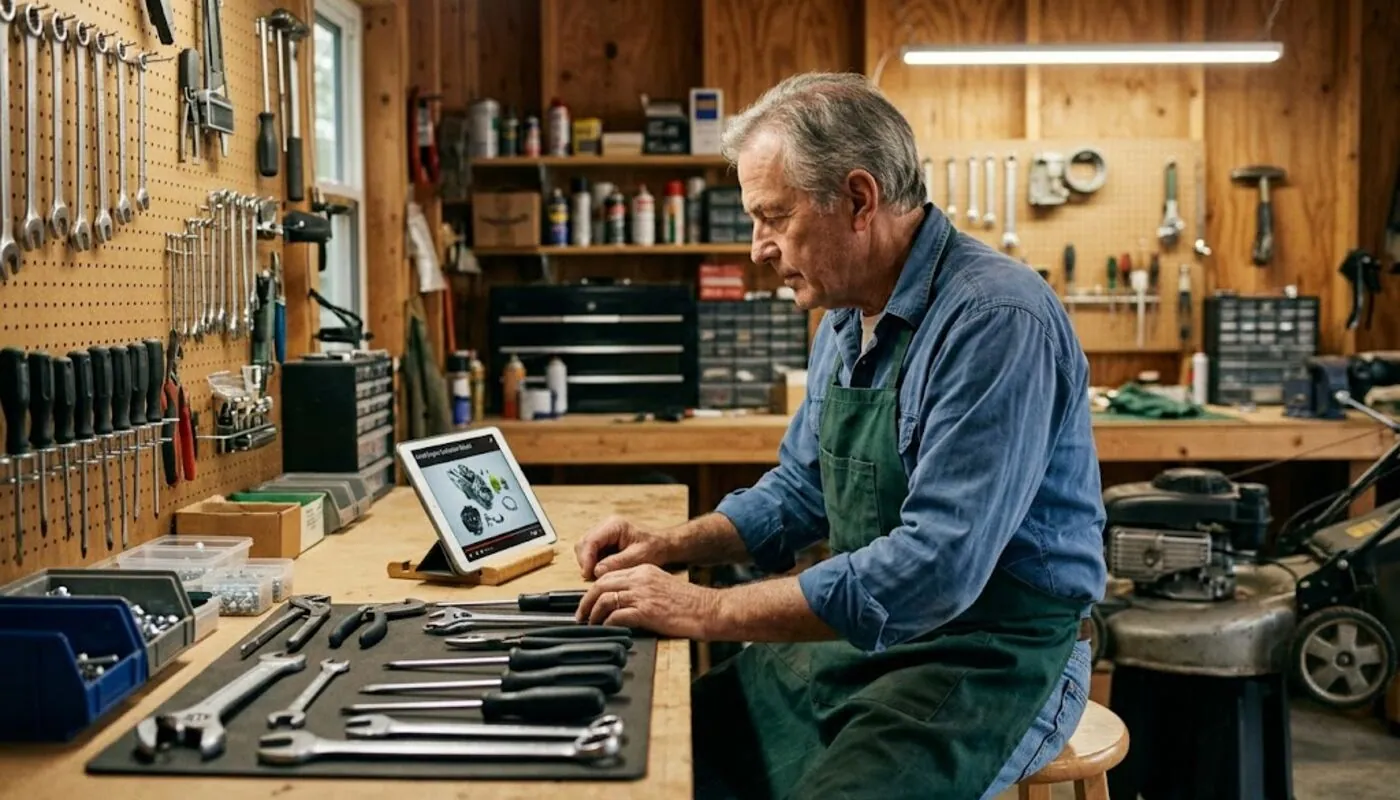
The repairs that pay for the whole toolkit
Five ordinary jobs that cost more to hire out, once, than every tool it takes to do them yourself. That is the arithmetic of this whole site on one page.
Read the guide →
The rest of the aging-in-place work, in order
The same argument widened out: what to do to a house, in what order, starting at fifty instead of at seventy-five.
Read the guide →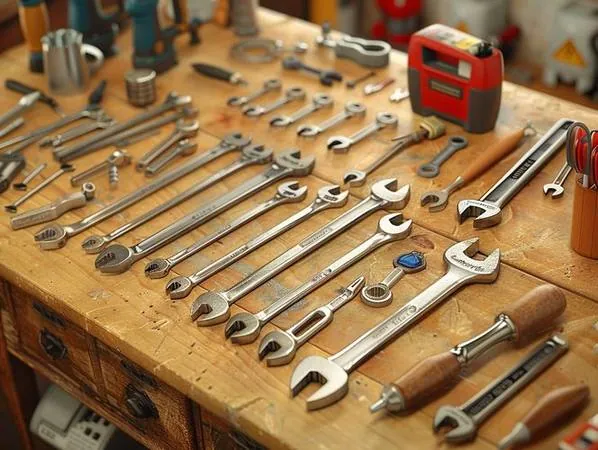
Tools bought once, at the age where that still pays
Buy well at fifty and the thing is still working at seventy-eight, which is exactly when it stops being your tool and becomes whoever turns up.
Read the guide →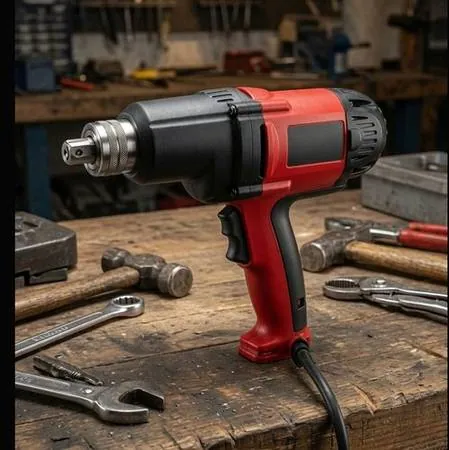
The ones with no battery to die on a shelf
A battery that has been in a drawer since 2019 is not a power tool. A cord has never once gone flat on anybody.
Read the guide →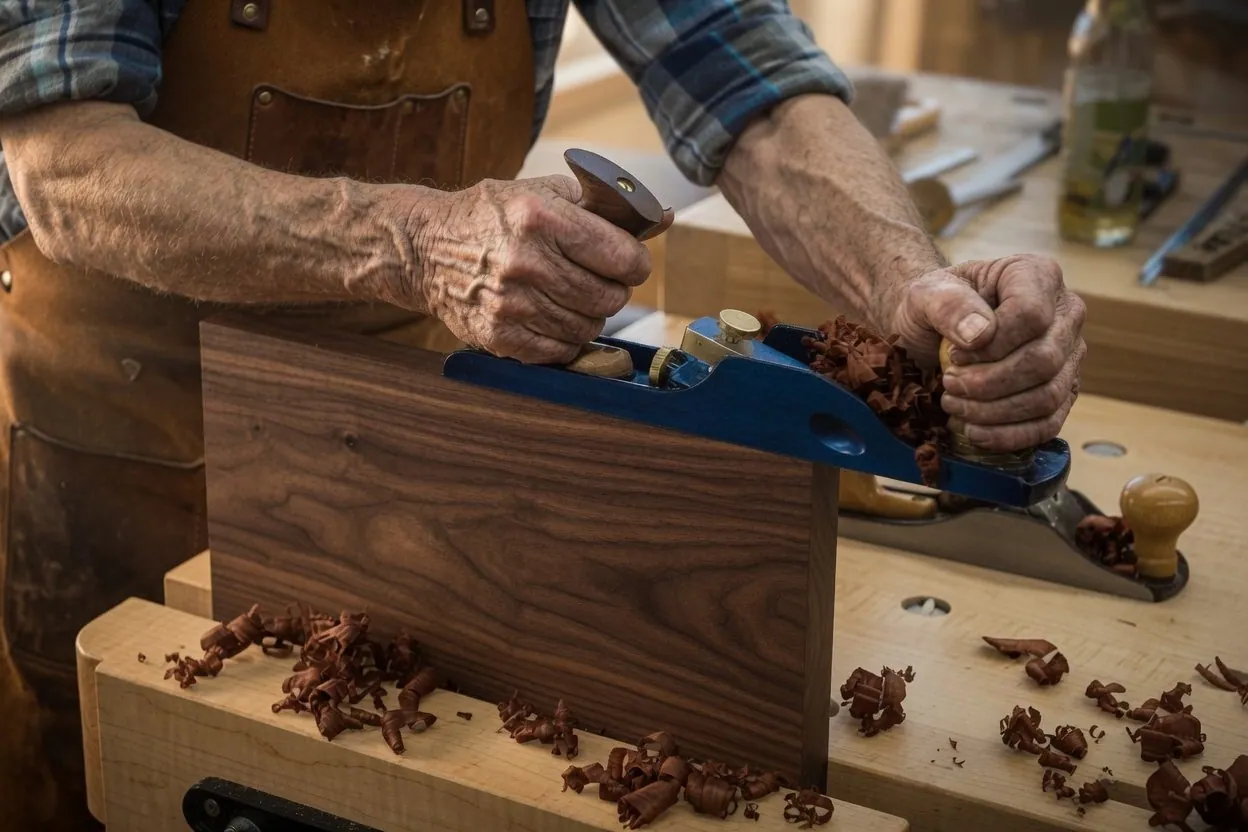
When a good tool starts to hurt to hold
A superbly made tool can still leave your palm aching after an hour, because it was shaped for a tradesman at thirty doing production work. Two different tests.
Read the guide →
The bathroom, which is the one that cannot wait
Everything else on this list will keep for a season. The bathroom is where the falls actually happen, and it is the one job worth doing out of order.
Read the guide →
Why every page here is on the same list
The spine of the site: why the generator, the grab bar and the hand saw all turn out to be the same argument wearing different clothes.
Read the guide →What This One Buys You
The right to be the one who decides.
Not a safer house, though it is that too. A house that answers for you in a conversation you are not invited to. The tools, the knowing, and the people — all three bought years early, while they were cheap and nobody was frightened.
If it happens anyway: radar fall detection, and the ninety-seven per cent nobody presses →
❓ Plain Answers
The short version of this page, one question at a time — the answer is always the first line.
Where is the cheapest place to buy good used tools?
An estate sale is the cheapest place to buy tools in America today, often for about a tenth of the new price. Go early for the choice and late for the price, and plug in power tools before money changes hands.
What tools do I need to replace a board on my front steps?
Replacing boards on front steps takes a saw, a tape measure, a hammer, a square and a box of deck screws. A circular saw works if you have one, and a hand saw if you have not.
Does a lifetime tool warranty still count if I buy the tool used?
Some lifetime tool warranties follow the tool and some only cover the person who bought it new, so it depends on the maker. Check what the guarantee says today, and none of them covers ordinary wear.
How can I get home repairs done if I cannot climb a ladder anymore?
Build a circle of people before you need it, through a church, a senior center, a community center, a neighbor or your county's Area Agency on Aging. Keep the ladder and gloves ready for when somebody says yes.
Is it safe to get under a car on a jack to change the oil?
No, never get under a vehicle supported by a jack alone, because a jack is a lifting device, not a holding device, and jacks fail. Use jack stands rated for the weight, on level concrete, with the wheels chocked.
Why do small home repairs matter so much for staying in your own home?
Small unfixed repairs add up to a house that visibly is not being kept, and that becomes the evidence when family decide whether you can still manage it. A house in decent order speaks for you.