What Goes On the Card — And the One Thing That Never Does
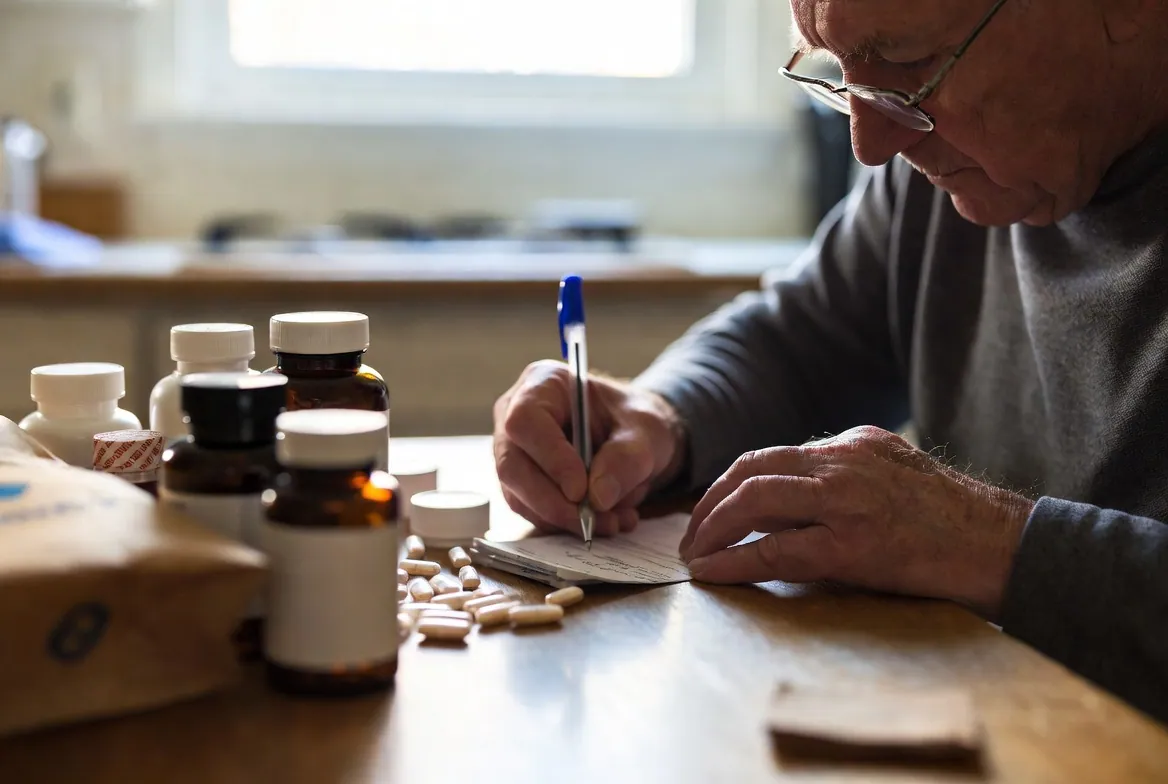
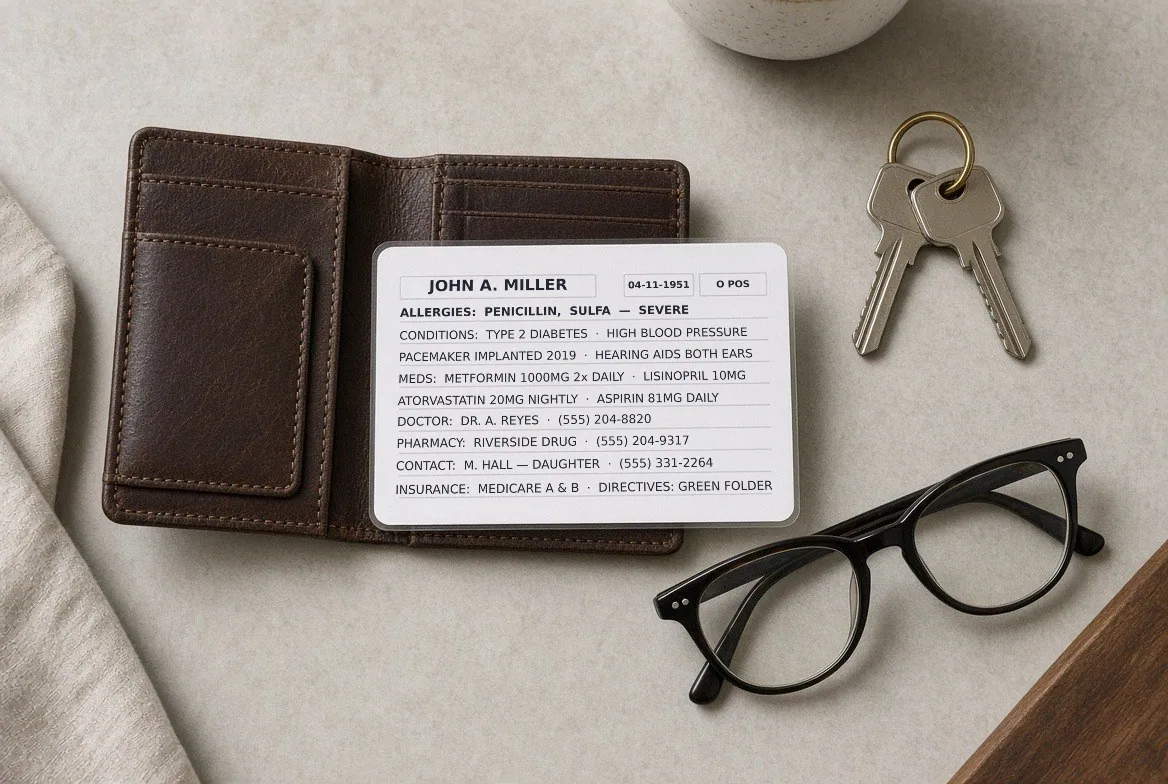
Think of it as the answers to the questions a paramedic asks in the first ten minutes — written down while you're calm and healthy. Name and date of birth. Every current medication, with dose and how often — this is the pharmacist-conversation list, doing double duty — and it means everything you take, not just prescriptions. The daily aspirin, the vitamins, the fish oil: responders treat the whole picture, and the over-the-counter shelf is part of it, especially alongside a blood thinner. Drug and food allergies, in big letters; an allergy a responder doesn't know about can turn treatment into the emergency.
Diagnosed conditions — diabetes, AFib, COPD, a pacemaker or other implanted device, hearing aids, the things that change what care looks like. Your doctor's name and number, your pharmacy, two emergency contacts with their relationship to you. Your insurance or Medicare plan name. And if you have advance directives, a one-line note about where the documents are — the card doesn't make those decisions, it just tells people where your decisions are written down.
The card is the part a paramedic reads in ninety seconds. There is a longer version of the same idea for everything that comes after — who decides, which insurer, where the deed is, and who feeds the dog. That is on the folder page.
And the one thing that never goes on it: your Social Security number. Not on the wallet card, not on the fridge sheet, not anywhere. A lost wallet with a medical card in it should cost you a re-print, not your identity. Same restraint for account numbers of any kind — the plan name is enough; the responders don't bill you from the kitchen.
Free printable — nothing to buy, nothing to sign up for. We turned this exact list into paper: a full-size sheet for the refrigerator and two cut-out wallet cards — one for you, one for your spouse. And by design, there is no line for a Social Security number anywhere on it, so the rule above is built into the paper itself.
Download the printable card (PDF) →Where It Lives — The Fridge Is Not a Joke, It's the Protocol
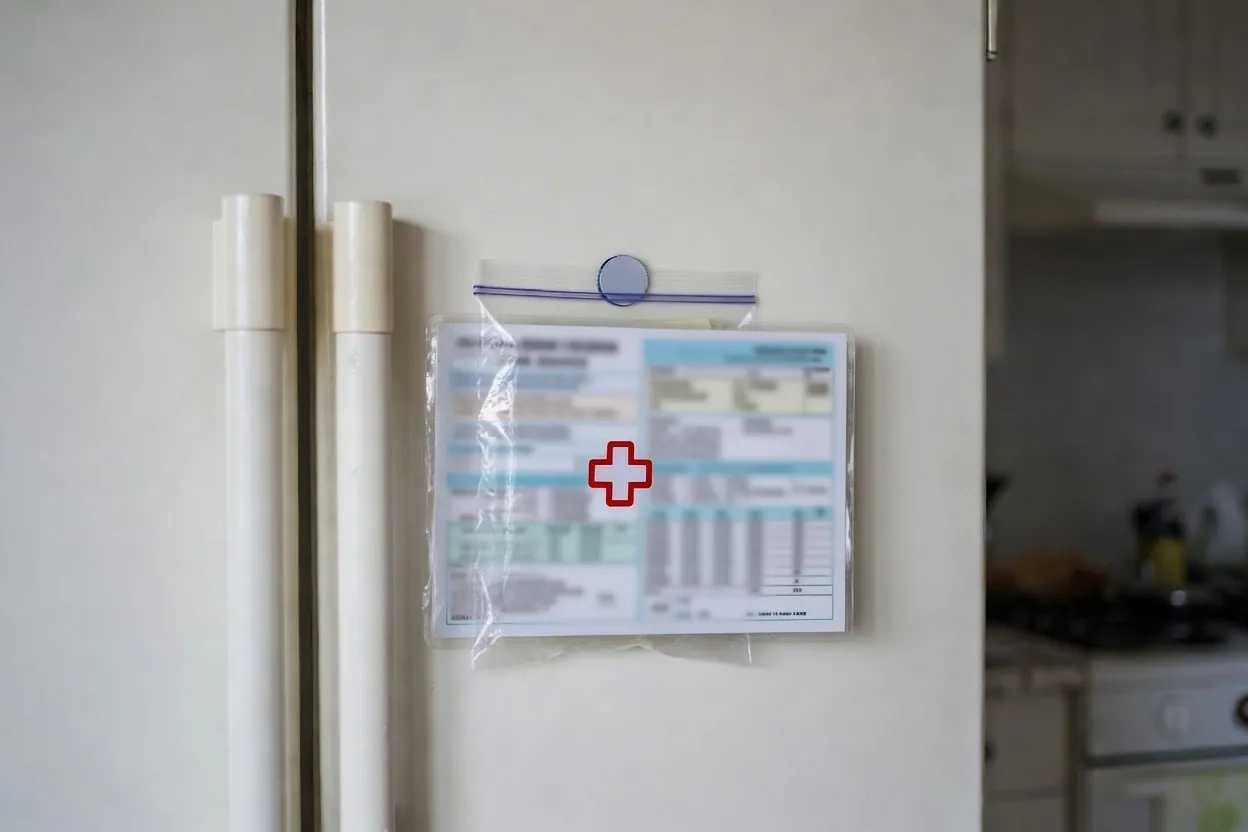
Copy one: the refrigerator. This sounds like folk wisdom and is actually national protocol. The Vial of Life program — distributed free by fire departments all over the country — puts your medical form in a labeled pouch or container on or in the refrigerator, with a decal on the fridge and one for the front door or window. First responders know to check the refrigerator for exactly this, because the fridge is the one object in every American home they can find in the dark. Put the sheet in a zip bag on the fridge door where it can be seen — not in a drawer, not behind the grandkid art.
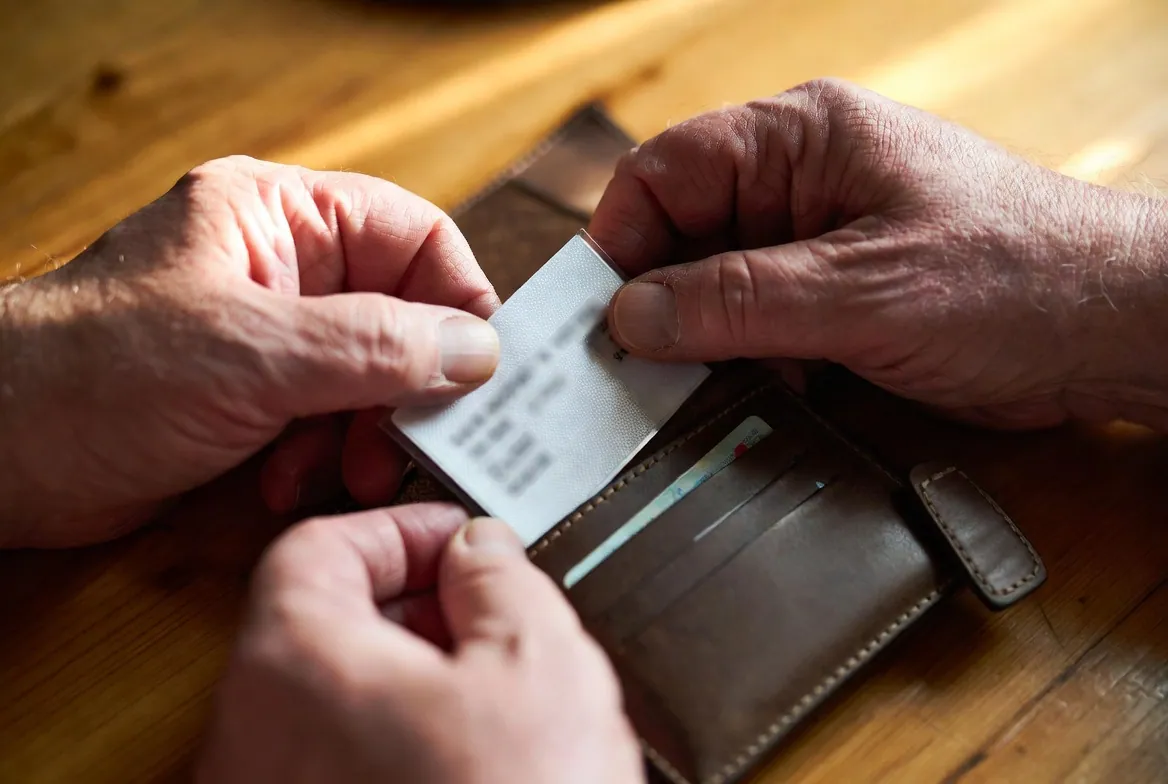
Copy two: the wallet, right behind the driver's license — because away from home, the wallet is where responders look for who you are. Copy three: the go-bag and the glove box — the go-bag because an evacuation is precisely when a new doctor in a new town knows nothing about you, and the glove box because the truck is where a lot of life happens.
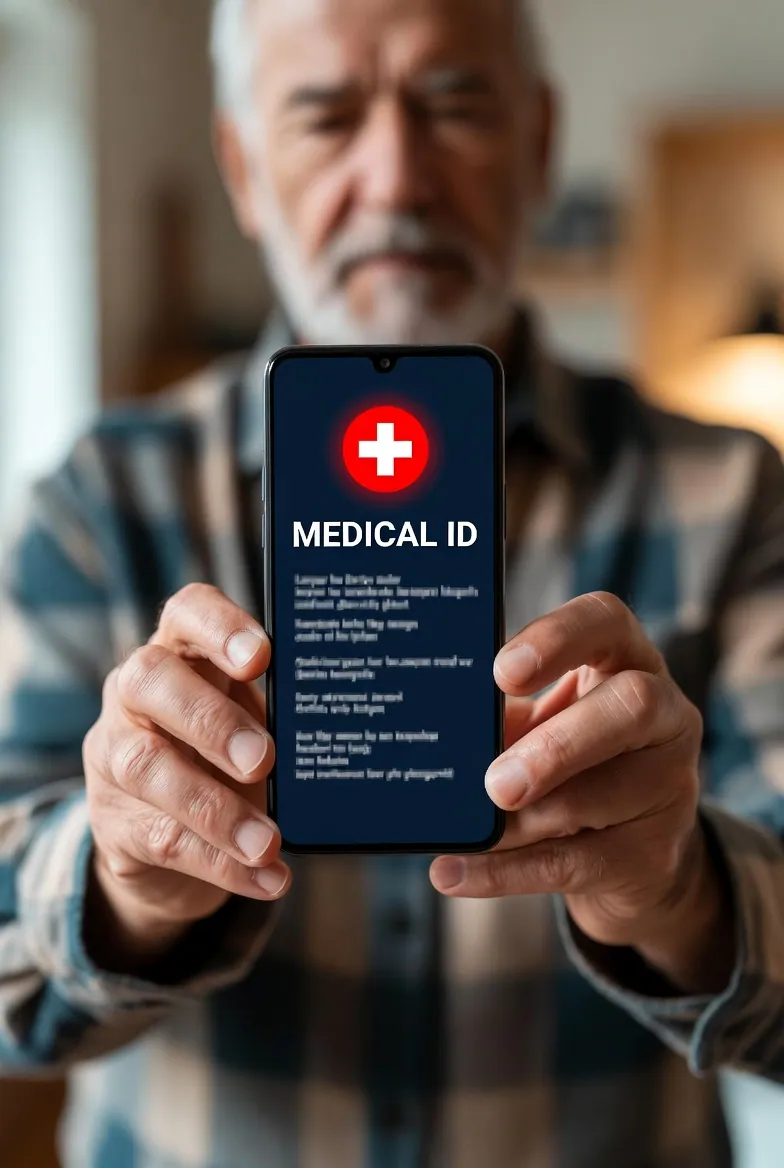
And the modern layer: your phone's lock-screen medical ID — both major phone systems have a built-in feature that shows medications, allergies, and emergency contacts from the lock screen without unlocking the phone, and responders check for it. Set it up the same afternoon you make the cards; the grandkids can do it in ninety seconds if the settings menu argues with you.

Where to find it on the phone — and what it is called
On an iPhone, it is called Medical ID, and it is not something you download — it lives inside the Health app that came with the phone (the white icon with the red heart). To set it up: open Health → tap your picture in the top corner → tap Medical ID → tap Edit and fill in your medications, allergies, conditions, and emergency contacts — the same list that is already on your card → then turn on Show When Locked. That last switch is the whole point: it is what lets a responder see the information without your passcode.
On most Android phones, it is called Medical info (some phones say “Emergency information”), and it is a settings screen, not an app at all. To set it up: open Settings → tap Safety & emergency → tap Medical info → fill it in → turn on Show on lock screen. Phone makers shuffle the menu names a little; if you don’t see it, type “medical” into the search bar at the top of Settings and it will take you straight there.
The one exception: Google’s Pixel phones handle it through a pre-installed app called Personal Safety — it shows up as just “Safety” in the app list. Same information, same job, same result. Whichever phone is in the house, the feature is free and already on it — it is just waiting to be filled in, and the grandkids can do the whole thing in the time it takes to pour the coffee.
And do it ahead of time, while you have a clear mind and no stress. That is when nothing gets forgotten — especially something important. Fill it out on an ordinary calm afternoon, the same day you make the paper cards, and the version of you having the worst day of the year inherits the work of the version who was having a good one.
One Per Person — Not One Per Household
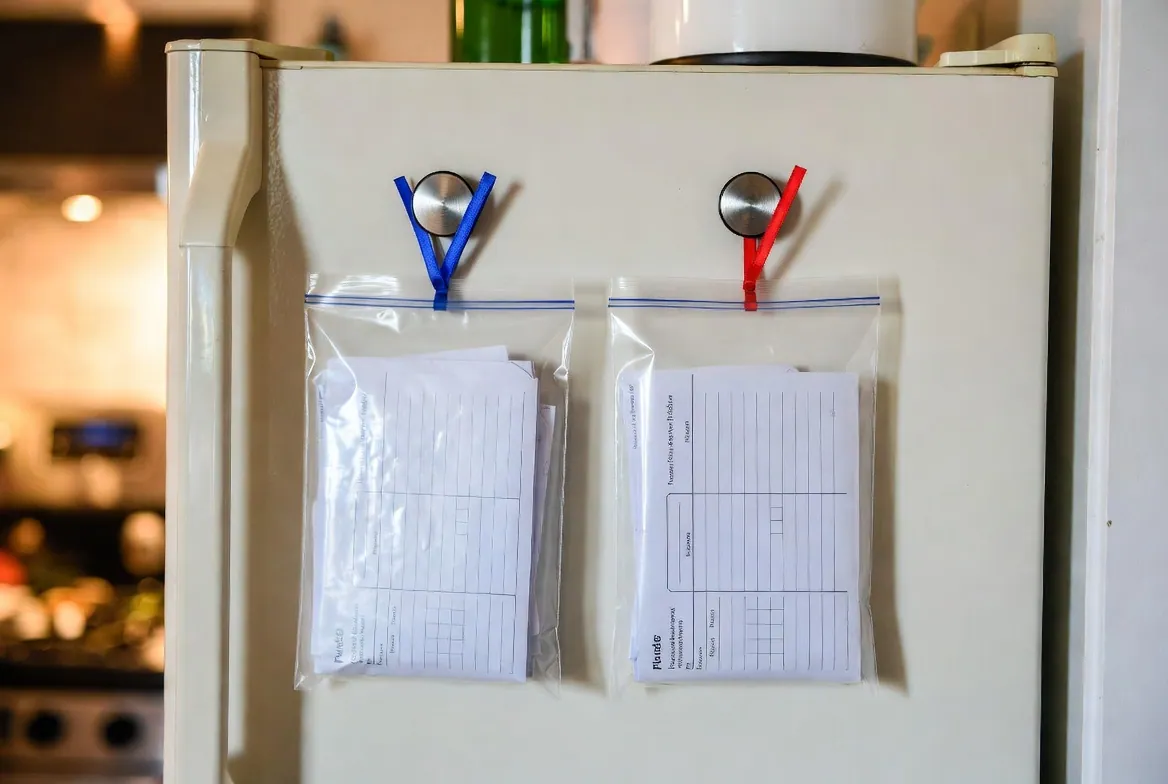
The card is personal equipment, like the slippers and the gloves with the names in the cuffs: your wife's card carries her medications, her allergies, her doctors — not yours. Two sheets in two bags on the fridge, clearly named. If a parent, a sibling, or a friend stays with you for a season, they get a card for the season. And tell the family where everything lives — the fridge bag, the wallet card, the phone feature — because the second-best person to speak for you is someone who knows exactly where you already did.
Keeping It Current — The Card Is Only as Good as Its Date
An out-of-date medication list isn't neutral — it can actively mislead the people trying to help you. So the card gets a date in the corner, big enough to see: "Reviewed July 2026." Then hitch the review to a rhythm you already have: every 90-day refill, glance at the card; any medication change, reprint the card that week — and June 1st, when hurricane country freezes the jugs and stages the cooler, the cards get their annual full read-through as part of the same ritual. Ten minutes to make, one minute to keep — and the laminated version means the kitchen, the rain, and twenty years of wallet can't blur a word of it.
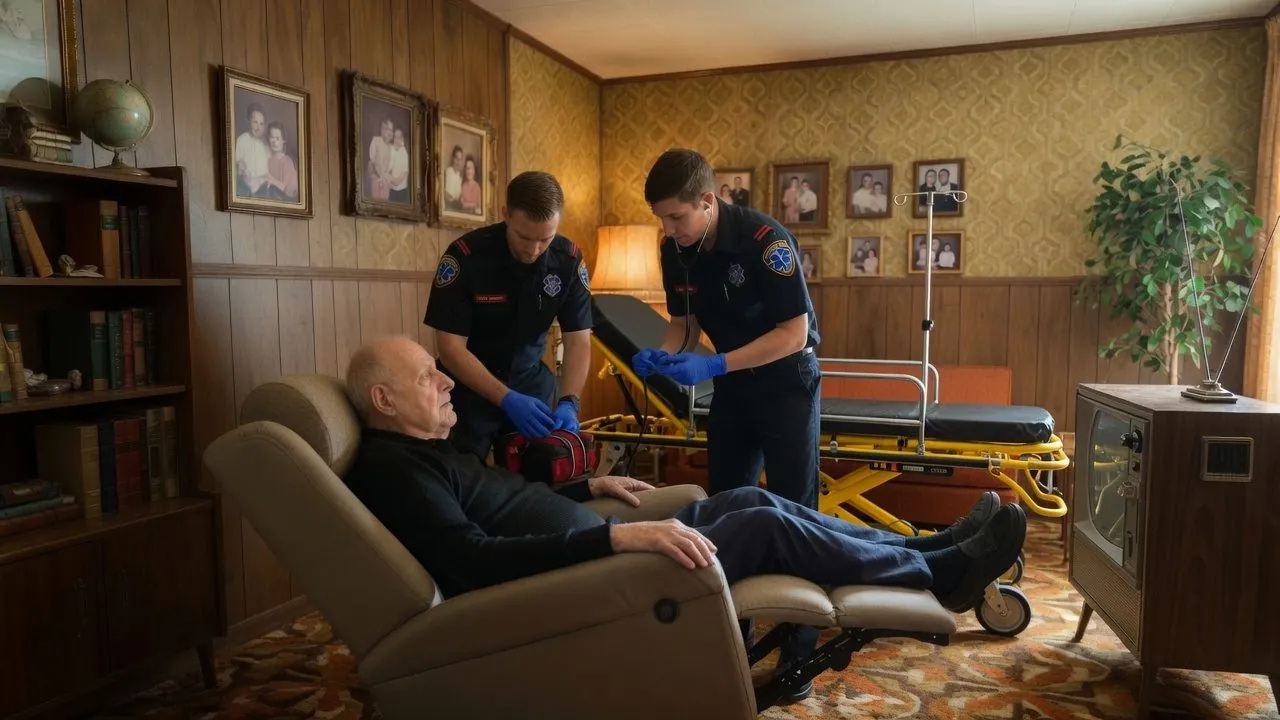
⚠️ A Story, and Then the Facts
And test it once. Hand the finished card to a friend or a grandkid and ask them to play paramedic: name, medications, allergies, doctor, who to call. If they can answer all five in thirty seconds without asking you anything, the card works. If they stumble, whatever slowed them down is what you rewrite.
Your Checklist — Done Before Dinner
✅ Ten Minutes, Four Copies, One Phone Setting
That finishes the medical shelf of this website: the monitors and the drawer, the 90-day supply, the cold-chain plan — and now the card that introduces all of it to a stranger at the worst possible moment, in your own handwriting, dated this year.
The Vial of Life program details on this page — the refrigerator-stored medical form, the fridge and door decals, free distribution through fire departments and senior organizations, and responders' practice of checking the refrigerator — are drawn from the program's own materials at vialoflife.com and overviews from SafeWise and Western & Southern's Vial of Life guide. The story above is a composite illustration — no real persons or events. This page is not medical or legal advice: what belongs on your card, whether a medical ID bracelet is right for you, and anything involving advance directives are conversations for your doctor, your pharmacist, and your family.
❓ Plain Answers
The short version of this page, one question at a time — the answer is always the first line.
What should go on a medical information card?
A medical information card should list your medications with doses, your allergies, your conditions, your doctor and pharmacy, and two emergency contacts. Add your name, date of birth and insurance or Medicare plan name, and include over-the-counter pills and vitamins.
Should I put my Social Security number on my medical card?
No, never put your Social Security number on a medical information card, the wallet card or the fridge sheet. A lost wallet should cost you a re-print, not your identity, and account numbers stay off too.
Why do people keep medical information on the refrigerator?
Keeping medical information on the refrigerator follows the Vial of Life program, and first responders know to check the fridge for it. Put the sheet in a labeled zip bag on the fridge door where it can be seen.
How do I set up Medical ID on my iPhone?
On an iPhone, open the Health app, tap your picture, tap Medical ID, tap Edit and fill in your medications, allergies, conditions and contacts. Then turn on Show When Locked so a responder can see it without your passcode.
Where do I find medical info on an Android phone?
On most Android phones, open Settings, tap Safety & emergency, tap Medical info, fill it in and turn on Show on lock screen. If you don't see it, type “medical” into the Settings search bar.
How often should I update my medical information card?
Glance at your medical information card at every 90-day refill, reprint it the week of any medication change, and give it a full read-through once a year. Write the review date in the corner.