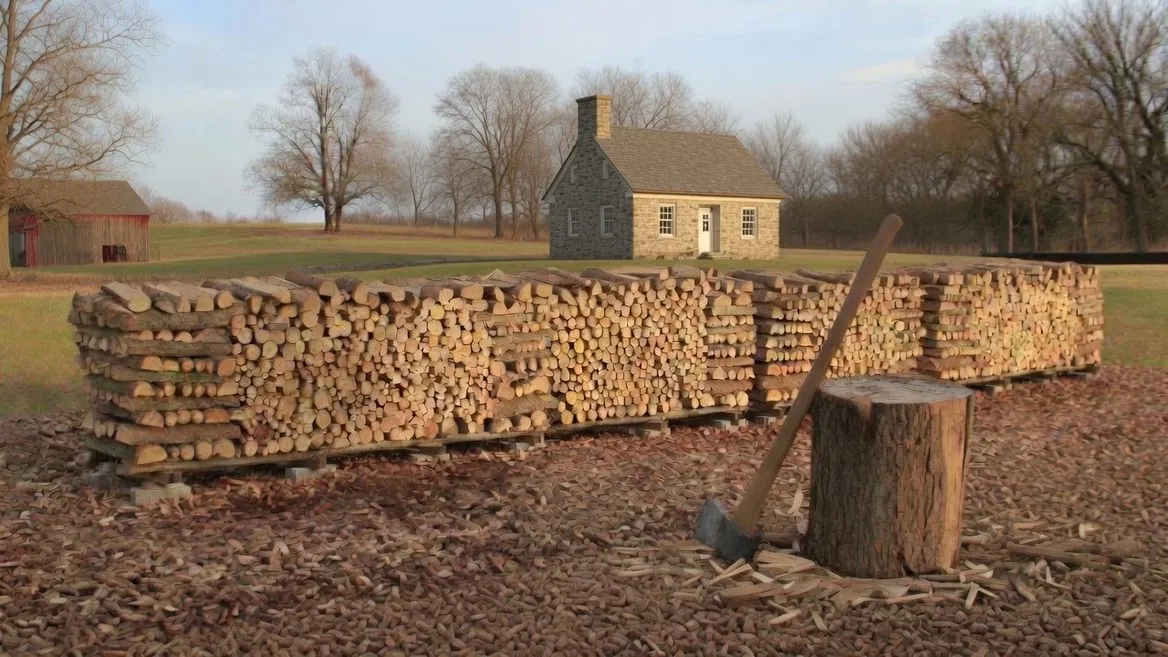
🏡 Where I Got My Opinion
A man ought to say where his opinions came from, so you can weigh them properly and throw out the ones that were only borrowed.
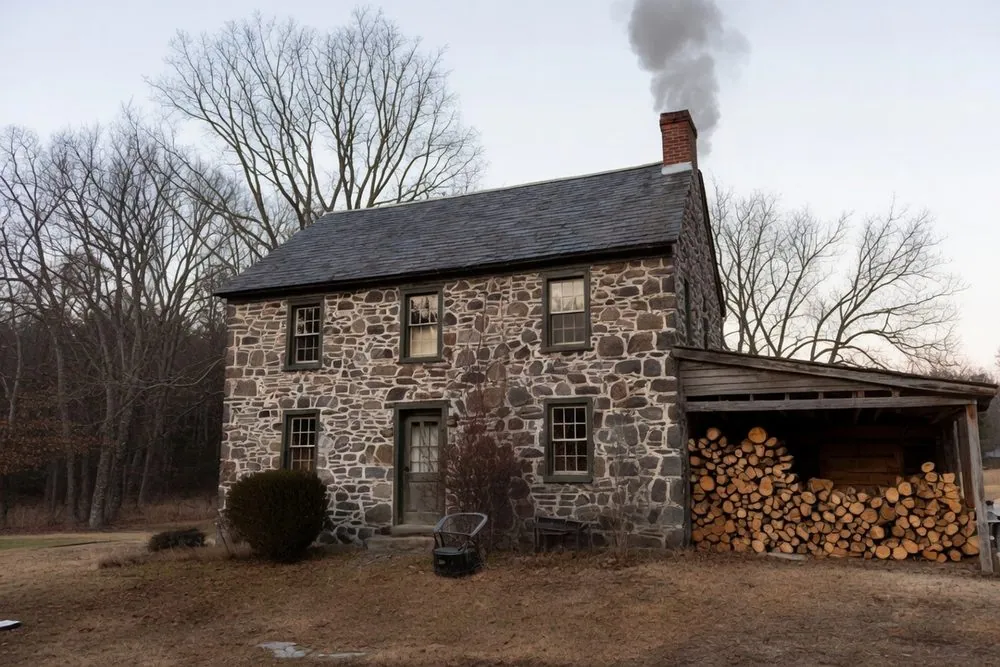
I kept a stone farmhouse on seven acres outside Frederick, Maryland. Cows, chickens, sheep and goats. A garden that wanted weeding whether I wanted to weed it or not, butter and cheese to make, eggs to gather, and canning that started in July and quit when I ran out of jars or daylight, whichever came first.
That house burned better than eight cords of wood the first winter I had it.
Eight cords. I did not get that figure out of a book. I carried it through a kitchen door an armload at a time (and if I were starting that job again today I would do it with a garden wagon and my arms free to see my own feet), and there is no education in the world quite like it. A stone house is a beautiful thing to look at and a hungry thing to heat, and it does not care about your plans for the weekend.
Everything further down this page was paid for in that manner.
⚡ The Night the Wire Comes Down
Now, a man with good electric service may wonder why he should trouble himself about firewood at all. Here is why.
Your furnace burns oil, or it burns gas, and you would naturally suppose that makes it independent of the power company. It does not. That furnace has a fuel pump, an igniter, a circuit board and a blower, and every last one of them draws its living off the wire coming in from the pole. When that wire comes down, your full tank of oil is still a full tank of oil, and your house is precisely as warm as the weather outside says it is. The heat pump is worse. The thermostat on the wall is a decoration.
The woodstove does not know the power is out. It has never known. It holds no opinion whatever on the subject of the grid and did not ask to be connected to it in the first place.
And when the wire goes it generally takes the telephone with it, sooner or later — the tower has a battery, and the battery has its own notions about how long it means to keep working. The internet goes with it, and so does the news, and so does every arrangement you had for reaching another human being in a hurry.
So there you sit. One man, his house, whatever he had the foresight to lay in, and whatever the weather has conjured up outside the door. That is not a frightening thought and I do not offer it as one. It is an arithmetic problem. It has an answer. And on a well-run place the answer has been standing out in the woodshed since April, seasoning quietly, asking nothing of anybody.
If you want the whole account of what a week like that actually does to a household, it is on the Midwest outage page, told day by day. This page is only about the part of it that keeps you warm.
💧 A Cord of Water, Delivered
A living tree is mostly water, and it does not stop being mostly water merely because it has been inconvenienced with a saw.
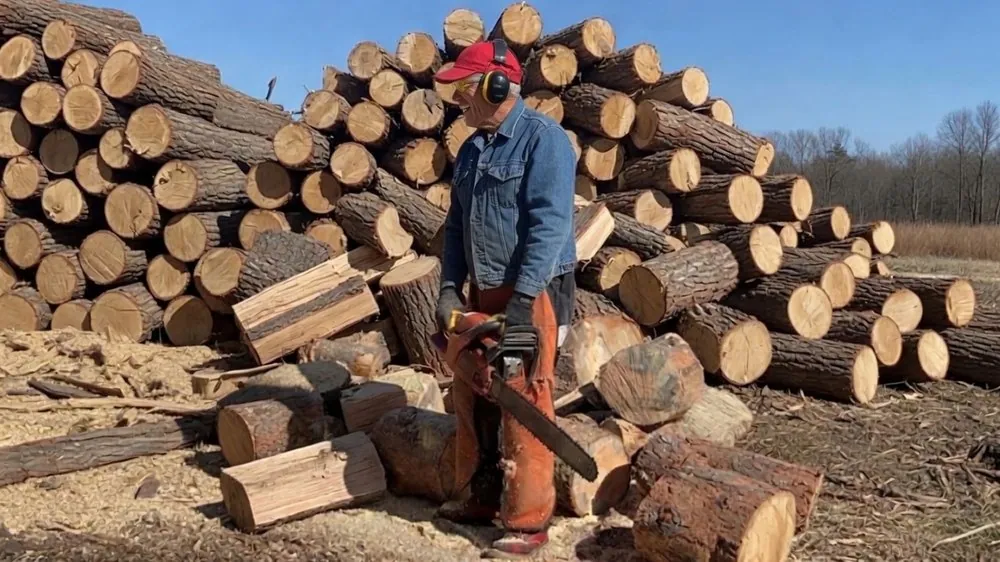
Fresh-cut wood runs to about half water by weight. Half. You may lay a log of it on the fire and the fire will take it politely, the way a man takes on a chore he did not volunteer for, and then it will spend the better part of an hour boiling that water out before it gets round to the business of warming anybody.
That is where your heat has gone. Not up the chimney — into steam. You bought a cord of firewood, and a good share of what came off the truck was water, freighted to your door at firewood prices and stacked by your own hands.
Dry the same wood under twenty per cent and it burns like it has somewhere to be. Nothing about the tree changed. Only the water left.
I hold no grudge against the man who sells green wood. He is doing what the trade permits, and the trade permits a great deal. My objection is to the arrangement whereby he knows precisely what he has got on that truck and you do not. The rest of this page is arranged to correct that arrangement.
🔥 The Slow Manufacture of a House Fire
Here I must leave off being amusing for a paragraph or two.
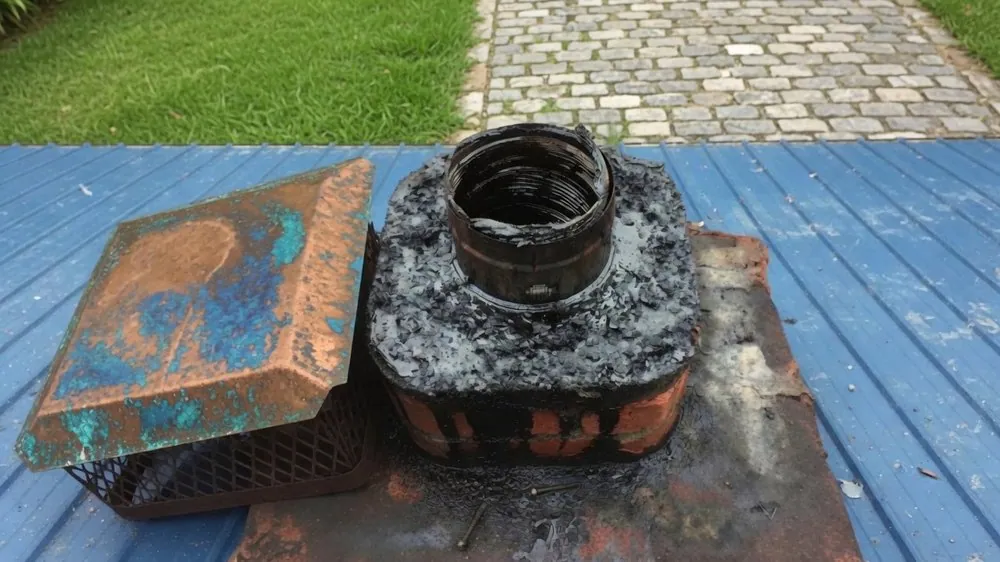
A cool fire is a smoky fire, and smoke is nothing but fuel that never got burned. It goes up the flue, meets cold brick, and lies down there as creosote — a black tar that hardens and thickens, coat upon coat, week upon week, like a man putting on another jacket every Sunday and never once taking one off.
Creosote burns. That is its leading characteristic and the only one worth committing to memory. So the man who burns wet wood all winter is not merely cold and ill-tempered. He is building a fire inside his own chimney on the installment plan, paying it down in weekly deposits, and on the day the account comes due there is a noise in the wall like a freight train and a light above the roof that the neighbors can see from their kitchens. And the neighbors will gather, as neighbors do.
Two conclusions follow, and neither is a matter of taste.
Burn dry wood. It is the one thing entirely within your control that changes how fast that tar accumulates.
Have the chimney swept once a year by a man who does it for his living. Have it done whether you believe it wants doing or not, because belief is not a survey. And do not go up on that roof yourself at seventy in order to save the fee. The fee is cheaper than the funeral, and a good deal cheaper than the house.
📅 Concerning Time, Which Cannot Be Hurried
Wood dries on its own schedule and there is no negotiating with it. You may plead, you may plan, you may buy the finest stove in the county. The wood is indifferent to all of it.
Most species want six months to a year, split and stacked out in the weather where the wind can get at them.
Oak wants two years and will sulk if you press it. The compensation is that seasoned oak is about the finest firewood in creation — which is the usual bargain with slow things, and the usual reason people refuse the bargain.
The softwoods dry quicker, often inside six months, and burn quicker too, so they earn their board as kindling and as autumn wood rather than as the log you bank the stove with at bedtime.
And it must be SPLIT. Bark is a raincoat. It was a raincoat while the tree was alive and it does not resign the position simply because the tree has died. Leave a log in the round and it will lie in your yard for three years — grey and weathered and thoroughly respectable on the outside, green as April in the middle — and it will deceive you every time, because you are looking at the outside, which is exactly what it wants. And if splitting a winter’s worth is beyond you now, that is exactly what a wood bank is for — there are about 250 of them, and one has been serving seniors since 1979.
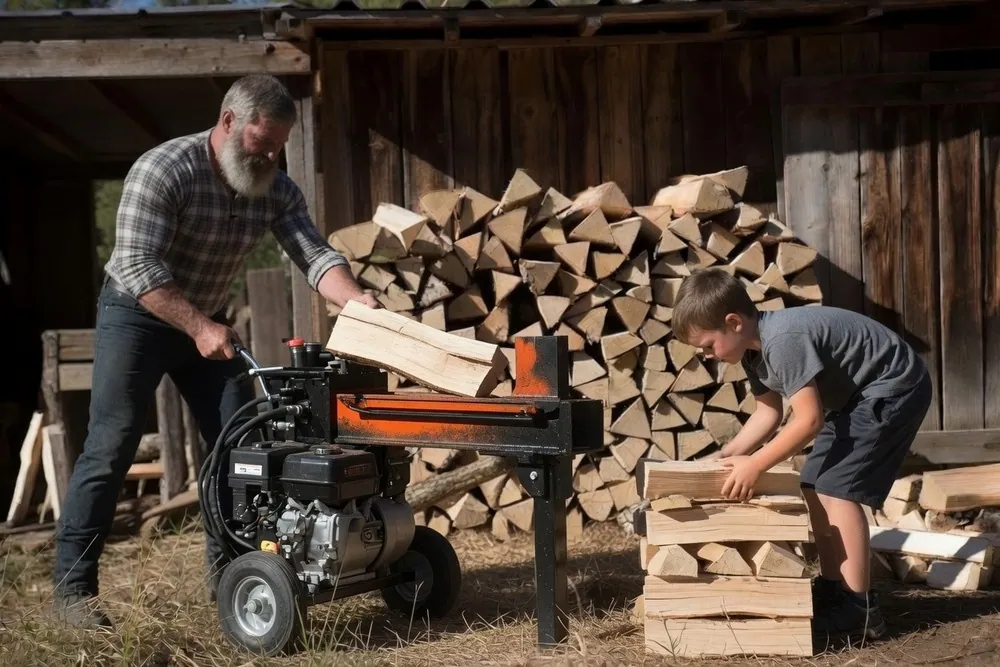
Which brings us to the only calendar that matters. Not the day the tree came down. The day it was split and stacked. The wood you burn this winter should have been somebody’s warm afternoon two summers ago.
🔍 How to Tell, With Nothing But Your Hands
You will be offered wood by a man who says it is seasoned, and he may even think so. Here is how you find out, standing in his yard, owning nothing but the hands you came with.
Look at the cut end. Wood cracks as it dries, and the cracks run out from the center like the spokes of a wheel. A green face is smooth and untroubled.
Look at the color. Grey, dull, weathered, plain. If it looks freshly cut it is freshly cut, and no amount of assurance will change it.
Pick it up. Half the water is gone out of seasoned wood, and once you have hefted both you will find the dry piece almost insultingly light for its size.
Knock two pieces together. This is the best of the lot and it costs nothing whatever. Seasoned wood rings. Green wood thuds, the way a wet cat lands. You will know the difference the first time you hear it and you will never require instruction again. That is the entire education, delivered in one second, free of charge.
And look at the bark, which on well-dried wood is often loose, or has given up and departed altogether.
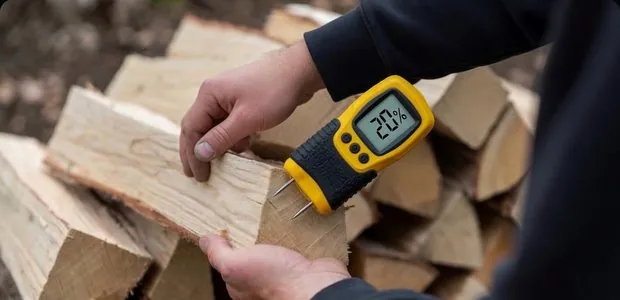
Should you buy a moisture meter — and they cost less than a tank of fuel — then use it honestly. Do not stick the pins in the outside of a log. The outside dries first and will tell you a flattering lie after any week without rain. Split a piece open and test the fresh inner face. That is where the truth lives. Under 20% is ready. Above 25% you have bought a boiler, not a stove.
And since a picture will settle an argument quicker than a paragraph ever did, here is the way most men hold that meter — which is also, and not by accident, the way that tells them precisely what they were hoping to hear.
🪵 The Tarp, and Other Well-Meant Disasters
A man may do everything else correctly and then undo the whole of it with eleven dollars of blue plastic.
He buys a fine tarp, throws it over the woodpile, ties it at all four corners, stands back and admires the tidiness of it. What he has constructed is a sweat lodge. The water in that wood has to go somewhere, and he has just bolted the door. Cover the top third. Leave the ends and the sides wide open to the weather. Rain is not the enemy once wood is stacked properly; trapped evaporation is.
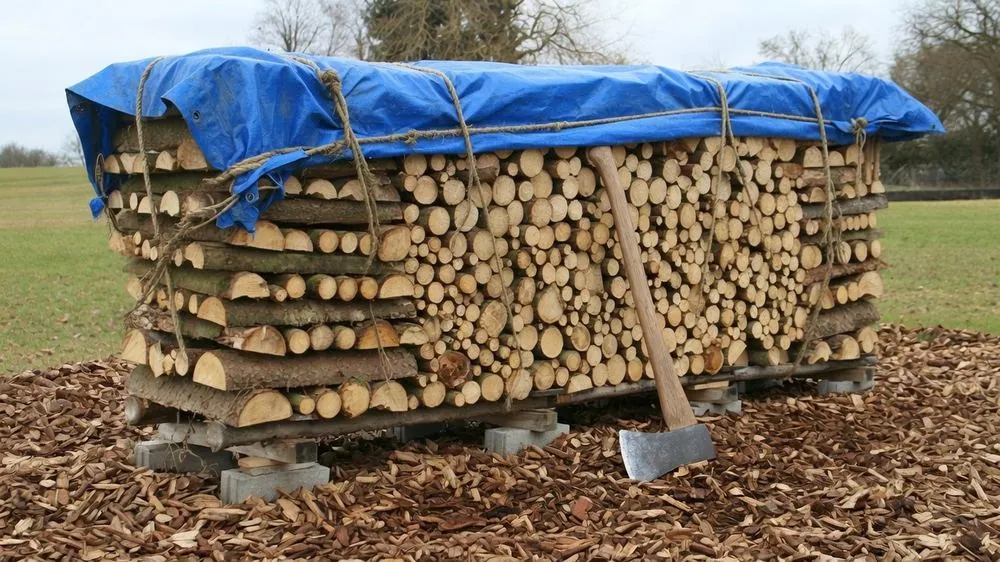
Get it up off the ground. Pallets, rails, a couple of old two-by-fours — anything at all. Wood stacked on bare dirt drinks the ground dry all winter and rots from the bottom row up, and the bottom row is the one you get to last, in February, when your opinions are already low.
An old farmer will tell you to stack it where the wind gets at it and never mind the sun, and on that particular subject the old farmer is right and has been right since before anybody wrote it down. Give it sun and give it wind, and if you must choose, choose wind. A single row standing out in the open where the weather can work on it will beat a fat handsome pile in a sheltered corner every time.
And one thing about a covered woodpile that nobody puts in the firewood articles. A tarp over a stack makes exactly the shelter a great many things are looking for — dark, dry, undisturbed, and full of gaps. Snakes use woodpiles. So do scorpions, black widows and brown recluses, wasps, mice and everything that follows the mice. They are not there by accident; you built them the best real estate on the property and then left it alone for four months.
So the rule is: never reach into a woodpile you cannot see into, and never put a bare hand under the tarp. Lift the cover from a distance and give it a moment before you go in. Wear the gloves. Take the wood off the top and work down rather than pulling from the middle. And be especially careful with the bottom row and anything against the ground — that is where they will be. At seventy, a bite miles from a hospital is a different proposition than it was at thirty.
And do not stack it against the house. It holds damp against your siding, it is a standing invitation to every carpenter ant in the township, and a large quantity of fuel piled against a wall is a thing the fire department would rather you reconsidered. Keep a week’s worth by the door. Keep the rest of it out in the yard where it belongs.
🧓 On Swinging Things
Splitting wood at fifty is a pleasure and a mild form of showing off. At seventy-five it is a negotiation between a man and his shoulder, and the shoulder has the better lawyer.
They say wood warms you twice — once in the splitting and once in the burning. Whoever said that first had never stacked it, never hauled it, and never gone out in December to dig the top row out from under six inches of snow with his supper going cold indoors. It warms you five or six times, and it collects most of them well in advance. That is the bargain, and it is a fair one, but nobody should sign it thinking it is two.
Which is the whole argument of this site, standing out in the open where you can walk round it. The tools and the racks and the woodshed get bought and built while swinging things is still fun, because a rack put up at fifty is still standing at seventy-five and has spared you ten thousand bends at the waist. A forged maul on a hickory handle does not wear out. You do, and on a schedule you did not set.
And here is the honest part, which the catalogues leave out. The day arrives when a man stops swinging and starts buying it split. It comes sooner for some than for others and there is no disgrace in it anywhere. What does not change on that day is the drying, the stacking and the covering — because none of that cares in the least who swung the maul.
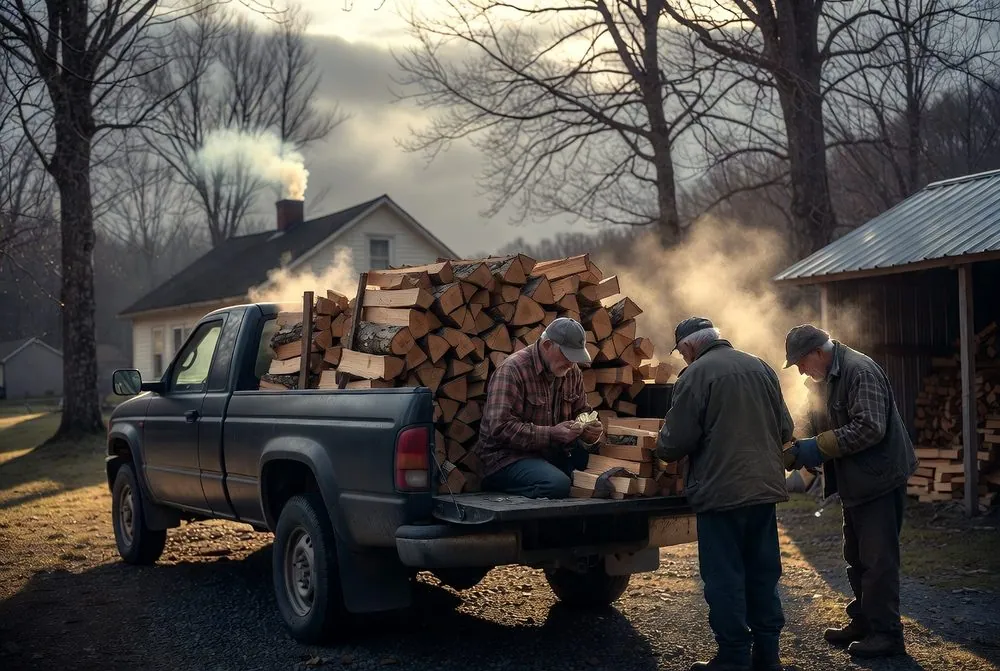
A word on the kindling splitter, since it is the one nobody has heard of. It is a fixed blade sitting in an iron ring. You set the wood on it and strike downward — no swing, no aim, and nothing whatever held in the hand you are swinging toward. It removes the single most dangerous motion in the entire business, and it removes it at any age you please.
Two more, and both free. Wear the gloves; there is a whole page on which sort for which job. And if you have reached the stage where a fall would be a serious matter, do not split alone. The wood is in no hurry. It has already waited two years and it will cheerfully wait until Saturday, when there is somebody else in the yard.
❓ Questions, Answered Without Charge
How can I tell if firewood is seasoned without a meter?
Knock two pieces together — seasoned rings, green thuds — and look for cracks running out from the cut face. The rest of the examination is up in How to Tell, With Nothing But Your Hands.
How long does firewood take to season?
Six months to a year for most of it, split and stacked. Two years for oak. The particulars, and why the splitting date beats the felling date, are in Concerning Time.
Can I burn wood the same year the tree came down?
You can make it burn. That is a different claim from saying it is fit to burn. Anything will catch if a man works at it long enough with enough newspaper and enough profanity, and afterwards he will tell you it burned fine. It did not burn fine. It burned reluctantly, gave up half its heat to boiling water, and laid down another coat of tar in his chimney while he watched. A tree that came down this October is next-winter-after-next’s firewood. If you need wood this winter, buy it dry from somebody and start your own pile the same afternoon.
And the reason to have a stove at all is not the fire. It is that it keeps making heat when everything else in the house has stopped — which is a plan of its own, and we have written it out in how to heat one room safely.
Should I put a tarp over my woodpile?
Over the top third, yes. Over the whole pile, you have made it wetter. The full account of that particular disaster is in The Tarp.
Is a moisture meter worth the money?
Yes, chiefly because it ends arguments. They cost less than a tank of fuel and they do not care how honest a seller’s face is. Only mind where you put the pins: the outer inch of a log dries first and will report a comfortable falsehood. Split a piece and read the fresh face. Under 20% is ready, 20 to 25% is a compromise, and anything above that is a kettle.
🛒 Buy It at Fifty
It all comes down to one sentence, and I am sorry to report that it is not a clever one.
You cannot buy dry wood in January. Oh, there is wood for sale in January, and plenty of it, at a fair price and delivered promptly. It is wet, and the man selling it knows exactly what month it is, and so do you, and that is the whole of the transaction.
The fellow who is warm in January was out in his shirtsleeves the previous April with a maul and no particular sense of urgency. He was not being wise. He was only being early — which is the same thing wearing work clothes.
And a man with a full woodshed in February is the most popular fellow on his road, and he did nothing whatever to earn that popularity except be early. Which is worth remembering, because the day may come when it is your turn to be cold and somebody else’s turn to be early, and neighbors have long memories about which way that traffic has been running.