💬 Three Cans, One Lesson
Nobody talks about the day the can opener wins. It is a small defeat in a private kitchen, and most people just quietly change what they buy at the store rather than mention it. As always on this site, the stories below are composite illustrations, not true stories — real patterns with no real persons or events.
📖 The Soup That Stayed Shut
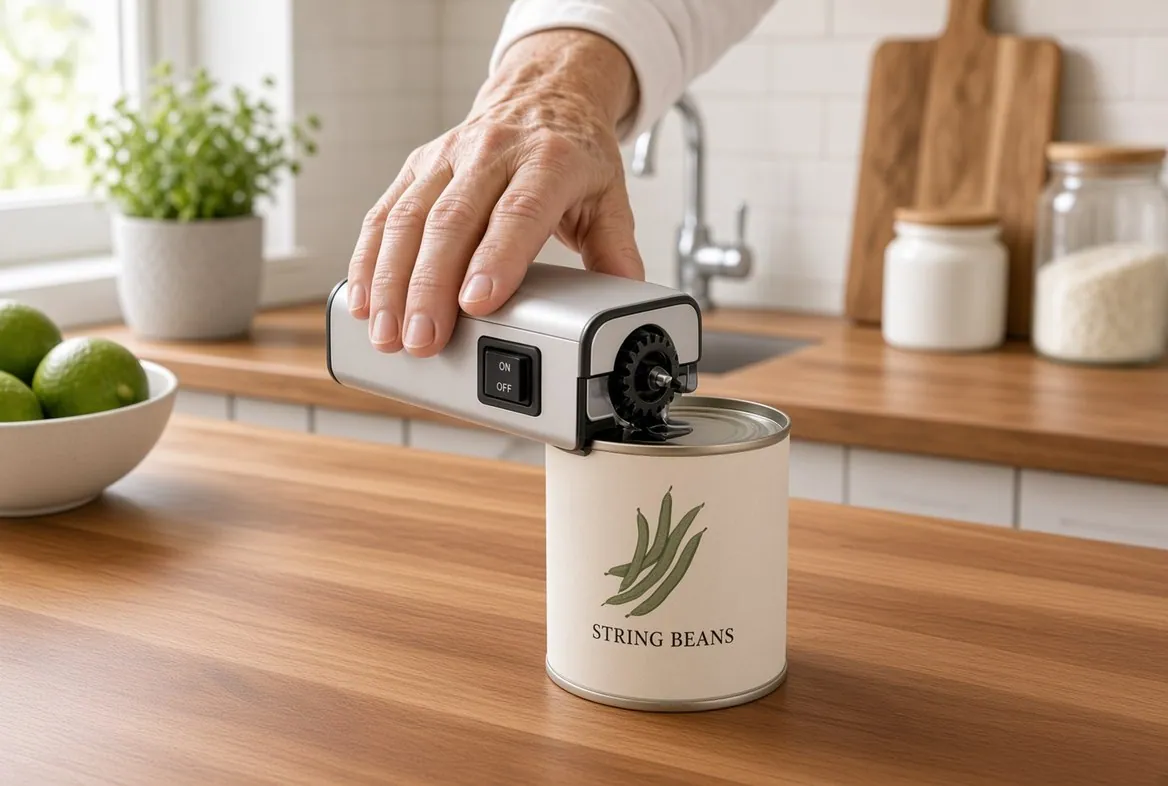
The chicken noodle was right there on the counter and her hands simply could not finish the job — the squeeze to keep the wheel biting and the twist to drive it around, both at once, on a bad-knuckle day. She tried the church-key end. She tried, for one regrettable minute, the point of a paring knife, which is how a lot of emergency room stories start. Then she put the can back in the pantry and had toast, and after that she quietly stopped buying cans at all — which meant the cheapest, longest-keeping food in the store had gone off her list. The battery opener her granddaughter brought sits on the can, walks itself around at the press of a button, and asks her hands for nothing. The soup aisle came back.
📖 The Lid in the Chili
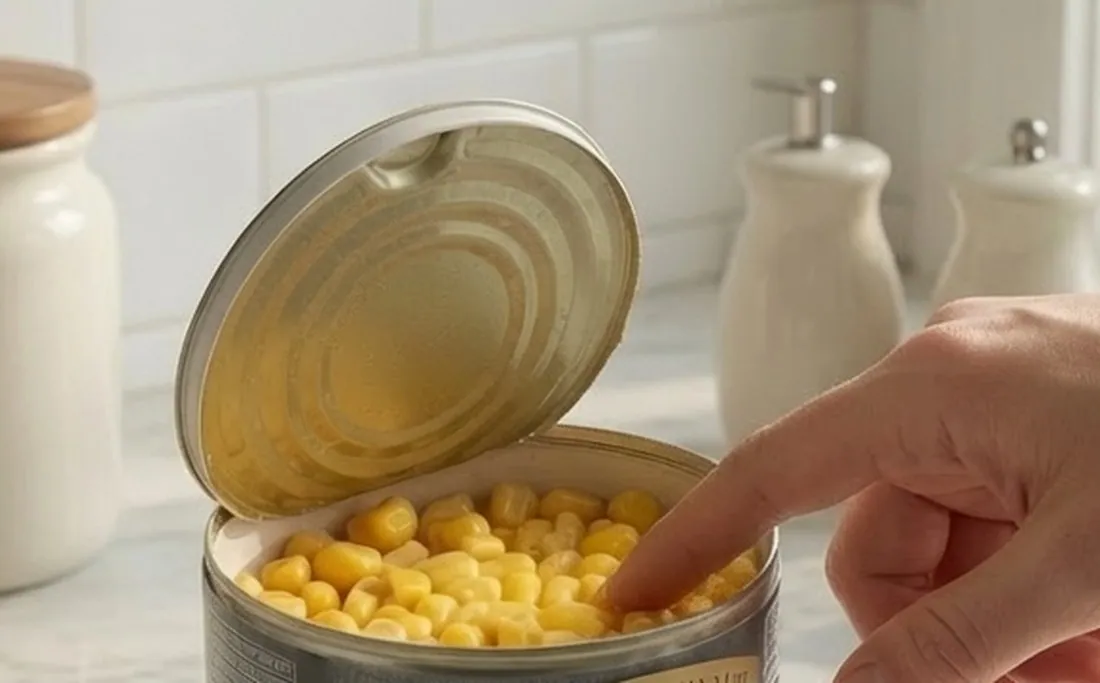
The old opener cut the lid loose from the top and dropped it, edge like a razor, straight into the chili — and he did what everyone does, which is go in after it with his fingers. The thumb healed; the habit needed replacing more than the skin did. His new opener cuts from the side instead: it unseals the seam below the rim rather than punching through the lid, so the lid lifts off blunt as a coaster and the can rim stays smooth too, and a little magnet holds the lid up out of the food entirely. Nobody in that kitchen touches sharp metal anymore, because there is no sharp metal to touch.
📖 The Hurricane Week Opener
The week the power stayed off, the pantry was the whole grocery store: beans, stew, fruit, the tuna nobody admits to stockpiling. Her countertop electric opener sat there as dead as the microwave — but the little battery one from the junk drawer ran all week on the same AAs as the flashlights, opening every can in the house with one press while the neighborhood ate crackers and complained. It is the rare electric convenience that keeps its promise in a blackout, and after that week it did not live in the junk drawer anymore. It lives with the flashlights, where the important things stay.
🥫 Why Electric — One Button Instead of Two Jobs
Watch what a manual can opener actually demands. One hand clamps the handles together hard enough to keep the cutting wheel biting into the rim — and holds that squeeze for the entire trip around the can. The other hand pinches a small knob and twists it, over and over, against real resistance.
That sustained squeeze-plus-twist is precisely the kind of gripping and twisting this site’s easy-grip guide exists to design out of a house — the same motion as the round doorknob and the stubborn jar lid, held for thirty seconds against a fighting piece of steel. If a lid has started winning arguments, that is ordinary arithmetic rather than anything about you: grip is the first thing to go, and it starts at fifty.
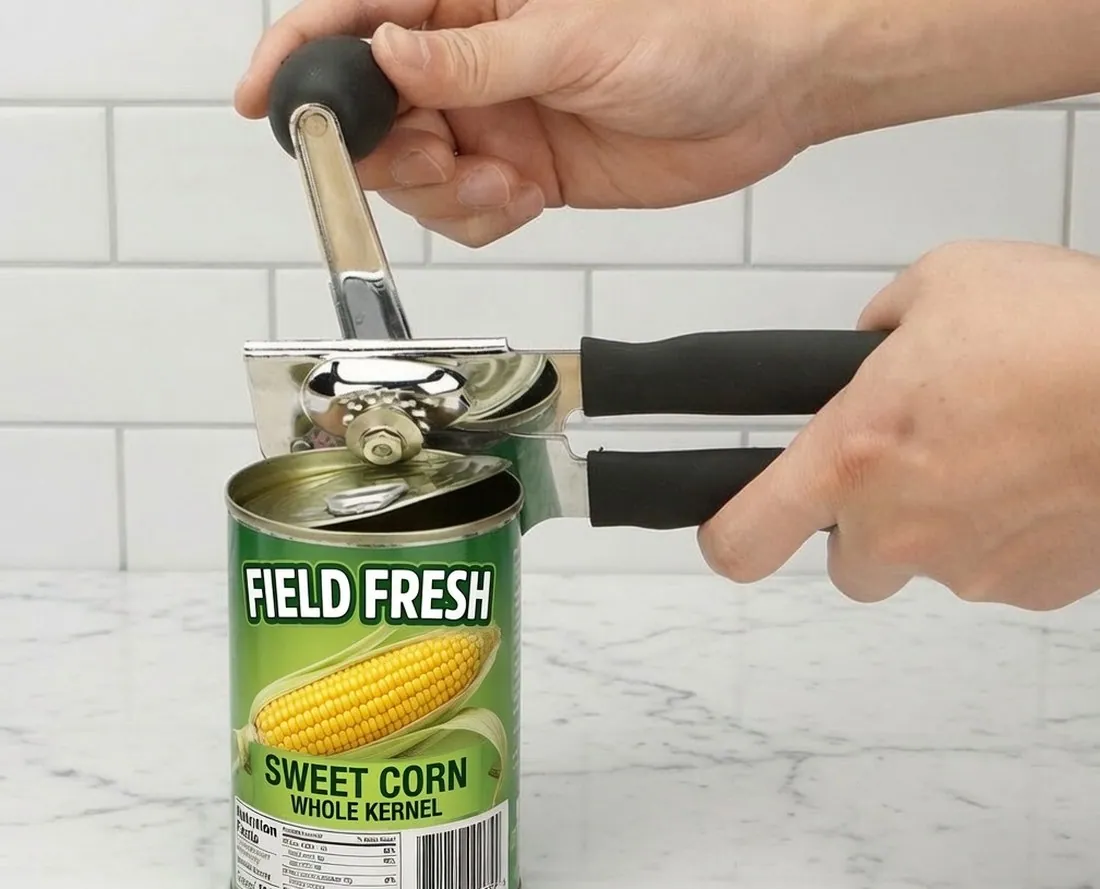
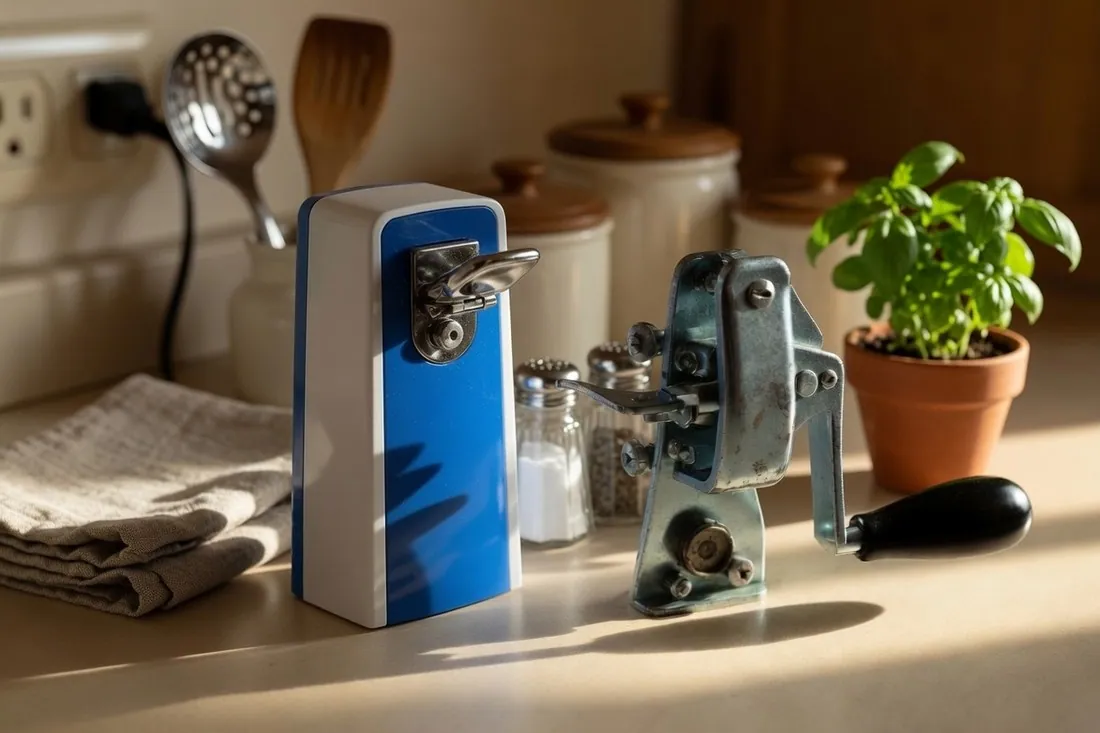
An electric opener replaces the whole performance with a press. The countertop kind clamps the can, drives the wheel with a motor, and holds the lid on a magnet when it is done. The little battery-powered kind is even simpler: set it on top of the can, press the button once, and it drives itself around the rim hands-free while you get the bowl out. Either way, your hands supply a decision instead of force — and like the kettle and the multi-cooker before it on this site, the machine does the part that used to hurt.
📊 The Reasons Behind the Button
Two facts carry this whole page. The first is about hands: grip strength declines with age for nearly everyone — the evidence is laid out in the numbers section of the easy-grip guide — and occupational therapists who work with arthritis single out sustained, forceful gripping and twisting as the exact motions that trigger joint pain and should be engineered out of daily tasks. A manual can opener is that motion, bottled and sold. The therapists’ standing advice for moderate arthritis is blunt: switch to an electric opener and let the machine do the work.
The second fact is about the metal. A traditional opener is a top-cut design: it punches through the lid from above and shears it loose, leaving a razor edge on the lid and a matching one inside the can rim. A side-cut, smooth-edge design does something smarter — it rolls along the outer seam below the rim and unseals the can instead of piercing it, so the lid comes away blunt and the can rim stays smooth. Add the magnet that lifts the lid clear, and the two classic can injuries — the sliced fingertip on the lid, and fishing sharp metal out of the food — simply have no way to happen.
Sources: CreakyJoints / Global Healthy Living Foundation — occupational therapist guidance on gripping, twisting, and arthritis • grip-strength decline evidence and citations on our easy-grip upgrades page
🔍 What to Look For — Five Things, No Gadgets
1. Smooth-edge, side-cut operation
This is the feature that matters most, and boxes advertise it as “smooth edge,” “safe cut,” or “side cut.” It means no sharp lid, no sharp rim, no blood in the kitchen. Most good electric models cut this way now — but check the box, because the words are the whole point.
2. Buy both: the countertop for every day, the battery one for the blackout

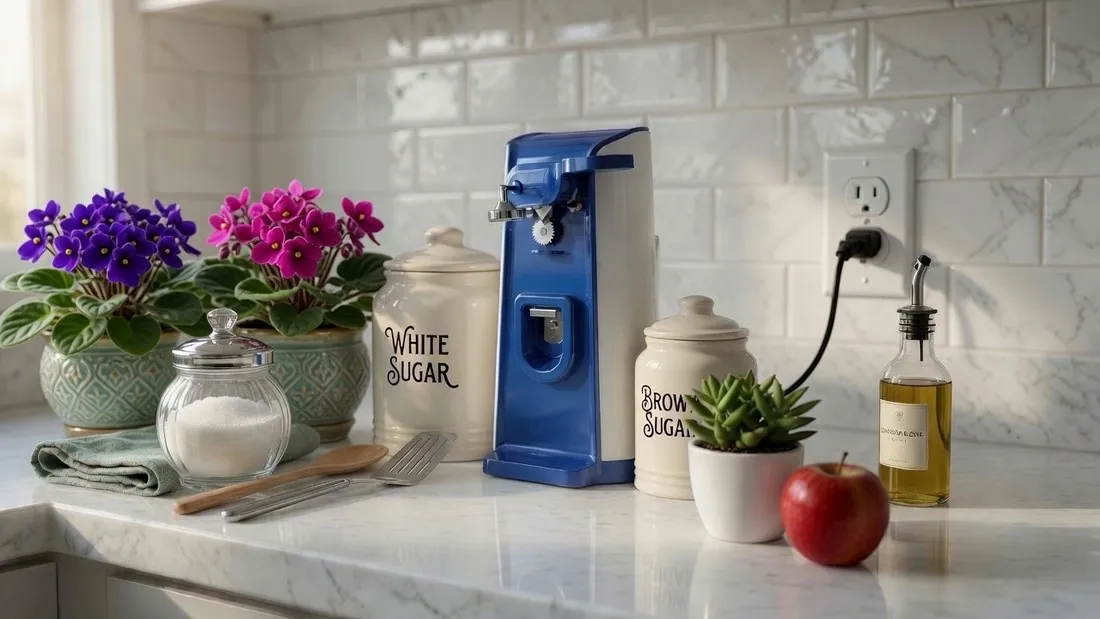
The countertop electric plugs in, never needs batteries, holds the can for you, and shrugs at the big juice cans — it lives on the counter and does the daily work. The one-touch battery opener sits on the can, walks itself around at a single press, needs zero grip, and runs on AA batteries — it lives with the storm supplies and takes over when the counter goes dark, as the story above says. These are not two answers to the same question. Together they run about $40–$60, and between them they cover every day of the year including the bad ones.
3. A magnetic lid lifter
The magnet holds the cut lid up and away so it never drops into the food and you never touch it. Small feature, does a lot of the safety work.
4. One big button, no tiny controls
The whole point is less finger work. A single large press-button or a light-touch lever beats any model with small switches, and there is nothing on a can opener that needs a setting.
5. Built to be the last one you buy
The homepage card’s promise holds: a quality electric model runs $15–$35 and lasts 15–20 years. Buy it now, use it forever — and if the budget is tight, this is another appliance that turns up at yard sales for a few dollars, working fine, because the previous kitchen upgraded styles rather than wore it out.
🏷️ The Two We Would Actually Buy
Everything above is a list of features. Here it is with names on it — both checked on Amazon in October 2026, one for the counter and one for the drawer.
For the counter: Hamilton Beach SmoothTouch (model 76606)
Hamilton Beach, the Virginia company, lists it as a smooth-edge opener that takes regular and pop-top cans and runs from an easy-touch lever instead of a grip. It plugs in, so there are never batteries to think about, and Hamilton Beach lists it at $39.99. The catch: it dies with the power — which is exactly what the second one is for. See the Hamilton Beach SmoothTouch →
For the blackout drawer: Kitchen Mama Auto Electric Can Opener
Battery-operated: set it on the can, press the button, and it works its own way around, leaving a smooth edge, by the maker’s description. No cord, so it keeps opening cans when the power is out. The catch: it runs on batteries, so keep a fresh spare set in the same drawer. See the Kitchen Mama →
⚡ The Blackout Answer — This One Has a Happy Ending
Every electric servant on this site comes with the same honest caveat — it dies with the power — and this is the one page where the caveat solves itself. The battery one-touch opener runs on the same AAs as your flashlights, which makes it the rare electric convenience that works better during a hurricane than the stove does. Keep it with the storm supplies, keep spare AAs beside it, and the pantry full of outage-kitchen cans stays open all week.
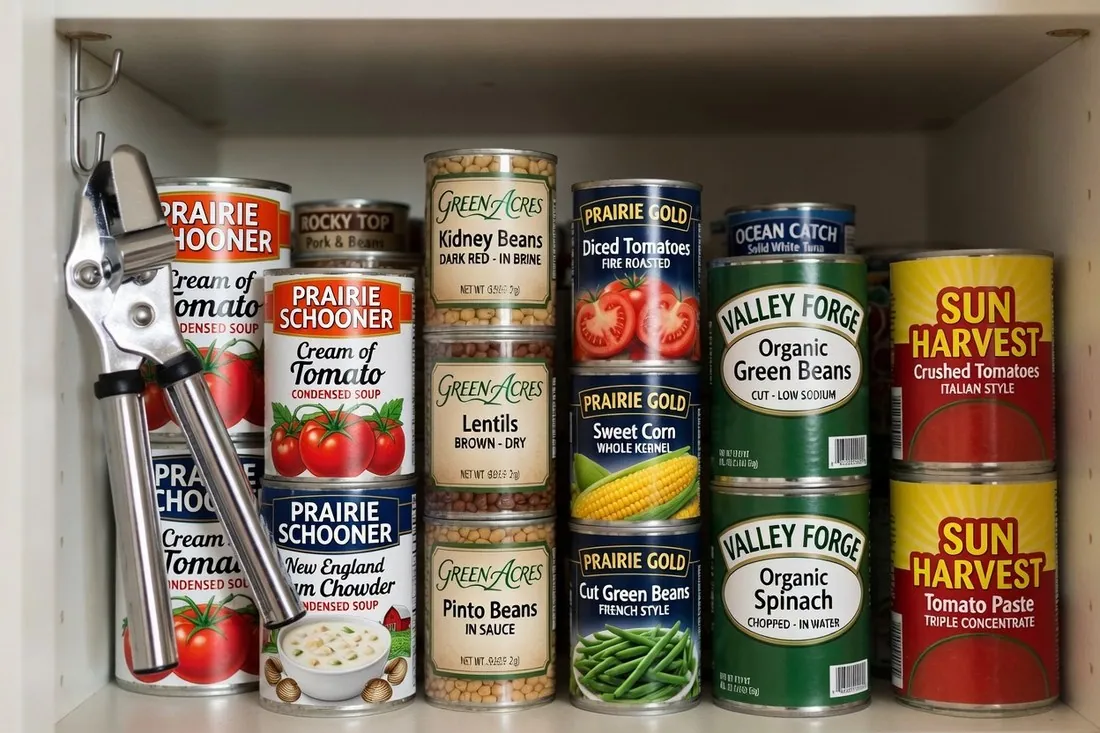
And the five-dollar insurance policy: keep one big-handle, easy-grip manual opener in the drawer as the zero-battery backup — the kind with oversized cushioned grips and a large knob, which asks far less of your hands than the old all-steel style. Between the battery opener and that, no week without power ever stands between you and the soup.
🛒 Buy It at Fifty

Canned food is the quiet backbone of both halves of this site: the cheapest, longest-keeping food in the store on an ordinary Tuesday, and the whole grocery supply on the week the power is out. An opener your hands cannot operate takes all of it off the menu at once — which is exactly how a two-dollar tool quietly changes what someone eats.
Buy the electric one at fifty and it is a small convenience; keep it at seventy and it is the difference between a full pantry you can use and a full pantry you look at. Fifteen to thirty-five dollars, fifteen to twenty years, zero fights with the lid. The best safety equipment is the kind you would have wanted anyway.
❓ Plain Answers
The short version of this page, one question at a time — the answer is always the first line.
What is the best electric can opener for seniors with arthritis?
A smooth-edge electric opener you work with one press or one lever — no squeezing, no twisting. By name: the Hamilton Beach SmoothTouch (model 76606) for the kitchen counter, and the battery-operated Kitchen Mama Auto Electric Can Opener for the drawer, because it keeps working when the power is out. Both leave a smooth edge by their makers’ descriptions, so there is no razor lid to fish out of the food.
Is an electric can opener easier on arthritic hands?
Yes, an electric can opener replaces the squeeze-and-twist of a manual opener with a single button press. Occupational therapists single out sustained gripping and twisting as motions that trigger joint pain, and advise switching to an electric opener for moderate arthritis.
What is a smooth-edge can opener?
A smooth-edge or side-cut can opener unseals the seam below the rim instead of piercing the lid, so the lid comes away blunt and the rim stays smooth. Boxes advertise it as smooth edge, safe cut or side cut.
How much does a good electric can opener cost?
A quality electric can opener runs $15–$35 and lasts 15–20 years. A countertop model and a battery one together run about $40–$60.
Will an electric can opener work in a power outage?
A battery-powered one-touch can opener runs on AA batteries, so it keeps working when the power is out, but a plug-in countertop opener does not. Keep an easy-grip manual opener in the drawer as the zero-battery backup.
What should I look for in an electric can opener?
Look for smooth-edge, side-cut operation, a magnetic lid lifter and one big button with no tiny controls. The magnet holds the cut lid up so it never drops into the food.